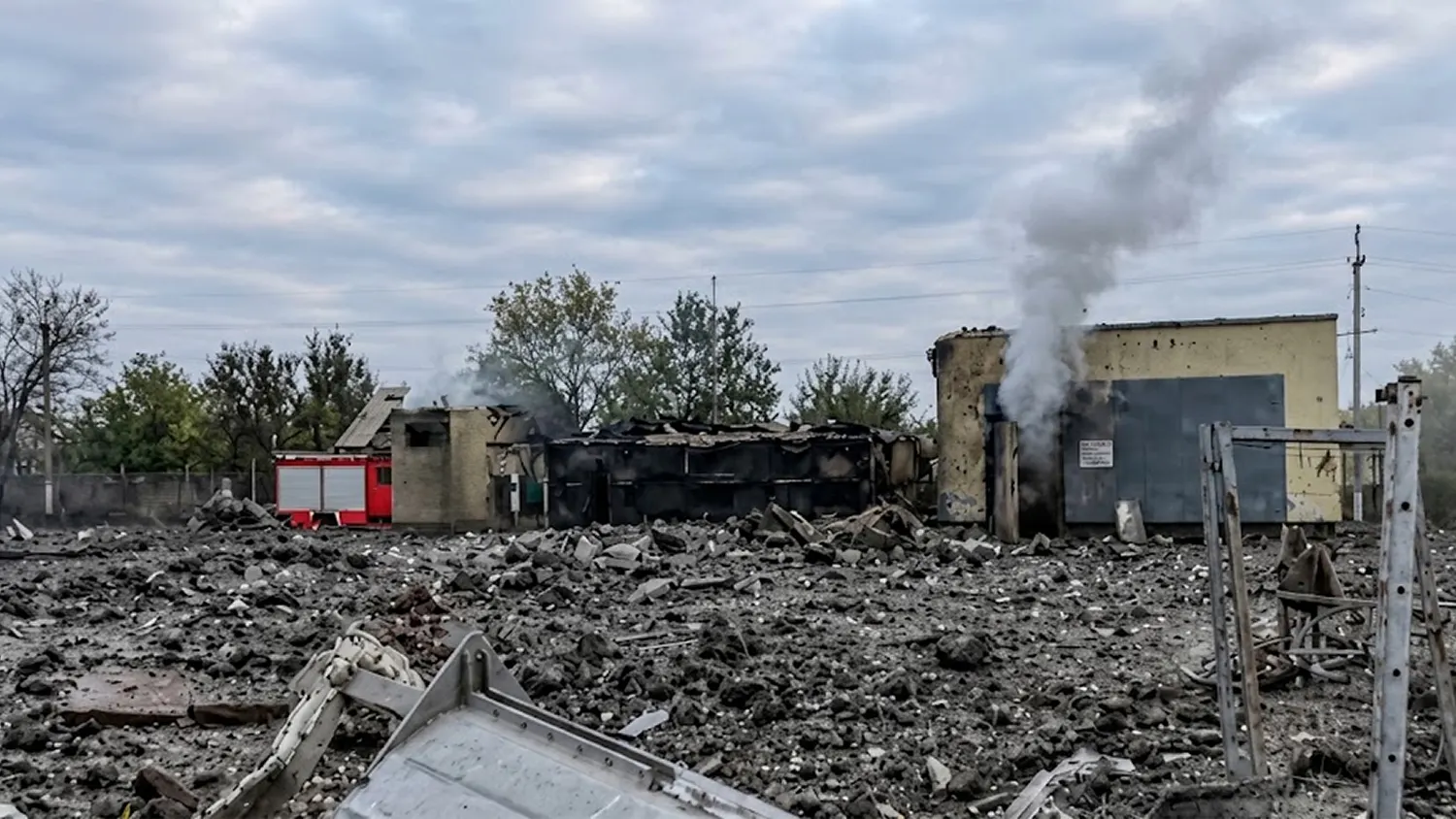
On Monday, November 2, 2026, a routine bread line in southeastern Ukraine turned into one of the deadliest strikes on civilians in recent months. Russian forces hit a school in the village of Komyshuvakha, in the Zaporizhzhia region, that had been turned into a humanitarian aid center and shelter.
A Monday Food Line Became a Target
Classes at the school had been suspended for a long time because of the nearby front line. Local officials converted the building into a place where residents could collect food, water, and basic supplies.
Every Monday, people lined up there, mostly elderly residents, families, and vulnerable people who stayed in the village. Officials say the site operated openly, and everyone knew what it was.
Two Waves of Bombs, Minutes Apart
According to President Volodymyr Zelenskyy and local emergency services, Russian jets first dropped several heavy guided bombs just as people arrived for the distribution. A second wave followed shortly after, hitting the underground shelter where survivors had run for cover.
Zelenskyy described it this way: “The Russians carried out the first attack just as people were arriving at the site, dropping several aerial bombs. Then came a second attack, again with aerial bombs, this time targeting the shelter.”
Officials call this a “double-tap” strike, an attack timed to hit rescuers and survivors after the first blast.
First Responders Were Among the Dead
The latest report from Ukrainian officials puts the toll at 29 confirmed dead and 48 missing, with at least five people injured. Among the dead are:
- Civilians who had come for aid
- Two emergency rescuers, Denys Konovalenko and Oleksii Sushchevskyi, both 44
- Four police officers who rushed to help
Two other rescuers were hospitalized. Searching the rubble has been slow and dangerous. Crews from the State Emergency Service are using heavy machinery and sniffer dogs, but repeated air raid alerts and Russian drones circling overhead have interrupted the work.
The Zaporizhzhia Regional State Administration declared Tuesday a day of mourning.
Why Many Officials Call It a War Crime
International humanitarian law is clear on the basics. Attackers must tell civilians apart from fighters, and they must not deliberately target civilian buildings. Aid sites, shelters, and rescue workers all have special protection under the Geneva Conventions and the Rome Statute of the International Criminal Court.
Ukrainian and European officials say the Komyshuvakha strike broke those rules. They point to the open, predictable use of the site as an aid hub and to the second strike on rescuers. The International Criminal Court has already issued arrest warrants over earlier attacks on civilian targets in this war, and UN investigators have documented similar strikes on schools and other civilian sites. A formal finding on this attack would need a full investigation.
Moscow’s Familiar Playbook
The reporting so far includes no Russian statement specific to this attack. In past cases, Russia’s Defense Ministry has said it only hits military targets. It has dismissed civilian-casualty claims as “provocations” and sometimes claimed that Ukrainian forces use schools or shelters as command posts.
This time, the Kremlin’s public focus was elsewhere. After Ukrainian-aligned hackers set off false alerts in Russian emergency apps, spokesperson Dmitry Peskov insisted Russia’s warning systems were working normally and called for stronger cybersecurity.
Allies Respond as the Barrages Continue
Zelenskyy urged allies to give a “strong and tough” response and to send more air defense. He said Ukraine had offered further humanitarian steps to ease the fighting, “but Russia continues to kill people.”
European foreign ministry officials called the strike a grave violation of international humanitarian law and renewed calls for more anti-air defense. Poland scrambled military aircraft and activated air defenses as new waves of Russian missiles and drones hit Ukraine. It also announced plans to tighten security on its border with Russia’s Kaliningrad exclave.
Russian aircraft also struck energy grids and ports in southern Ukraine, ending hopes that a brief local pause in fighting might hold.