The Ebola outbreak in the Democratic Republic of the Congo (DRC) has crossed another devastating milestone, with more than 5,000 people dead and over 10,000 infected since the epidemic was declared in May 2026. The outbreak, driven by the rare Bundibugyo virus, has become the deadliest Ebola epidemic in the country’s history and the second-deadliest ever recorded worldwide.
According to the latest figures from the Congolese Ministry of Health, reported by the Associated Press on October 31, the outbreak has infected 10,351 people and killed 5,026, representing a fatality rate of nearly 50%.
The rapid increase in infections has raised serious concerns among public health officials, particularly as the virus continues to spread through communities where access to medical care is limited. Despite an expanding international response, conflict, overstretched healthcare facilities, and the absence of an approved vaccine or specific treatment for the Bundibugyo strain are making containment increasingly difficult.
Bundibugyo Virus Makes the Outbreak More Difficult to Control
One of the biggest challenges facing health authorities is the particular strain responsible for the current epidemic.
Unlike several previous major Ebola outbreaks, which were caused by the Zaire ebolavirus species, the 2026 outbreak is driven by Bundibugyo ebolavirus. This distinction is important because medical tools developed for the Zaire strain cannot simply be used against every type of Ebola virus.
The Ervebo vaccine, for example, has been shown to protect against Zaire ebolavirus but does not provide established protection against Bundibugyo virus. Similarly, existing targeted antibody treatments for the Zaire species are not approved treatments for this outbreak.
As a result, there are currently no licensed vaccines or specific treatments for Bundibugyo virus disease.
Healthcare workers must rely primarily on supportive medical care, including fluid replacement, careful monitoring, and treatment of complications. Early medical attention remains important because patients have a better chance of survival when they receive appropriate care before their condition becomes critical.
Researchers are working to evaluate potential vaccine and treatment candidates, but developing effective medical tools remains a major challenge.
More Than Half of the Affected Provinces Have Reported Cases
The outbreak remains concentrated in eastern Democratic Republic of the Congo, although its geographic reach has expanded considerably.
By October 31, cases had been recorded in eight of the country’s 26 provinces, affecting 67 health zones. Ituri and North Kivu have emerged as the main epicenters, accounting for the overwhelming majority of infections and deaths.
The affected provinces include:
- Ituri
- North Kivu
- South Kivu
- Haut-Uélé
- Bas-Uélé
- Tshopo
- Sud-Ubangi
- Nord-Ubangi
The expansion has complicated efforts to identify infected individuals, monitor their contacts, and prevent further transmission.
According to the latest reporting, 50 of the 67 affected health zones still had active cases. This means the outbreak is not limited to a handful of isolated communities but involves a much wider network of affected areas.
Poor Contact Tracing Allows the Virus to Spread Undetected
Another major concern is the difficulty health authorities face in identifying where new infections originate.
Contact tracing is one of the most important tools in controlling an Ebola outbreak. Once a person tests positive, health workers attempt to identify everyone who may have been exposed and monitor them for symptoms.
However, this process has become increasingly difficult in the DRC.
According to the Africa Centres for Disease Control and Prevention, approximately 80% of new infections are occurring outside previously monitored chains of transmission. This means many infected individuals are not being identified through existing contact-tracing networks.
The problem is compounded by the number of people who become seriously ill or die before reaching medical facilities.
The World Health Organization has reported that approximately one-third of recorded deaths occurred outside treatment centers, before patients could receive proper medical assessment and care.
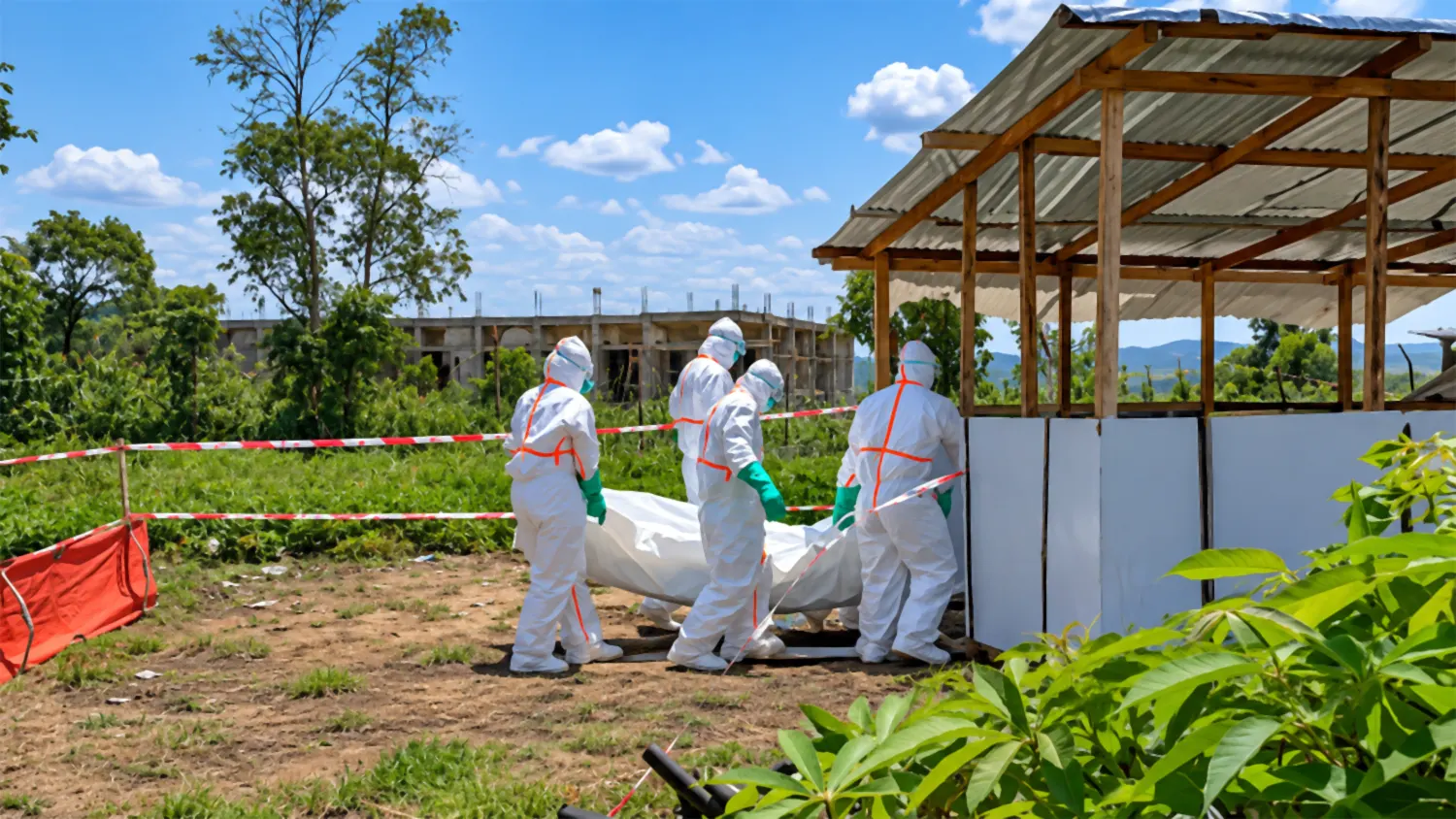
These deaths create additional challenges because health workers may have limited opportunities to identify potential exposure, protect family members, and investigate transmission routes.
Community engagement and early access to treatment are therefore essential to slowing the outbreak.
Armed Conflict and Insecurity Are Disrupting Ebola Response Efforts
The medical challenges are only part of the problem. The outbreak is unfolding in a region already struggling with years of armed conflict and humanitarian instability.
Eastern DRC, particularly Ituri and North Kivu, has experienced persistent violence involving armed groups. This insecurity makes it difficult for healthcare workers and humanitarian organizations to reach affected communities.
Medical teams have faced attacks, while health facilities and treatment centers have struggled to maintain consistent operations.
The situation has also affected the delivery of medical supplies, transportation, and essential equipment. In some areas, insecurity prevents response teams from reaching communities quickly enough to investigate suspected cases.
Healthcare workers are facing additional pressure from staffing shortages and delayed salary payments. The Associated Press reported that workers at an Ebola treatment center in Ituri went on strike in October, demanding several months of unpaid wages.
When treatment facilities cannot operate consistently, patients may lose access to timely care and communities become harder to monitor.
The combination of armed conflict, limited infrastructure, and an overstretched healthcare system is making an already difficult epidemic considerably harder to contain.
Ebola Cases Have Spread Beyond the Democratic Republic of the Congo
Although the DRC accounts for the overwhelming majority of infections and deaths, the outbreak has also reached other African countries.
Uganda reported cases earlier in the epidemic, while Kenya confirmed infections linked to a traveler from the DRC. Nigeria subsequently reported an imported case, extending the outbreak’s geographic reach into West Africa.
According to the Associated Press, Kenya had recorded eight confirmed cases and two deaths, while Nigeria’s single confirmed patient had been evacuated to Switzerland.
These developments have increased concerns about cross-border transmission, particularly in regions where people regularly travel for trade, employment, and family reasons.
However, imported cases do not automatically mean that a wider outbreak has developed in those countries. Health authorities are using isolation, contact tracing, and monitoring to prevent further transmission.
The international situation also requires careful monitoring. The US Centers for Disease Control and Prevention has emphasized that the risk to the American public and travelers remains low, despite the outbreak’s scale and geographic expansion.
Why the 2026 Ebola Epidemic Is Historically Significant
The current epidemic has already become the deadliest Ebola outbreak in the history of the Democratic Republic of the Congo.
It is also the second-deadliest Ebola outbreak ever recorded, behind the 2014–2016 West Africa epidemic, which infected more than 28,600 people and killed over 11,000 across Guinea, Liberia, and Sierra Leone.
The scale of the current outbreak is particularly concerning because it has expanded rapidly despite decades of experience responding to Ebola epidemics.
Previous outbreaks benefited from medical tools developed specifically against the Zaire species. The Bundibugyo strain presents a different challenge, leaving health authorities without an approved vaccine or targeted treatment.
The current epidemic also demonstrates how public health emergencies can become more difficult to control when they occur alongside armed conflict, population displacement, and weak healthcare infrastructure.
WHO, UNICEF and International Partners Continue Response Efforts
The response involves the Congolese government, the World Health Organization, and several international humanitarian organizations.
The World Health Organization (WHO) is supporting surveillance, contact tracing, clinical preparedness, infection prevention, and coordination between affected countries. It is also working to improve access to remote communities and strengthen cross-border monitoring.
UNICEF is supporting community engagement, public health communication, infection prevention, water and sanitation services, and assistance for children and families affected by the outbreak.
The International Organization for Migration (IOM) is also involved in population mobility monitoring and health preparedness at important border crossings and transit points.
Meanwhile, neighboring governments have strengthened surveillance and preparedness measures to identify imported cases and prevent further transmission.
Research efforts are also underway to evaluate potential vaccines and treatments specifically targeting Bundibugyo virus disease.
However, the effectiveness of these efforts will depend heavily on whether response teams can reach affected communities and gain the cooperation of local populations.
Can the DR Congo Ebola Outbreak Be Brought Under Control?
The latest figures suggest that the epidemic remains a serious and evolving public health emergency. With more than 10,000 infections and over 5,000 deaths, the immediate challenge is preventing further transmission while improving access to medical care.
There is no guarantee that case numbers will decline in the near term. Continued transmission outside monitored contact networks, deaths occurring outside treatment facilities, and insecurity in eastern DRC all present major obstacles.
Reversing the trend will require several measures working together.
First, health authorities need to expand contact tracing and improve early detection so that infected individuals can be isolated before spreading the virus to others.
Second, communities need greater access to treatment facilities, alongside stronger public education and support for safe burial practices.
Third, international research efforts must accelerate the development and evaluation of vaccines and treatments specifically designed for the Bundibugyo strain.
Finally, response teams need reliable funding, adequate staffing, and safe access to affected areas.
The outbreak is a reminder that controlling a deadly infectious disease requires more than medical expertise. It also depends on public trust, functioning healthcare systems, political stability, and international cooperation.
For now, the Democratic Republic of the Congo faces one of the most serious Ebola emergencies in modern history, with the coming weeks likely to be critical in determining whether containment efforts can catch up with the virus.