The death toll is rising, more rain is coming, and the ground has nowhere left to put it.
What started as an alarming weather event has escalated into a full-blown humanitarian crisis across central and southern China. The confirmed death toll has climbed to 22 people, with at least 20 others still missing as rescue teams race against rising rivers and saturated hillsides. Nearly 24,000 residents have been emergency-evacuated from the highest-risk zones, and the storm systems driving all of this show no immediate sign of clearing.
This isn’t a localized disaster. It is unfolding simultaneously across Hunan, Guangxi, Guizhou, and Hubei, four provincial-level regions that together cover an area larger than Western Europe and the meteorological forecast for the coming days is not reassuring.
The Hardest Hit Provinces, by the Numbers
The scale of destruction breaks down starkly when you look province by province.
Hunan Province has absorbed some of the most extreme rainfall of the entire event. In Shimen County alone, more than 61,500 people have been directly affected, a staggering figure for a single county. The area recorded 339 millimeters of rain in a single 24-hour window, with one township shattering its own historical record by receiving 240 mm in just a matter of hours. Five deaths have been confirmed in Hunan, and 11 people remain missing.
Guangxi Region recorded the single deadliest incident of the crisis. A truck carrying farm workers plunged off a bridge into a heavily swollen river over the weekend, killing 10 people more than a third of the total national death toll from a single event.
Guizhou Province, where mountainous terrain amplifies every flood into a potential landslide event, has seen four deaths and five people missing, with widespread structural damage to homes and severed communication lines cutting off rural villages from emergency services.
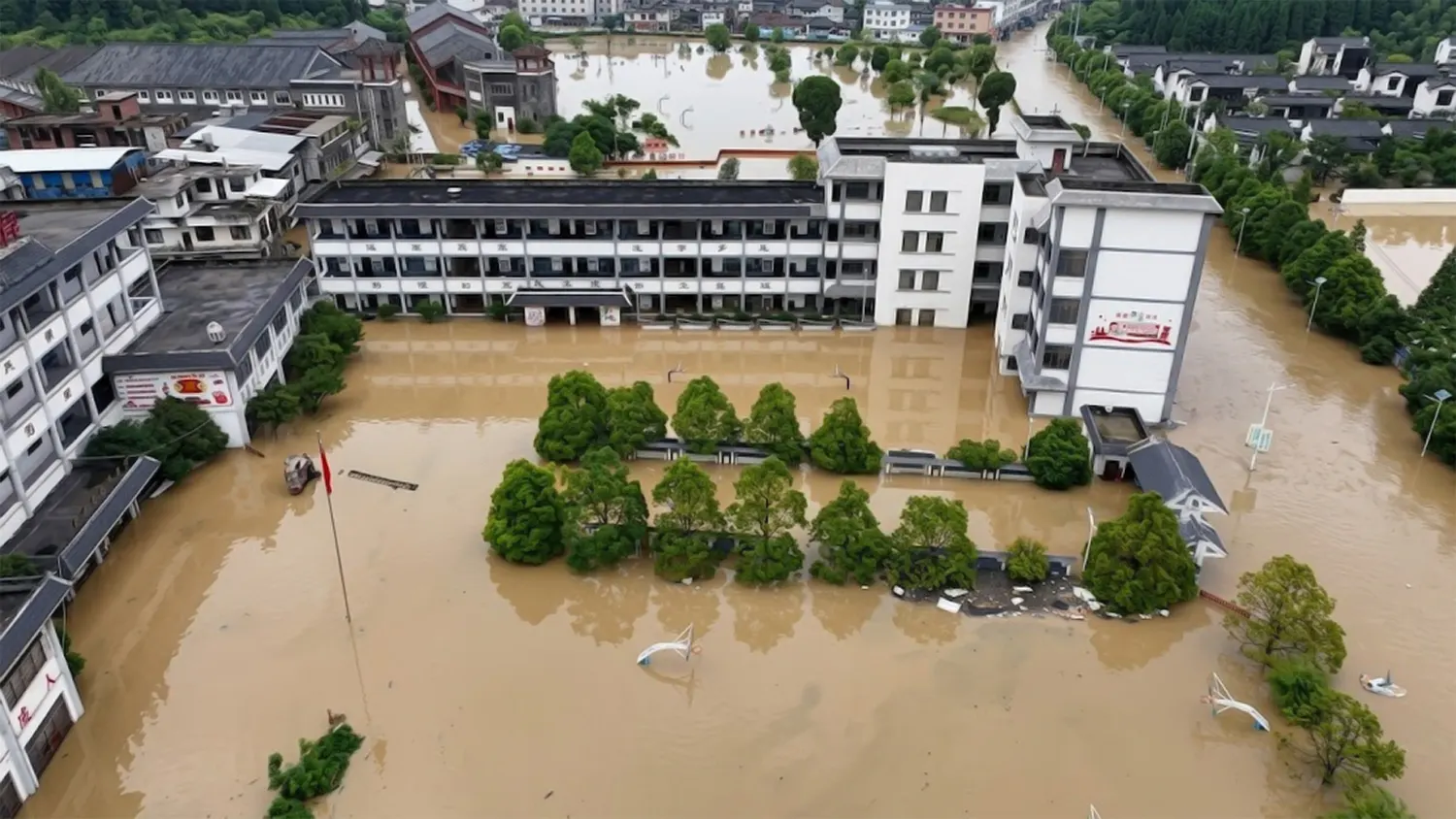
Hubei Province has lost three lives with four missing. In major cities like Jingzhou and Zhijiang, authorities have fully suspended schools, businesses, and public transit. Emergency crews are navigating submerged streets by inflatable boat.
What the Government Mobilized and How Fast
The central government’s response moved quickly once the scale of the crisis became apparent.
Beijing has allocated 150 million yuan roughly $22 million USD specifically for emergency response, infrastructure rebuilding, and direct support to families who have suffered property losses. That funding is already being deployed, not held in reserve.
The Ministry of Emergency Management rushed 15,000 pieces of relief supplies to Hubei, including folding beds, temporary furniture, and household emergency kits, to support the tens of thousands of people who have lost access to their homes. Rolling forecasts are being used to time mass evacuations before rivers crest rather than after, a shift toward anticipatory response that emergency management agencies globally have been pushing for.
Weather models currently show no immediate clearing across the affected regions. Flood control teams remain on high alert, and authorities are explicitly framing this as an ongoing emergency, not a receding one.
The Rain Isn’t Staying South
One of the more alarming developments in the latest forecasts is the northward shift of the storm system.
The rain belt that has been pounding southern and central provinces is now pushing into Beijing, Hebei, and Henan regions far less accustomed to flood scale rainfall events. Farmland waterlogging warnings have already been issued for wheat-growing areas in Henan, where standing water on fields during harvest season can devastate crop yields. Major train lines running out of Beijing have preemptively suspended services ahead of the incoming system.
Meanwhile, Hainan Province in the far south has upgraded its flood and storm alerts to Level III, with some townships recording over 300 mm of rainfall in under 24 hours. The geographic spread of this event is widening, not contracting.
Why the Ground Makes Every New Raindrop More Dangerous
The compounding factor that meteorologists keep flagging isn’t just the volume of rain still falling, it’s the condition of the soil underneath it.
Across southern and central China, the ground is completely saturated after weeks of continuous downpours. A fully saturated soil profile can’t absorb additional water. It behaves more like a paved surface: every new millimeter of rainfall converts almost instantly into surface runoff, dramatically accelerating the speed at which rivers rise and hillsides destabilize. The risk isn’t linear, it compounds. A region that could safely absorb 50 mm of rain last month may trigger flash floods and landslides with just 20 mm today.
This is why emergency authorities aren’t just responding to what has already happened. They are executing anticipatory evacuations moving people out before rivers crest rather than scrambling after they do.
This Is What Climate Whiplash Actually Looks Like
The crisis unfolding right now fits a pattern that climate scientists have been documenting with increasing urgency: rapid oscillation between drought and flood, sometimes within weeks.
The physics driving it are straightforward. For every degree Celsius of atmospheric warming, the air holds approximately 7% more moisture. That moisture doesn’t release gradually, it accumulates until conditions tip, then releases all at once in violent, concentrated bursts. Towns are recording months’ worth of rainfall in hours. Drainage systems designed for historical precipitation patterns simply cannot handle it.
Several specific mechanisms are intensifying China’s seasonal extremes:
Heatwaves are arriving earlier and lasting longer. Northern and central cities now regularly experience extreme heat arriving more than 10 days ahead of historical averages, with multi-week stretches of temperatures above 35°C running from late June through September. An intensifying Western Pacific Subtropical High, a massive atmospheric pressure system is stretching further west and north, pinning hot stagnant air over population centers and triggering the regional droughts that precede flooding events.
When the rains come, they hit harder and faster. Rather than steady seasonal rainfall, precipitation is increasingly collapsing into short, violent bursts. The stronger summer monsoon is also pushing moisture further inland than historical patterns suggest, the geographic zones receiving heavy annual rainfall have expanded significantly northward and westward, bringing unprecedented flooding to regions that historically had little experience managing it.
Typhoons are carrying more water inland. Warmer ocean surface temperatures act as fuel for tropical storms, meaning more typhoons are making landfall back to back and carrying significantly more moisture deep inland when they do extending the effective flood season well into autumn.
The result is a climate whiplash cycle: prolonged heat bakes and hardens the soil, stripping it of absorption capacity. When the inevitable intensified rainfall follows, water can’t penetrate the hardened ground and instantly becomes catastrophic surface runoff. The drought created the conditions for the flood.
China Is Adapting But It’s an Arms Race
In response to worsening seasonal extremes, China has significantly expanded its climate adaptation infrastructure. Thousands of new weather radar installations, AI-driven forecasting networks, and the country’s flagship “sponge city” program which redesigns urban surfaces to rapidly absorb and retain floodwater are all part of a national effort to build resilience into the physical landscape.
But adaptation infrastructure takes years to deploy at scale, and the climate system is moving faster. The China Meteorological Administration has confirmed that the current weather system is the strongest and most widespread since the 2026 flood season officially began and the season is far from over.
For the 24,000 people already evacuated, the 20 still missing, and the rescue teams navigating flooded streets by inflatable boat, the infrastructure of the future offers little comfort right now.
The rain belt is still moving. The death toll is still climbing.