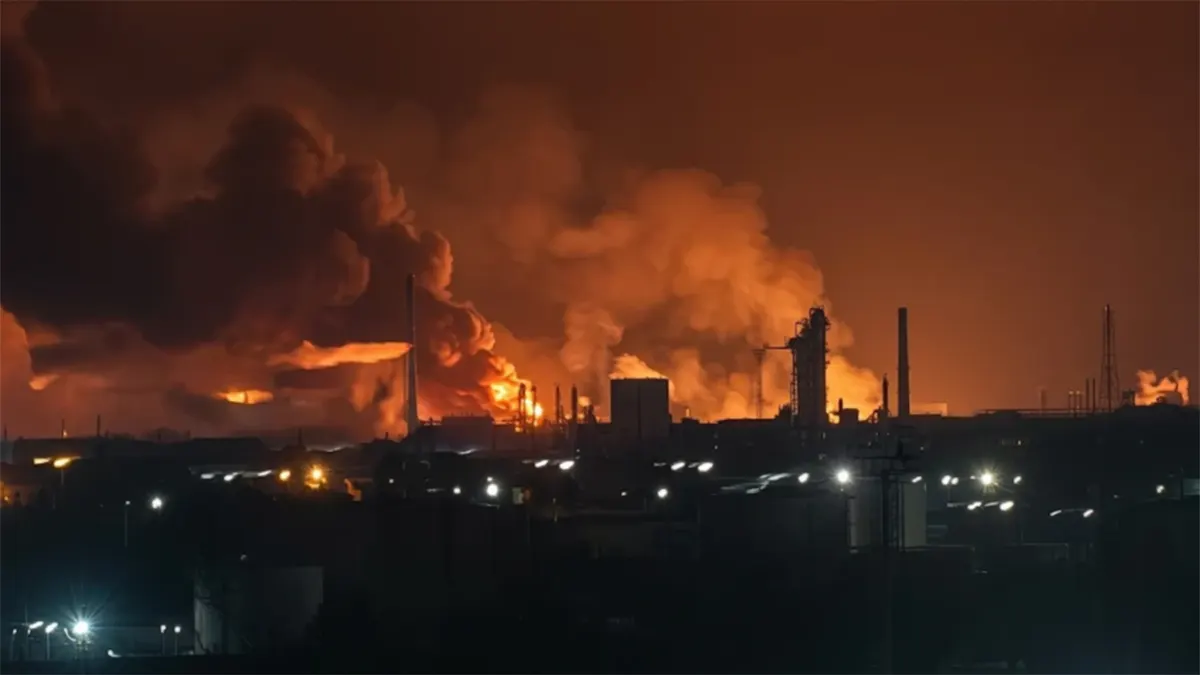
A Ukrainian drone attack on Russia’s Ryazan region reportedly struck one of the country’s largest oil refineries and a major logistics center overnight on November 5, triggering industrial fires, electricity disruptions, and damage to nearby buildings.
The attack targeted industrial infrastructure in and around Ryazan, approximately 200 kilometers southeast of Moscow. Russian regional authorities confirmed fires at industrial facilities, damage to power lines, and one injury, while independent reports identified the Rosneft-operated Ryazan Oil Refinery and a Wildberries logistics center as possible targets.
The raid underscores Ukraine’s continuing efforts to disrupt Russia’s oil processing infrastructure and place additional pressure on the country’s energy sector.
Ryazan Oil Refinery Reportedly Targeted in Overnight Drone Raid
The attack began during the early hours of November 5, with explosions and air-defense activity reported around 2 a.m. local time.
Videos circulating on social media appeared to show a large fire near the Ryazan Oil Refinery, one of Russia’s major petroleum processing facilities. Ukrainian and independent monitoring channels reported that drones had reached the refinery complex.
The facility is operated by Rosneft and has an annual crude oil processing capacity of approximately 17 million metric tons. It produces gasoline, diesel, aviation fuel, fuel oil, and other petroleum products used across central Russia.
The refinery is particularly important because of its role in supplying fuel to Moscow and surrounding regions. Its products also support Russia’s military logistics and transportation requirements.
Reuters analysis of social media footage indicated that the refinery appeared to have been hit. However, the extent of the damage remained unclear, and the footage could not independently establish when it was recorded.
Russian regional authorities confirmed industrial fires but did not officially identify the refinery as one of the damaged facilities.
Wildberries Logistics Center Also Reportedly Caught Fire
The Ryazan attack reportedly extended beyond energy infrastructure.
A major logistics center belonging to Wildberries, one of Russia’s largest online retailers, was also reported to have caught fire during the overnight raid.
The distribution complex is located in the Ryazansky industrial park and serves as an important regional logistics hub.
Reports from local residents and monitoring channels indicated that drones or falling debris may have damaged the facility.
However, the reported strike on the Wildberries center was not independently confirmed, and the company had not publicly verified the extent of any damage at the time of reporting.
The incident highlights how attacks targeting industrial areas can potentially affect commercial facilities and supply-chain operations alongside strategic infrastructure.
One Person Injured as Power Outages Hit Ryazan
The drone attack also caused disruptions across the surrounding region.
Ryazan Governor Pavel Malkov confirmed that one person had been injured during the incident. No fatalities were reported in the available accounts.
Damage to electrical transmission lines caused power outages in parts of Ryazan city.
The Moskovsky district was among the areas affected, with electricity reportedly restored later in the morning following emergency repairs.
The attack also damaged residential properties in the Ryazan district. Falling debris and blast effects reportedly shattered windows at School No. 58, prompting authorities to cancel classes.
Additional fires were reported at non-residential buildings in the nearby Rybnovsky district.
These incidents demonstrate how drone attacks on industrial targets can create wider disruptions for surrounding communities, even when the main targets are located within designated industrial zones.
Ukraine’s Campaign Against Russian Oil Infrastructure
The Ryazan attack comes amid Ukraine’s sustained campaign against Russian oil refineries and fuel-processing facilities.
Throughout the war, Ukrainian forces have increasingly used long-range drones to target infrastructure that supports Russia’s petroleum industry.
These operations seek to disrupt the production of gasoline, diesel, aviation fuel, and other products that are essential to both the civilian economy and military operations.
Major facilities targeted during the broader campaign have included the Ryazan refinery, Moscow refinery, Slavneft-YANOS in Yaroslavl, Kirishi refinery in the Leningrad region, and refineries in Perm and Samara.
The facilities vary in their strategic importance, but many serve major transportation networks, industrial centers, or export infrastructure.
The strategy focuses on reducing Russia’s ability to process crude oil into higher-value petroleum products, rather than simply targeting oil production itself.
Refineries are particularly significant because they transform crude oil into fuels needed by vehicles, aircraft, industrial facilities, and military equipment.
Damage to processing infrastructure can therefore create consequences beyond the immediate industrial site.
How Refinery Strikes Could Affect Russia’s Economy
Repeated attacks on Russian oil infrastructure could place additional pressure on domestic fuel markets and government finances.
When refineries are damaged or forced to reduce production, the resulting supply disruptions can affect gasoline and diesel availability.
Regional shortages may become more severe when military logistics, agricultural operations, and critical transportation services receive priority access to available fuel.
Civilian consumers and businesses can then face higher prices or reduced availability.
The consequences may extend into other sectors of the economy.
Higher fuel costs can increase expenses for food transportation, freight operations, manufacturing, and public services. These additional costs can contribute to inflationary pressure.
Russia has also used export restrictions to protect domestic fuel supplies during periods of market stress.
Such measures can help stabilize local availability but may reduce opportunities to generate revenue from exporting refined petroleum products.
At the same time, repairing damaged refinery equipment can be expensive and time-consuming.
Modern processing facilities rely on specialized machinery, control systems, and industrial components. Western sanctions and restrictions on technology imports can complicate the procurement of replacement equipment and prolong maintenance.
However, the overall economic impact depends on the severity of the damage, the availability of alternative refining capacity, and how quickly affected facilities return to operation.
Why the Ryazan Attack Matters
The November 5 raid illustrates Ukraine’s continued focus on Russian infrastructure beyond the immediate battlefield.
By targeting facilities involved in refining, distribution, and transportation, Ukraine seeks to impose additional operational and financial costs on Russia.
The Ryazan refinery is particularly significant because of its size and its role in supplying fuel to central Russia.
Damage to such facilities can potentially affect fuel availability, industrial operations, and military logistics.
At the same time, the attack’s full impact remains uncertain.
Russian authorities confirmed fires, electricity disruptions, and one injury, but did not provide a comprehensive assessment of refinery damage. Reports of damage to the Wildberries logistics center also remained unverified.
The longer-term consequences will depend on how much industrial capacity was damaged and how quickly Russia can restore operations.
As Ukraine continues targeting Russian energy infrastructure, attacks such as the Ryazan raid are likely to remain an important part of the wider effort to weaken Moscow’s logistical and economic capacity.