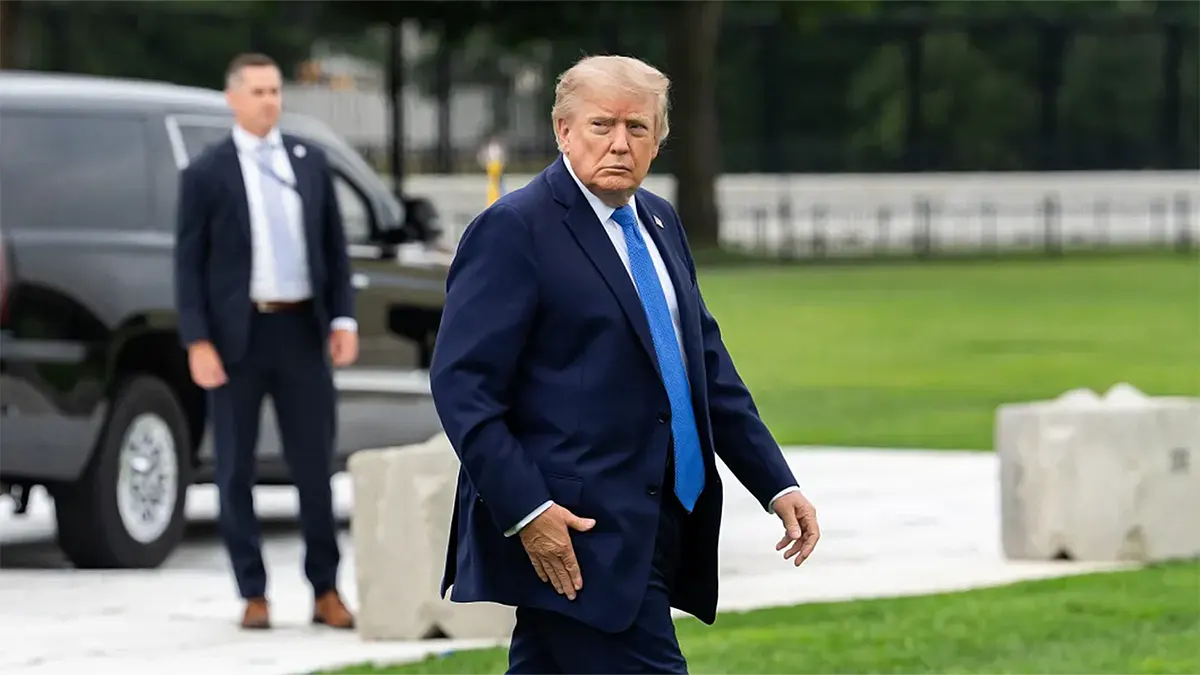
President Donald Trump has ordered a major reduction in joint military exercises with South Korea, and the timing tells its own story. The decision landed just weeks after Trump publicly vented that Seoul refused to help with a U.S. military operation involving Iran despite tens of thousands of American troops stationed on Korean soil for its defense.
The result: the annual Ulchi Freedom Shield exercise, originally planned as an 11-day drill running from August 17 to 27, was cut down to just five days, wrapping up on August 21.
What Actually Got Cut
The shortened timeline wasn’t the only change. Several live-field training exercises were downsized or scrapped entirely. Phase two of the drills, the portion traditionally focused on counteroffensive operations was either canceled outright or shifted to computer-simulated scenarios instead of troops on the ground.
Trump has framed the pullback as a safety move, not a weakness. In his telling, easing up on drills near North Korea reduces tension rather than inviting it, and he’s pointed to his personal relationship with North Korean leader Kim Jong Un as proof that direct diplomacy works better than large-scale war games.
The Iran Snub That Changed the Conversation
But the drills aren’t the whole story. In earlier remarks, Trump described asking South Korea’s president for help with a military operation involving Iran and getting turned down. That refusal appears to have irritated him, especially given the scale of America’s commitment to Korean defense: roughly 39,000 U.S. troops stationed there specifically to guard against North Korea.
Trump’s frustration boiled down to a simple question: if South Korea won’t help the U.S. abroad, why should the U.S. keep footing a massive defense bill at home? He’s also revived an old grievance about defense cost-sharing, recalling that during his first term he pushed Seoul to raise its annual payment toward U.S. troop costs, eventually settling on a phased increase starting near $3 billion a year, an arrangement he says was later rolled back under the Biden administration.
Together, these threads reveal a transactional approach to alliances: Trump treats military protection less like an automatic obligation and more like a service that should come with financial or strategic payback, whether that’s cash or cooperation on unrelated conflicts.
South Korea’s Response: Comply, But Stay Uneasy
Seoul didn’t push back publicly. South Korea’s Joint Chiefs of Staff agreed to the shortened schedule, and Defense Minister Ahn Gyu-back maintained that core readiness goals would still be met despite the compressed timeline.
Still, the abrupt nature of the announcement rattled people. Many South Koreans voiced confusion over the lack of advance warning, and the sudden shift stirred broader questions about how dependable the U.S.–South Korea alliance really is. President Lee Jae Myung tried to steady the mood during a Cabinet meeting, insisting the alliance remains a solid foundation for national security while also expressing hope that Trump’s rapport with Kim Jong Un might eventually open the door to real dialogue with Pyongyang.
North Korea, for its part, wasn’t impressed. Kim Yo Jong, sister of Kim Jong Un, dismissed the reduced drills as still fundamentally provocative, scope and duration notwithstanding.
Japan Is Watching Nervously From Next Door
Japan isn’t part of the Ulchi Freedom Shield exercises, but Tokyo is far from indifferent. Japanese officials view strong U.S.–South Korea military readiness as directly tied to their own security, especially with North Korea continuing to advance its nuclear and missile programs.
Japan’s Defense Minister Shinjiro Koizumi publicly emphasized that trilateral cooperation between Japan, the U.S., and South Korea remains critical to regional peace. Tokyo has been quick to insist that the three-way alliance is still solid, framing Trump’s comments as a temporary political move rather than a real shift in broader U.S. strategy across the Indo-Pacific.
Why the Stakes Are So High
Both countries have enormous skin in the game. South Korea hosts about 28,500 U.S. troops under United States Forces Korea, anchored by the 1953 Mutual Defense Treaty. Camp Humphreys, near Pyeongtaek, is the largest overseas U.S. military base in the world and serves as USFK headquarters, alongside major Air Force installations at Osan and Kunsan.
Japan’s footprint is even larger. Roughly 53,000 to 55,000 U.S. troops are stationed there under the 1960 Treaty of Mutual Cooperation and Security, the largest permanent overseas U.S. military deployment anywhere. Key sites include Yokota Air Base near Tokyo, Yokosuka Naval Base (home to the Seventh Fleet’s forward-deployed carrier strike group), and the concentration of bases on Okinawa.
Because both nations host such a heavy American military presence, any unilateral move from Washington whether it’s scaling back drills or demanding more money has immediate ripple effects on regional defense planning.
The Bigger Picture
What’s playing out isn’t just a scheduling change. It’s a window into how Trump handles alliances more broadly: leaning on personal diplomacy over formal treaties, and treating military readiness, troop levels, and joint exercises as bargaining chips rather than fixed commitments. Supporters call it cost-effective leverage. Critics call it strategic ambiguity that leaves allies guessing. Either way, Seoul and Tokyo are now navigating a harder balancing act, trying to keep deterrence intact without provoking a U.S. administration that ties security guarantees to things that have nothing to do with security at all.