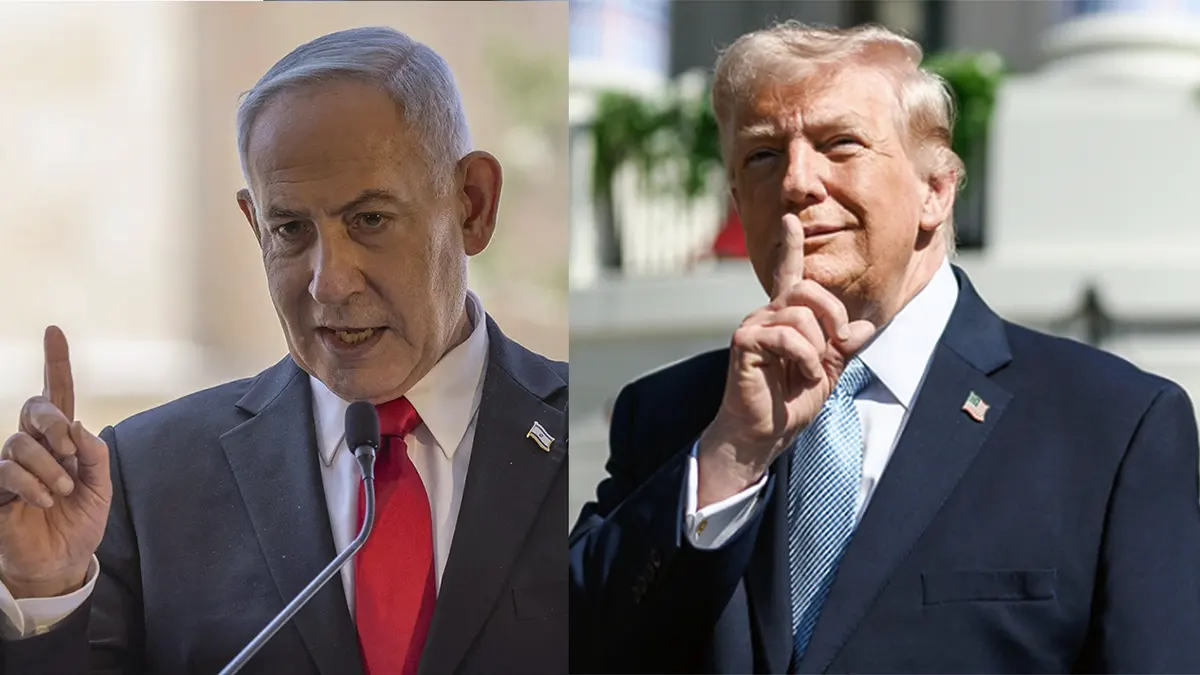
Israeli Prime Minister Benjamin Netanyahu has taken his objections straight to American television screens, urging the United States not to sell F-35 stealth fighter jets or advanced jet engines to Türkiye. His warning was blunt: doing so would “destroy the balance of power in the Middle East.”
The comments, made during back-to-back interviews with Fox News and CNN, land at an awkward moment for Washington. President Donald Trump, speaking at a NATO summit in Ankara, signaled he’s open to lifting existing sanctions and letting Türkiye back into the F-35 program, a move that would reverse a decision made during his own first term.
Why Netanyahu Is Sounding the Alarm
Netanyahu’s core argument centers on air superiority. He believes regional stability currently rests on Israel’s military edge and America’s posture in the region, and that arming Türkiye with fifth-generation fighter jets would tip that balance.
“I don’t think they should be given F-35s or the engines for their fighter jets, because that’ll upset the power balance in the Middle East,” he told Fox & Friends, adding that this balance is “ultimately guaranteed by Israeli air superiority.”
He didn’t stop at military logic. Netanyahu also questioned whether Türkiye deserves to be treated as a trusted U.S. ally at all, pointing to President Recep Tayyip Erdogan’s rhetoric and Ankara’s regional ambitions. He described Erdogan as someone who “calls openly for the annihilation of Israel,” referencing Turkish military presence in Cyprus and friction with Greece both NATO members.
Netanyahu went further on CNN, calling Türkiye “not exactly a model ally of the United States” and warning that boosting its military power would only invite more regional aggression, not less. He also tied Erdogan’s government to the Muslim Brotherhood, framing it as a destabilizing ideological force rather than a stabilizing one.
Adding fuel to the fire, Netanyahu cited recent comments from Turkish Foreign Minister Hakan Fidan, who called Israel a “burden that humanity can no longer bear”, a line Netanyahu used as evidence that hostility toward Israel runs through the highest levels of the Turkish government.
Trump’s Very Different Read on Türkiye
While Netanyahu was warning against the sale, Trump was busy praising Ankara. He’s described Türkiye as an “extraordinary” and “loyal” ally, and appears eager to move past the tension that led to Türkiye’s removal from the F-35 program back in 2019, a fallout triggered by Ankara’s purchase of Russia’s S-400 missile defense system.
That history, though, isn’t just a diplomatic footnote. It’s a legal roadblock. Vice President JD Vance and several legal experts have pointed out that U.S. law currently bars the sale as long as Türkiye holds onto the S-400 system. Even if Trump wants to move forward, Congress may not make it easy.
Türkiye Fires Back: “Disinformation Campaign”
Ankara didn’t take Netanyahu’s comments quietly. The Turkish Foreign Ministry released a sharply worded statement just ahead of the NATO summit, accusing Israeli officials of running a coordinated disinformation campaign timed to distract from criticism of Israel’s own conduct.
The ministry’s statement didn’t hold back, accusing “Netanyahu and his partners in crime” of distorting criticism and pushing propaganda. It went further, directly linking his objections to Israel’s military campaign in Gaza, describing it as an attempt to divert attention from what it called “the Netanyahu government’s genocide in Gaza” and its broader “policies of occupation and annexation.”
Turkish officials pushed back on the idea that their country destabilizes the region, instead positioning Ankara as a force for peace calling on Israel to “pursue a constructive and peaceful policy” and stating that Türkiye “wants to see peace, stability and prosperity come to the whole region.”
Erdogan himself weighed in at the close of the summit, dismissing objections from both Israel and Greece (which also opposes the sale) in blunt terms saying their opposition “has no place in my world.” He added that he remains confident Trump maintains a “positive approach” toward eventually delivering the aircraft.
Netanyahu Downplays Any Rift With Washington
Despite the public disagreement, Netanyahu has been careful not to frame this as a break with Trump. When pressed on the tension, he insisted the U.S.-Israel relationship remains solid, particularly when it comes to countering Iran.
“He’s the President of the United States. He does what is good for the United States. I’m the Prime Minister of Israel, I do what is important for Israel, and most of the time these things are identical,” Netanyahu said on CNN, a line clearly meant to signal that disagreement on one issue doesn’t mean a broader falling-out.
What Happens Next
For now, the F-35 sale remains stuck between political will and legal reality. Trump has shown he wants to reward Türkiye’s NATO cooperation and reset relations with Erdogan, but Congress’s restrictions tied to the S-400 system aren’t going away on their own. Meanwhile, Netanyahu’s public campaign against the sale paired with Ankara’s equally public rejection of his claims suggests this disagreement is likely to keep playing out in interviews and statements rather than quiet diplomacy.