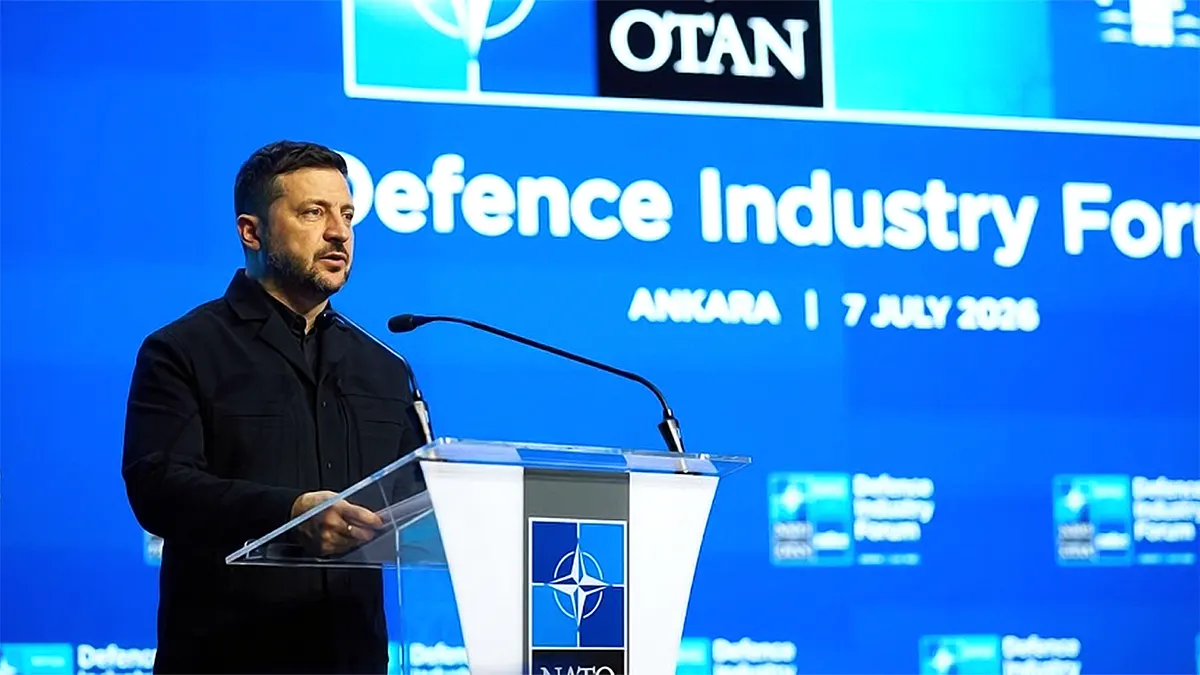
Leaders from across the alliance are gathered in Ankara this week for the 2026 NATO Summit, running July 7–8 at the Beştepe Presidential Complex. It’s the 36th summit in NATO’s history and the first Türkiye has hosted since Istanbul back in 2004. But the location is almost beside the point. What’s actually happening in that room is a test: can Europe turn its promises into hardware fast enough to keep Washington satisfied?
From Pledges to Production
Last year in The Hague, allies agreed to a big number, 5% of GDP on defense by 2035, split between 3.5% for core military spending and 1.5% for broader security and infrastructure. That was the easy part. Now comes the hard part.
NATO Secretary General Mark Rutte has framed Ankara as the “delivery summit.” Translation: no more slideshows about future budgets. Countries are being asked to show which factories are running, which contracts are signed, and which weapons are actually being built.
The Trump Pressure Is Reshaping the Agenda
Nothing is concentrating minds in Ankara quite like renewed pressure from President Donald Trump, who called Germany’s defense budget “ridiculous” just before the summit opened. That comment lands differently this year, because it’s paired with something more concrete than rhetoric, a real, expected drawdown of U.S. forces in Europe as Washington shifts attention toward the Indo-Pacific.
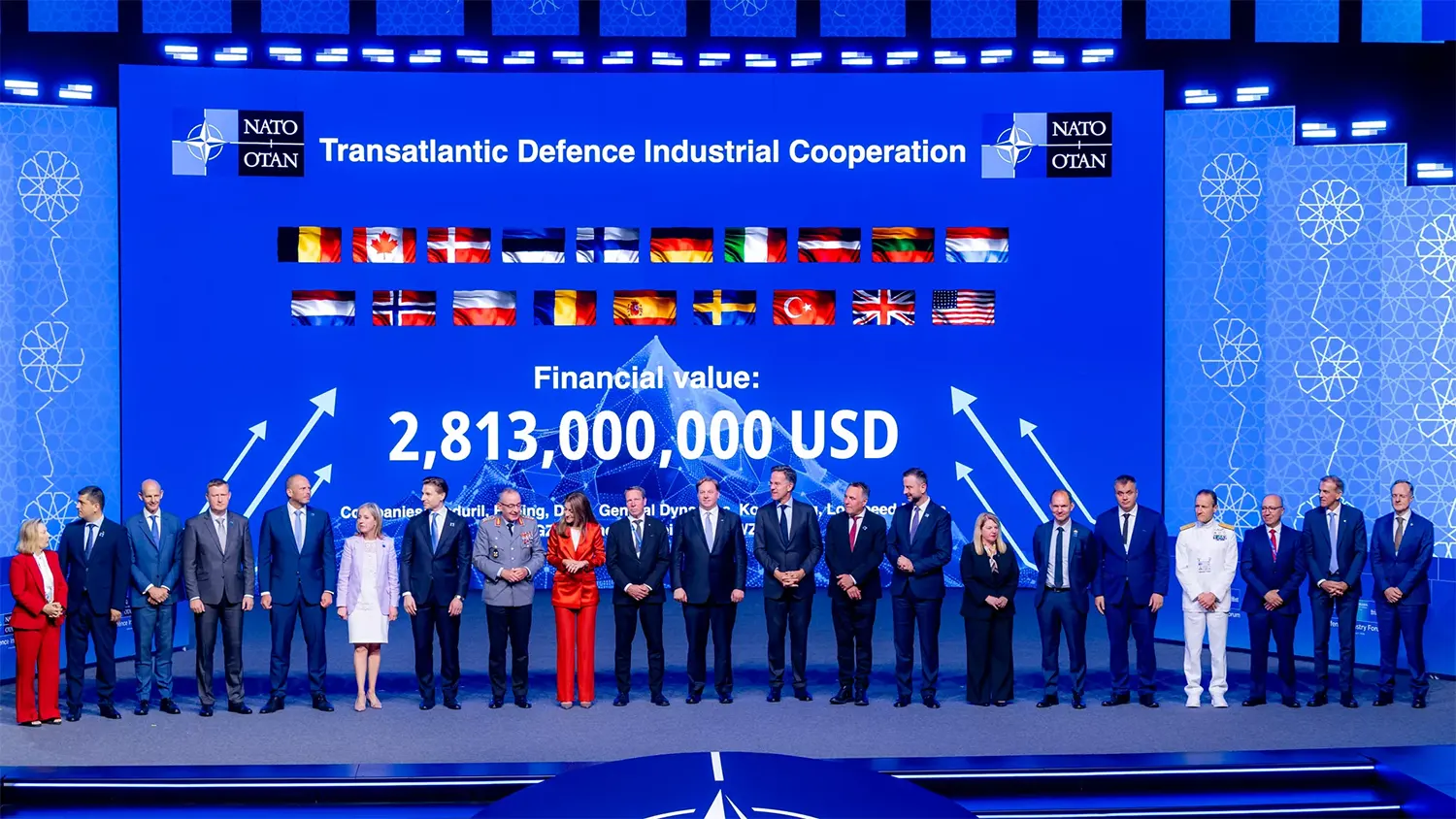
European allies know that if American troops start leaving, they can’t afford to look unprepared. So instead of just talking, they’re spending publicly and fast, through the NATO Summit Defence Industry Forum running alongside the main event.
What Europe is putting on the table:
- A combined $139 billion increase in core defense spending from European allies and Canada over the past year alone
- A €70 billion Ukraine support package for 2026–2027, with the U.S. financial contribution set at zero
- Fast-moving co-production deals in air and missile defense, space surveillance, and munitions manufacturing
German Chancellor Friedrich Merz called his country’s new budget “the greatest effort we have ever made”, a line that captures the mood well. European leaders feel they’re moving mountains, but they also know the only way to keep the U.S. fully committed is to prove they can hold their own.
New Deals on Drones, Space, and Raw Materials
Day one of the summit brought several headline-grabbing announcements meant to back up the spending talk with actual capability:
- A $40 billion investment in counter-drone technology and training
- Pooled funding for critical raw materials used in defense manufacturing
- New partnerships aimed at expanding high-end space capabilities
These aren’t abstract policy papers, they’re the kind of industrial commitments Rutte has been pushing allies to make visible.
Russia Still Looms Over Every Conversation
Even with burden-sharing dominating headlines, Russia’s war on Ukraine remains the summit’s underlying concern. With the Trump administration skeptical of continuing U.S. funding for Ukraine, European nations are moving to “Europeanize” support for the country almost entirely.
The €70 billion package is central to that shift funded through European bilateral pledges and a €60 billion EU loan facility, with no American money attached. NATO is also expanding its Force Model, filling gaps left by departing U.S. brigades with national units from other member states to keep deterrence against Russia intact.
Beyond conventional defense, the draft summit declaration includes updated protocols for hybrid warfare sabotage, cyberattacks, and GPS jamming reflecting growing concern about threats that don’t involve tanks or troops at all.
The Middle East Adds a Layer of Tension
Following the U.S. strikes on Iran earlier this year, the Middle East has become one of the more delicate topics at this summit, exposing real disagreement between Washington and several European members.
Because Ankara sits at the crossroads between Europe and the Gulf, NATO used the setting to invite foreign ministers from Qatar, the UAE, Bahrain, and Kuwait for high-level security talks. The draft Ankara Declaration also includes language demanding that Iran respect freedom of navigation through the Strait of Hormuz, a direct nod to concerns about global shipping routes.
Adding to the intrigue, Syrian President Ahmed al-Sharaa is in Ankara too. He’s not part of the official NATO proceedings, but he’s holding closely watched bilateral talks with Trump on the sidelines about regional stability.
Beyond the 32: A Wider Guest List
This summit isn’t just for NATO’s 32 members. Ukraine’s Volodymyr Zelenskyy and South Korea’s Lee Jae-myung are both attending, alongside representatives from Gulf nations navigating the fallout of recent U.S.-Iran tensions.
Ankara on Lockdown
Outside the summit halls, the mood in the city itself is tense. Local authorities imposed a total ban on public demonstrations ahead of the event, turning central Ankara into a tightly controlled “protocol zone.” Human rights groups have pushed back, pointing to detentions of activists in the days leading up to the summit as evidence of how far the security crackdown has gone.
The bigger picture: Ankara 2026 isn’t a summit about new promises, it’s about whether old ones can survive contact with reality. Between Trump’s pressure, Russia’s ongoing war, and a fractured Middle East, NATO allies are being asked to prove, in real time, that unity can hold even when the money, the troops, and the politics get complicated.