Over a single weekend, Ukraine launched one of its most geographically ambitious drone campaigns of the entire war. The targets weren’t front-line trenches. They were fuel depots, naval arsenals, rail lines, and port infrastructure spread across occupied Ukrainian territory, southern Russia, and all the way up to St. Petersburg, nearly 1,000 kilometers from the Ukrainian border.
The fires that followed were visible from space.
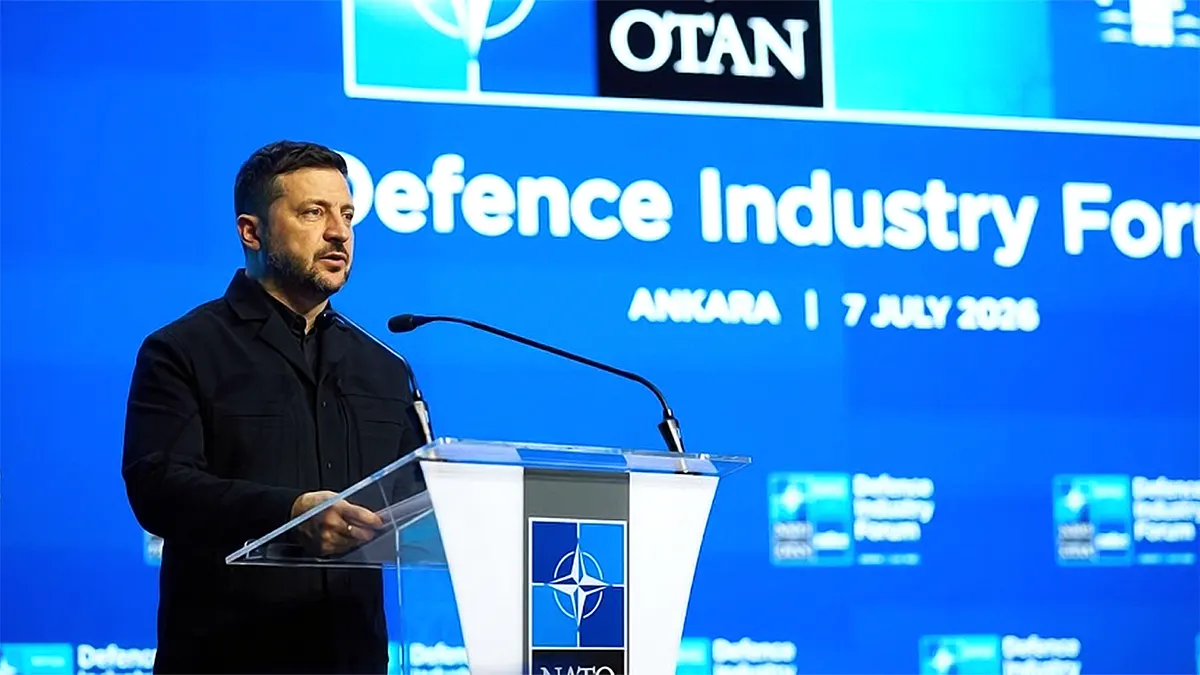
Zelenskyy Sent a Message the Night Putin Was Hosting a Global Economic Forum
The timing was deliberate. The massive drone campaign unfolded on the final day of Russia’s flagship St. Petersburg International Economic Forum the annual event where the Kremlin projects economic confidence to foreign investors and dignitaries.
President Zelenskyy confirmed the operations publicly, framing them as a direct response to Putin’s continued refusal to engage in face-to-face peace talks and Russia’s ongoing strikes on Ukrainian cities and civilian power grids. Ukraine calls these long-range strikes its “long-range sanctions” — a way of making Russia feel the cost of the war on its own soil, in its own economy, through its own infrastructure.
That night, the world watched black smoke rise over multiple Russian cities at once.
Four Fronts Hit Simultaneously
The campaign wasn’t a single strike. It was a coordinated, multi-directional assault designed to stretch Russian air defenses across the widest possible theater.
In occupied Donetsk, drones struck the Zuhres Thermal Power Plant also known as Zuyivska setting off a massive structural fire visible for miles. The plant is a key piece of power infrastructure in the Russian-occupied east.
On the rail lines, explosions rocked the Chystiakove area of Donetsk and parts of Luhansk. The strikes didn’t just damage tracks, they destroyed three locomotives and two rail couplings loaded with military fuel, cutting supply routes that Russia depends on to keep its front-line units armed and fueled.
In occupied Crimea, an oil depot in the settlement of Yedy-Kuyu in the Kerch district was set ablaze, adding to a growing list of fuel storage facilities Ukraine has systematically targeted across the peninsula over the past year.
A Drone Flew 1,000 Kilometers to Reach St. Petersburg
The most striking part of the campaign literally and figuratively was the strike on Kronstadt and St. Petersburg.
Drones flew upward of 1,000 kilometers from Ukrainian territory to reach Russia’s second-largest city. They struck the historic naval port of Kronstadt, damaging arsenals that support Russia’s Baltic Fleet. Thick plumes of black smoke disrupted operations at St. Petersburg’s main commercial airport, and authorities briefly locked down all entry and exit to Kotlin Island, where the Kronstadt naval base sits.
Governor Alexander Beglov confirmed three minor injuries in the city, all treated and discharged the same night.
The fact that Ukrainian drones could reach St. Petersburg at all is a statement. Russia’s air defense network, stretched across a country covering 11 time zones, clearly has gaps and Ukraine just flew straight through one.
The Krasnodar Depot: The Biggest Fire of the Night
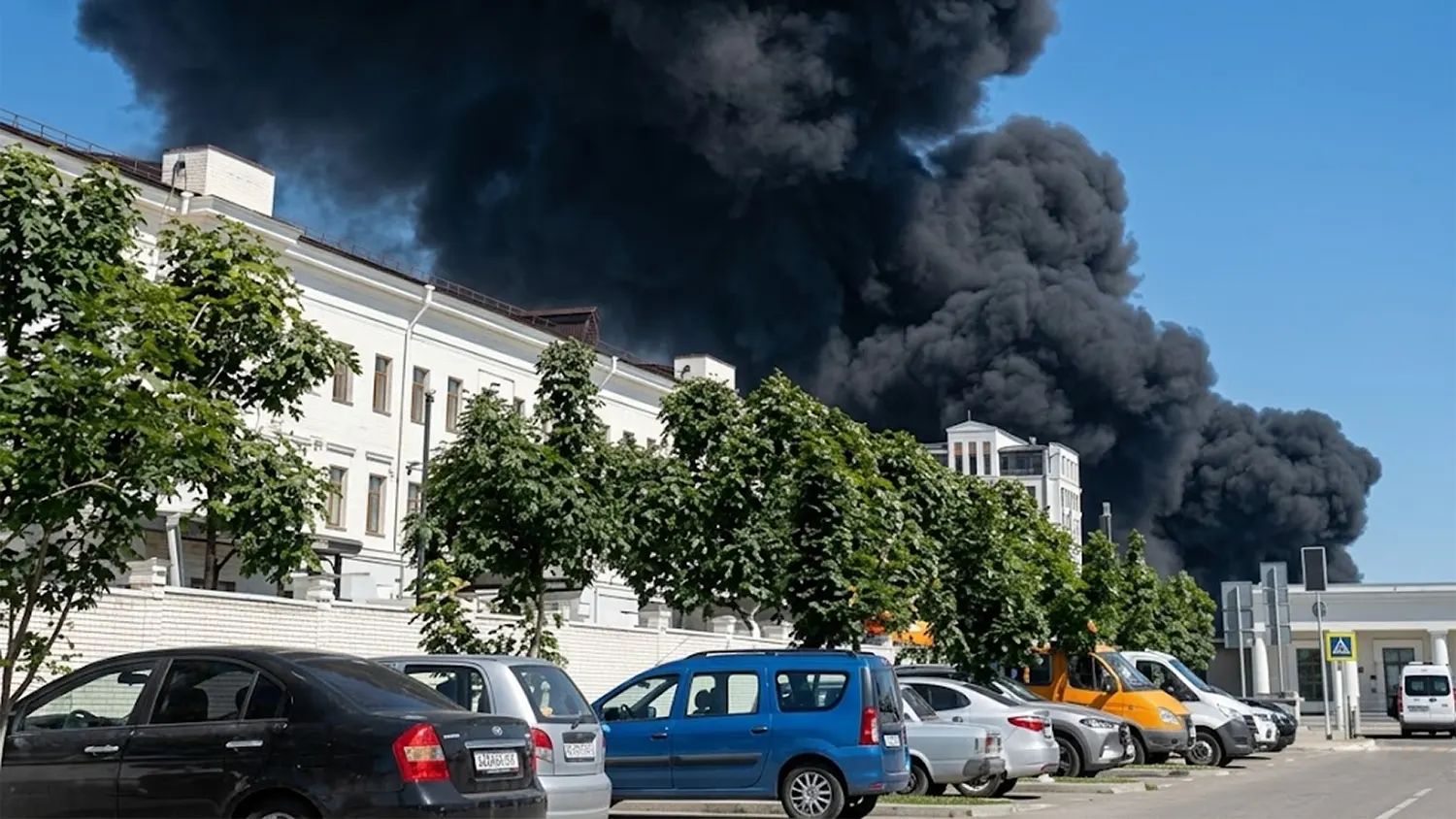
Down in southern Russia, a drone swarm hit the Ust-Labinsk oil depot in Krasnodar Krai, roughly 500 kilometers from the Ukrainian border.
Three petroleum storage tanks caught fire. The blaze covered approximately 54,000 square feet nearly the size of a full city block and sent towers of thick black smoke into the surrounding air.
The emergency response was enormous: 167 personnel and 54 specialized pieces of equipment were deployed to fight the inferno. The heat and toxic smoke were severe enough that 60 nearby residents had to be evacuated from their homes.
For those who stayed, Russia’s health monitoring agency issued emergency alerts instructing residents to seal their windows, stay indoors, wear masks if going outside, and continuously wipe surfaces to clear toxic soot from their homes.
Despite the scale of the fire, regional authorities confirmed no casualties at the depot itself, a reflection of how precisely the drones targeted industrial infrastructure rather than populated areas.
Zelenskyy specifically highlighted this strike, pointing out that the drones had traveled approximately 310 miles through Russian airspace to hit a facility deep in the southern fuel network.
376 Drones in One Night Going Both Directions
The scale of what happened in the air that night is staggering.
Russia’s Ministry of Defense claimed to have intercepted 376 Ukrainian drones across the entire theater. That number, if accurate, makes it one of the densest single-night drone campaigns Ukraine has ever launched.
But it wasn’t one-sided. Russia simultaneously sent 272 of its own strike and decoy drones into Ukrainian airspace. Ukraine’s Air Force reported shooting down 249 of them.
In other words, while Ukrainian drones were setting fuel depots ablaze from Crimea to St. Petersburg, Russian drones were simultaneously hitting Ukrainian targets, a reminder that this is still a two-way war being fought largely in the air, on both sides of the border, every single night.
The Human Cost Was Surprisingly Low With One Tragic Exception
Given the sheer number of drones involved and the size of the fires they caused, the confirmed casualty count was remarkably contained.
- Ust-Labinsk (Krasnodar): No casualties despite the massive fire and evacuations
- St. Petersburg / Kronstadt: Three minor injuries, all discharged from hospital the same night
- Zuhres power plant and the Donetsk rail lines: No immediate casualties reported at the targeted sites
- Tver Region: One man was killed when debris from an intercepted drone fell on him, a tragic reminder that even intercepted drones can be lethal
The one death connected to this campaign came not from a successful strike, but from the wreckage of a drone Russia shot down.
The Day Before: A Shadow Tanker in the Azov Sea
This wave of strikes didn’t happen in isolation. Just 24 hours earlier, a separate Ukrainian maritime drone strike in Taganrog Bay on the Sea of Azov hit a Russian shadow-fleet oil tanker and nearby cargo vessels.
That strike killed 5 crew members and injured 6 others, all Azerbaijani nationals working on the vessel, caught in the middle of a conflict they weren’t party to. The incident added a grim international dimension to the escalation, as the dead were civilian maritime workers from a third country.
Why Fuel and Rail Lines Keep Getting Hit
Ukraine’s targeting logic has been consistent throughout this phase of the war: hit what Russia needs to fight, not just where Russia is fighting.
Fuel depots feed the tanks, artillery systems, and vehicles that make up Russia’s ground offensive. Rail lines move ammunition, equipment, and supplies from Russian territory to the front. Naval arsenals keep the fleet armed and mobile.
By systematically degrading these supply chains rather than engaging Russian forces directly in costly ground battles, Ukraine is trying to starve the Russian military of what it needs to sustain its offensive tempo.
The strikes this weekend hit all three categories at once, across multiple regions, in a single night.
Whether that disruption lasts days or weeks, and whether Russia can replace what was destroyed faster than Ukraine can destroy it again, is the central question this campaign leaves open.