When Canada and Ukraine quietly signed a joint defense manufacturing deal, few expected it to trigger one of the most unusual diplomatic standoffs in recent memory. Now, Moscow is threatening to publish the physical address of a factory in Hamilton, Ontario and Western security analysts are calling it a new kind of geopolitical weapon.
The target is a corporate partnership between Sentinel R&D, a Canadian defense firm based in Hamilton, and Airlogix, a Ukrainian defense tech company. Operating together under the name Airlogix-Sentinel, the venture plans to build thousands of military reconnaissance drones per year on Canadian soil entirely out of reach from Russian missiles.
Russia doesn’t like that. Not one bit.
What the Hamilton Deal Actually Involves
The joint venture isn’t producing just any drone. The platform at the center of this dispute is the GOR, a fixed-wing, modular unmanned aerial vehicle originally developed by Airlogix based on years of hard front-line experience in Ukraine.
Under the partnership, Sentinel R&D handles the manufacturing of airframes and modular systems in Ontario, while Airlogix feeds in real-time design updates from engineers who are actively watching how Russian electronic defenses respond on the battlefield. The result is a production pipeline that combines combat-tested Ukrainian engineering with insulated Canadian manufacturing.
The numbers matter here. The GOR flies at up to 180 km/h, carries an operational range of 500 kilometers, runs on an electric motor giving it a low thermal and acoustic signature and is built around a modular “plug-and-play” frame. Mechanics can swap its payload in minutes: standard optical and thermal cameras one mission, an electronic warfare package the next.
Crucially, the drone is engineered specifically to survive Russia’s electronic battlefield. Russia routinely jams GPS signals across front-line areas, but the GOR relies on advanced internal navigation that keeps it on course even when fully cut off from satellite communication. With a 500-kilometer range, it can fly deep behind Russian lines and feed targeting coordinates for command centers, ammunition depots, air defense systems back to Ukrainian artillery and missile teams in real time.
Production is scheduled to begin before the end of this year.
Why Moscow Is Threatening to Publish a Factory’s Address
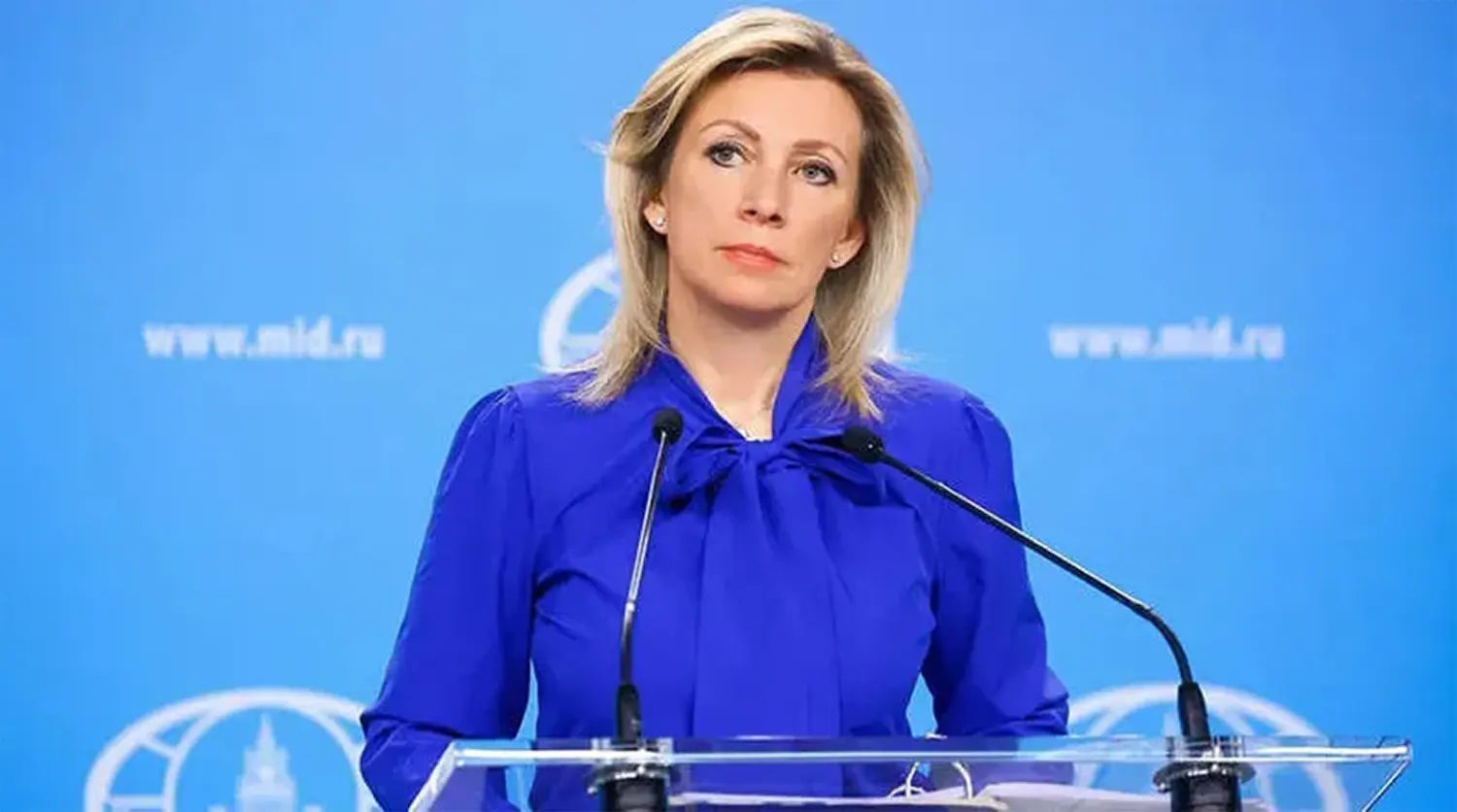
Russian Foreign Ministry spokeswoman Maria Zakharova didn’t mince words at her press briefing. She accused Canada of allowing Ukraine to “hide” its military supply chains in a safe third country, and framed the deal as a fundamental shift in Canada’s involvement in the war.
She then announced that Moscow would consider publicly exposing the exact physical coordinates of the Canadian facilities involved and declared that “the world should know the address of that drone facility.”
This is what security analysts are now calling state-level doxxing and it’s being treated seriously precisely because it doesn’t require a missile. Russia is almost certainly not going to strike a factory in Ontario; doing so would immediately trigger NATO’s Article 5 mutual defense clause and pull the entire alliance directly into the conflict. Moscow knows that.
But publishing an address opens the door to a different set of threats entirely: cyberattacks and DDoS floods targeting the company’s networks, intellectual property theft of the GOR’s drone blueprints, and on the ground harassment inciting pro-Russian actors, extremist groups, or conspiracy communities to target workers, stage disruptive protests, or attempt sabotage at the facility.
In response, Canadian intelligence and cybersecurity agencies are reportedly tightening both digital and physical security protocols around the venture ahead of production launch.
Canada’s Answer: “We Will Not Be Intimidated”
Ottawa hasn’t flinched. Defense Minister David McGuinty publicly dismissed the rhetoric, stating flatly that Canada will not be intimidated and the government has shown no indication of reconsidering the deal.
From Canada’s perspective, the arrangement is straightforwardly beneficial on two fronts. It helps Ukraine protect its defense supply chain from the constant threat of Russian airstrikes hitting domestic factories in cities like Kharkiv or Kyiv. And it simultaneously builds up Canada’s own defense manufacturing capacity in autonomous systems, a technology sector Ottawa has been actively trying to expand, injecting capital and high-skilled jobs into the domestic aerospace industry.
Why This Deal Changes the Shape of Allied Support
For most of the war, Western allied support meant shipping existing stockpiles or purchasing ready-made equipment. The Airlogix-Sentinel venture is something structurally different, it’s the construction of a long-term, integrated war production pipeline designed to outlast the current phase of the conflict.
Setting up assembly lines in Ontario means they can’t be taken offline by a single missile strike. Design improvements developed from front-line feedback in Ukraine can be fed directly into the Canadian facility in real time. And the further the production base sits from the battlefield, the harder it becomes for Russia to disrupt Ukraine’s drone supply through conventional military means.
That’s precisely what has Moscow so frustrated. It isn’t just that Canada is helping, it’s that Canada is helping in a way that Russia cannot reach.