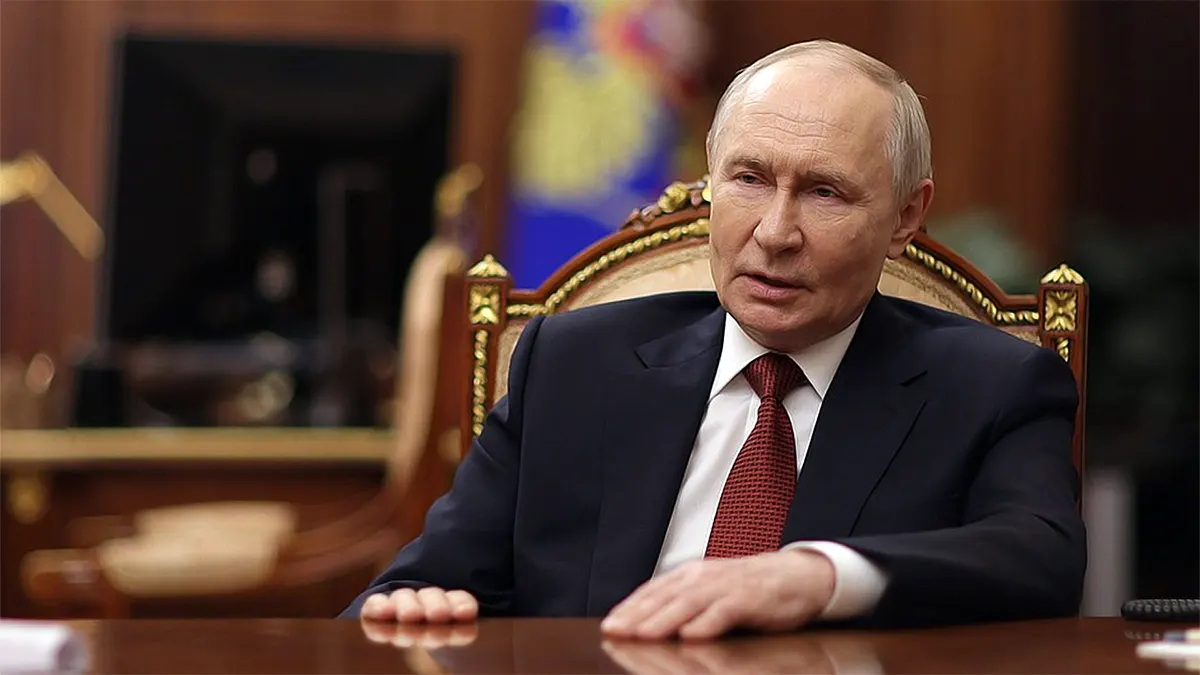
Russia’s oil refineries are burning. Gas lines are stretching. And Vladimir Putin’s response? It’s all psychological.
That framing delivered during a recent address to Russian officials reveals just how much pressure Ukraine’s deep-strike drone campaign is putting on Moscow, even as the Kremlin insists the damage is “not critical.”
Putin’s Spin: Bombs as Propaganda Tools
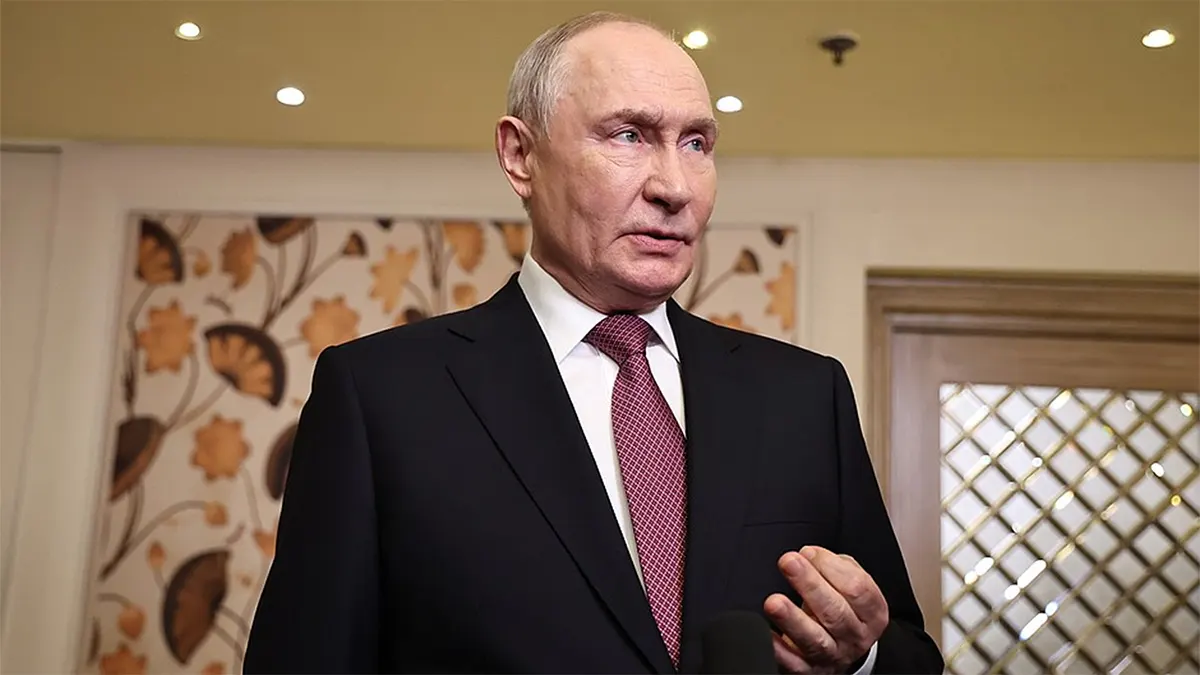
In his statement, Putin acknowledged the ongoing Ukrainian strikes on Russian fuel and energy infrastructure but was quick to recast their purpose. According to him, the real goal isn’t physical destruction, it’s manufacturing doubt inside Russian society.
His exact words:
“The strikes on our civilian infrastructure are intended not only to inflict damage on us… but also to fuel an information campaign… At a minimum, its purpose is to undermine our confidence in ourselves and our capabilities and, ideally, to create divisions within Russian society.”
It’s a carefully constructed argument. By framing the attacks as primarily psychological warfare, Putin deflects attention from the very real economic and logistical damage those strikes are causing on the ground.
Why Ukraine Is Actually Doing This
Ukraine’s military planners aren’t shy about their logic. They call it a campaign of “long-range sanctions” using cheap, domestically produced drones to do what Western political restrictions have prevented foreign weapons from doing: hit Russia where it hurts, deep inside its own territory.
The strategy targets three pressure points simultaneously:
Cutting off fuel to the frontline. Russian tanks, trucks, and jets run on refined petroleum. By striking refineries near distribution hubs including facilities in Yaroslavl, Krasnodar, and the Moscow Oil Refinery, Ukraine is attacking the supply chain that keeps Russian forces moving.
Draining the war chest. Russia funds its military largely through petroleum exports. Knock out enough refining capacity, and export volumes drop. Less export revenue means less money for ammunition, salaries, and equipment.
Thinning out air defenses. Russia’s geographic size used to be its shield. Now it’s a liability. Protecting hundreds of energy facilities scattered across a vast country forces Russia to redeploy advanced systems like the S-400 away from the Ukrainian frontlines creating windows of vulnerability that Ukrainian forces can exploit.
The Damage Putin Calls “Not Critical”
Here’s what’s actually happening on the ground:
Fuel rationing across Russian regions. The sustained drone campaign has knocked out a meaningful share of Russia’s domestic refining capacity. The result: long queues at gas stations, localized shortages, and emergency rationing measures in multiple regions.
A crisis in Crimea. Supply route disruptions have hit occupied Crimea especially hard. Authorities there were forced to suspend civilian gasoline sales entirely and declare states of emergency to manage the fallout.
Drone swarms over Moscow. The scale of Ukrainian strikes has escalated sharply. Waves of hundreds of UAVs have forced major Moscow airports to temporarily halt flights while air defenses scramble to respond.
None of that sounds like a purely informational operation.
The Anchorage Deal That May Already Be Dead
Separate from the drone war, Putin’s statement touched on another front where Russia feels it’s losing ground: the diplomatic one.
In comments that appear to respond to questions about U.S.-Russia negotiations, Putin offered pointed praise for President Trump calling him a “mature and experienced politician” who “knows what he is doing.” The diplomatic translation: Putin was pushing back against speculation that Trump had been pressured by European allies or Ukraine supporters into walking back commitments made in Alaska.
According to Putin, the Anchorage talks produced a clear framework. Russia, he claims, was asked by American negotiators to accept specific compromises chiefly, freezing frontlines in Kherson and Zaporizhzhia while Moscow consolidated control of the Donbas and agreed to those terms.
“We were asked to make compromises. We considered them. We made compromises… We came to Anchorage and said we agreed.”
The problem? Washington tells a very different story.
Washington, Kyiv, and the “Spirit” That Dissolved
U.S. Secretary of State Marco Rubio and other American officials have flatly rejected Putin’s characterization, stating that no formal agreements or binding commitments were made in Alaska only preliminary discussions.
Ukrainian Foreign Minister Andrii Sybiha was even blunter, declaring the so-called “Spirit of Anchorage” dead on arrival. His argument: any framework negotiated behind closed doors, without Ukraine at the table, is “doomed to become a spirit and disappear.” Western intelligence reports suggest Trump himself has grown frustrated with Putin’s inflexibility and may be stepping back from the Anchorage framework altogether.
Adding to Russia’s frustration: Washington has largely moved on. Since early 2026, the Trump administration has pivoted its foreign policy attention toward Iran, pushing the Ukraine backchannel negotiations to the margins. Putin himself acknowledged this, noting Russia is waiting for U.S. representatives to visit Moscow once “the active phase on the Iran tracker” concludes.
Two Wars, One Kremlin
What emerges from both threads, the drone strikes and the stalled diplomacy is a Kremlin under sustained pressure on multiple fronts, and choosing narrative control as its primary tool of defense.
On the battlefield, Putin reframes physical damage as psychological theater. In diplomacy, he reframes a stalled deal as American bad faith. Both moves serve the same purpose: maintaining the appearance of Russian strategic strength at a moment when the evidence on the ground is increasingly pointing the other way.
Ukraine, for its part, isn’t waiting for the talks to restart. The drones keep flying.