Israel’s strikes on Hezbollah strongholds are threatening to blow up the most consequential peace deal in years. Here’s how close things are to the edge.
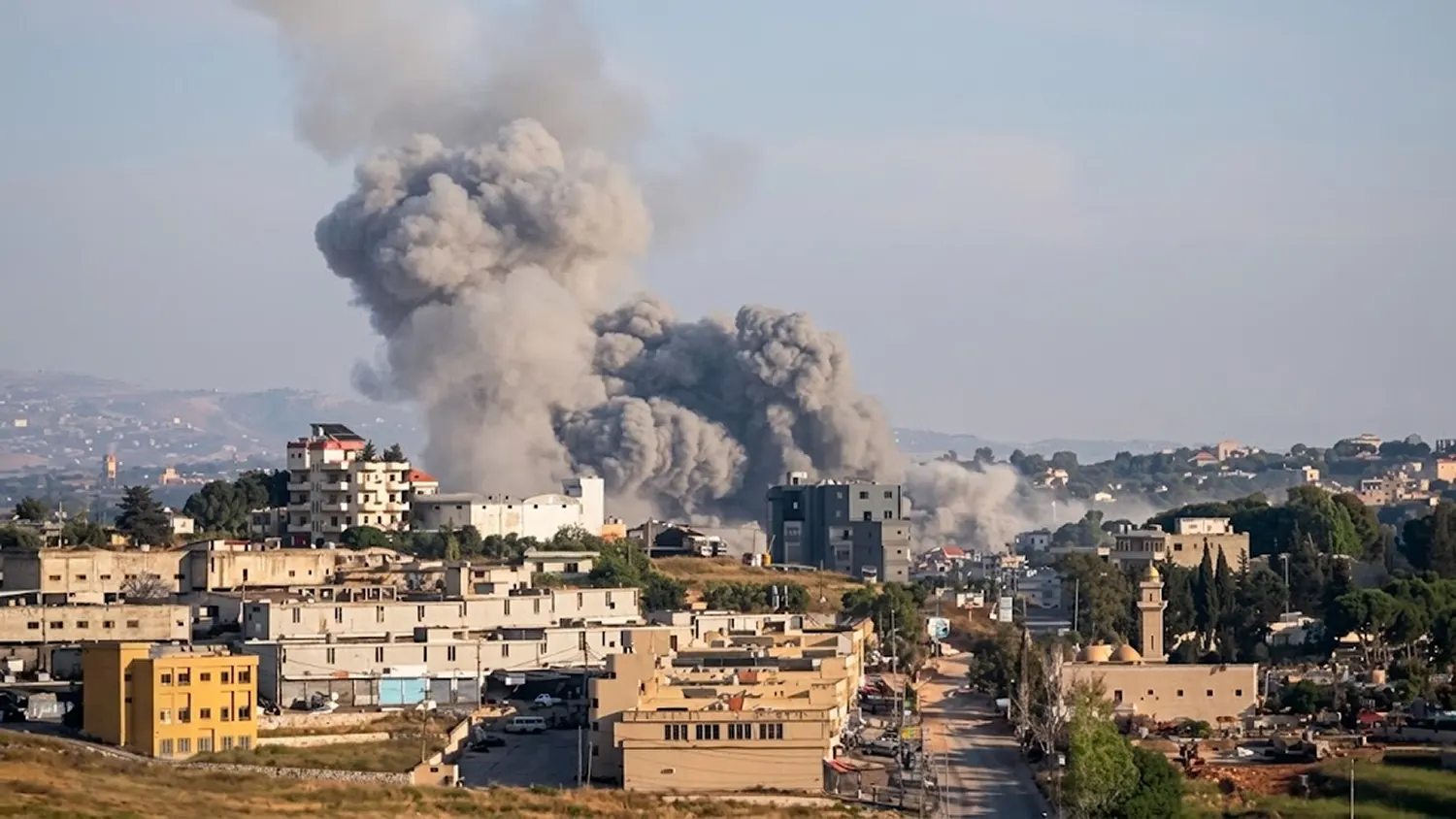
On Sunday, Israeli warplanes struck Dahiyeh, a densely packed southern suburb of Beirut and one of Hezbollah’s most entrenched strongholds. The target was an apartment building on a busy residential and commercial street in the Ghobeiry district. Within hours, Lebanon’s National News Agency confirmed at least 3 people were killed and 15 others wounded. A five-story building was reduced to dust and rubble. Rescue workers dug through the wreckage of the heavily damaged structure and neighboring shops, searching for survivors.
The Israel Defense Forces said the apartment served as a Hezbollah command center. It framed the strike as a direct response to Hezbollah launching projectiles and explosive drones into northern Israel earlier that day.
But the strike didn’t happen in a vacuum. It landed in the middle of one of the most delicate diplomatic moments in recent memory and it may have just made everything much more complicated.
Beirut Isn’t Just a Battlefield Right Now, It’s a Diplomatic Minefield
The fighting in Beirut has become a massive wildcard in an already fragile international peace process. Sunday’s strikes were not isolated incidents. Separate airstrikes across southern Lebanon hitting the Nabatieh and Saida districts pushed the total death toll across the country to at least 11 for the day alone, as localized clashes continued to fracture the region’s already shaky truce.
The timing could not be worse. The United States is in the final stages of brokering a landmark peace deal with Iran. At the center of that deal is the reopening of the Strait of Hormuz, a critical global shipping chokepoint that Iran controls access to. But Iran has made one thing abundantly clear: it will not sign anything while Israel continues its military operations in Lebanon.
Iran is Hezbollah’s primary backer. Every Israeli strike on a Hezbollah target in Beirut is, in Tehran’s eyes, a direct provocation and a ready-made excuse to walk away from the negotiating table.
The Phone Call That Stopped a War For Now
Behind the polished language of diplomatic statements, the relationship between Washington and Jerusalem has been under serious strain.
In early June, reports emerged of a phone call actually two calls in a single night between President Donald Trump and Prime Minister Benjamin Netanyahu. Trump had just learned that Israel was planning a massive, full-scale military raid on Beirut. He was furious.
According to U.S. and Israeli officials briefed on the exchange, Trump reportedly screamed, “What the f*** are you doing?” and told Netanyahu, “You’re f***ing crazy… Everybody hates Israel because of this.” He made it crystal clear: a heavy bombardment of the Lebanese capital would blow up months of delicate U.S.–Iran negotiations, and he wasn’t going to let that happen. He demanded that any military response stay strictly “surgical.”
Netanyahu backed down. Trump publicly celebrated the outcome on Truth Social, writing that Israel’s troops had been “turned back” from Beirut.
But the limited strikes we’re seeing now like the one that just leveled an apartment building in Dahiyeh, tell a more complicated story.
The Impossible Position Netanyahu Is In
Netanyahu isn’t operating in a political vacuum. He faces enormous domestic pressure from right-wing ministers within his own coalition who demand a forceful military response every single time Hezbollah fires a drone or rocket into northern Israel. To them, anything less is weakness.
At the same time, he knows that going even a fraction too far risks fracturing his critical relationship with Washington and potentially destroying the U.S.–Iran deal that Israel, paradoxically, also needs for regional stability.
So he’s threading a needle. Striking hard enough to satisfy hardliners at home. Staying “surgical” enough to keep Trump from losing it again. And hoping that the next Hezbollah drone doesn’t force him to make a choice he can’t walk back.
It is, to put it plainly, an almost impossible position.
How the World Is Reacting and Why Everyone Is Nervous
The international response has been one of deep anxiety and acute frustration. The broad consensus is that Israel is playing a high-stakes game of brinkmanship that could torpedo the most significant diplomatic breakthrough the region has seen in years.
Washington is publicly urging restraint while privately seething. U.S. officials are terrified that Netanyahu’s retaliatory strikes will hand Iranian hardliners exactly the justification they need to abandon the peace talks altogether. Trump has explicitly warned that Israel’s actions could “blow up” months of work.
Tehran, for its part, is playing it tactically. Iranian negotiators have stated openly that any final ceasefire agreement must include a complete end to Israeli military operations in Lebanon, no exceptions. When previous strikes hit Beirut, Iran responded by launching missiles directly at an Israeli airbase. The Islamic Revolutionary Guard Corps has warned it is prepared to launch continuous strikes to “deter” further Israeli actions, making clear that attacks on Hezbollah their proxy will not go unanswered.
Regional mediators like Qatar and Pakistan are scrambling. Qatari diplomats rushed to Tehran after the latest escalation, working frantically to keep Iran at the table despite the smoke still rising over Beirut. Their goal right now is pure damage control.
Lebanon’s government has condemned the strikes in the strongest terms, calling them a blatant violation of national sovereignty and a direct sabotage of the diplomatic channels Lebanese leadership has been trying to use to secure a lasting truce.
The picture that emerges is stark: the international community is pulling hard toward diplomacy, while Israel’s political leadership feels compelled to answer every Hezbollah rocket with overwhelming force. That disconnect, right now, is the single biggest threat to peace in the region.
The Clock Is Ticking
Every strike in Dahiyeh, every Hezbollah drone over northern Israel, every back-channel phone call between world leaders, they’re all pieces of the same fragile puzzle. The U.S.–Iran deal is real, and it’s close. But it requires a version of calm that the current cycle of retaliation is actively preventing.
Netanyahu has, for now, stopped short of the full-scale Beirut offensive that Trump killed over the phone. But “surgical” strikes are still strikes. Buildings still fall. People still die. And Iran is still watching and counting.
How long before the next escalation tips something that can’t be untipped? That’s the question nobody in Washington, Tehran, or Beirut wants to answer right now.