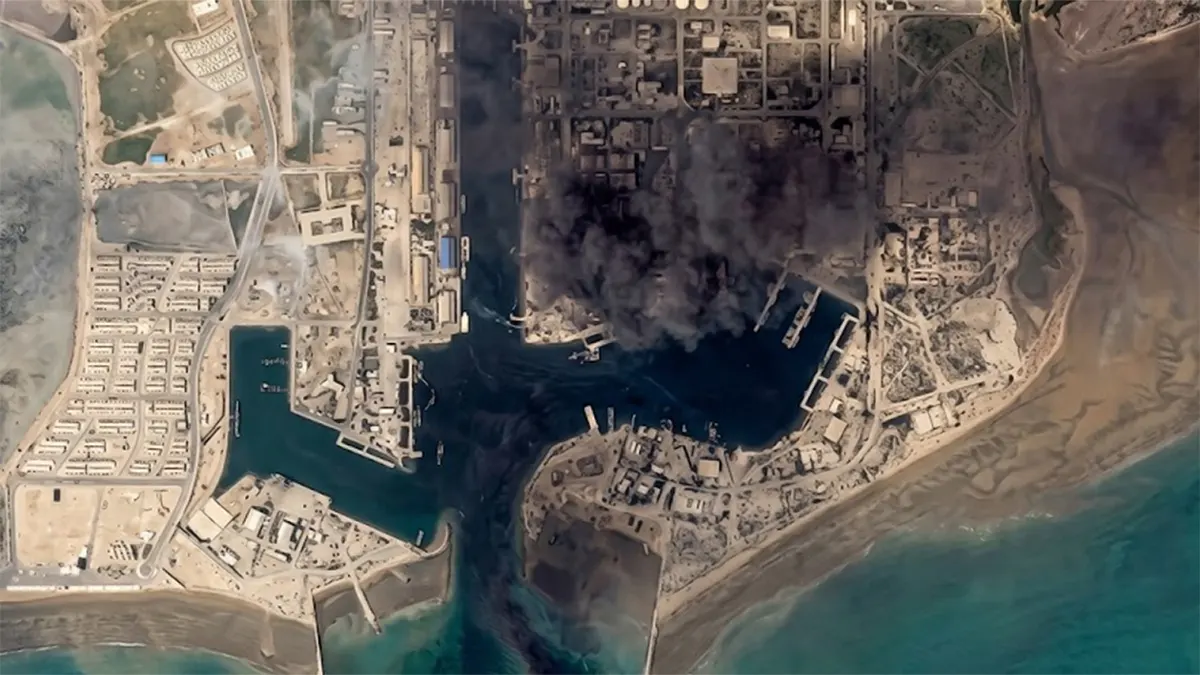
American fighter jets hit Iranian missile sites and naval boats near the Strait of Hormuz while Iranian diplomats were literally sitting in Doha trying to hammer out a peace deal. Here’s what’s actually going on.
Bombs and diplomacy, running at the same time
On the surface, it sounds contradictory. The U.S. military launched what it calls “self-defense strikes” against Iranian targets near the Strait of Hormuz specifically hitting missile launch sites and naval boats that were attempting to lay sea mines while, at that exact moment, Iranian negotiators were seated in Doha, Qatar, working toward a ceasefire extension deal.
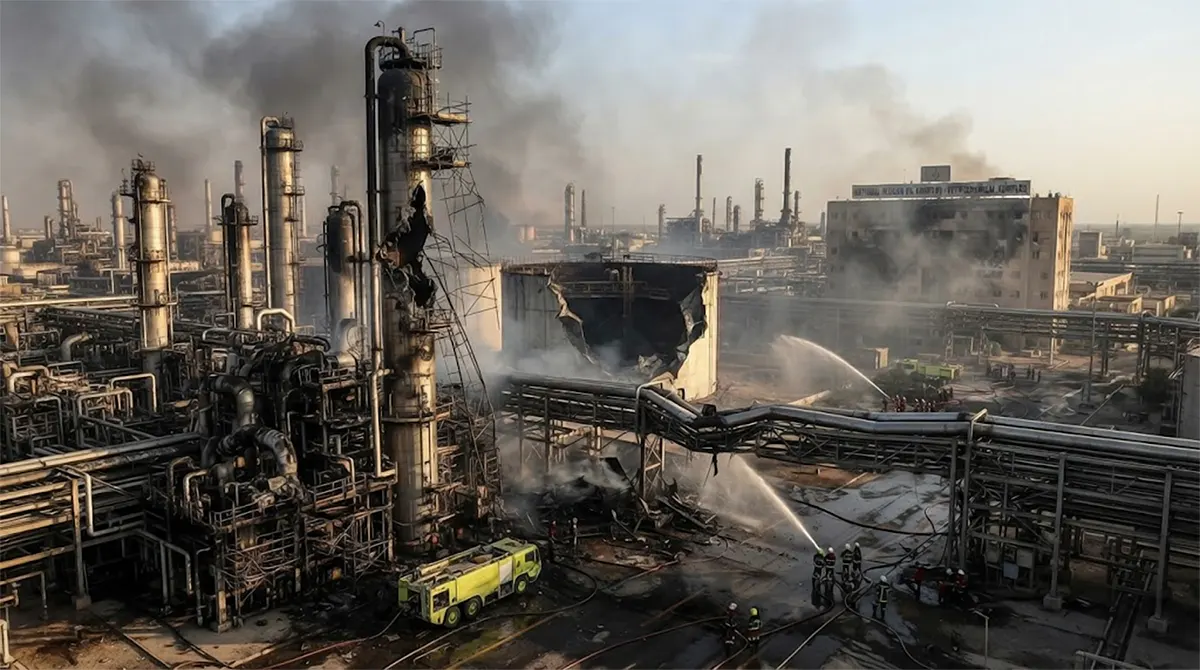
According to U.S. Central Command (CENTCOM), the strikes targeted Iranian forces near Bandar Abbas, a port city on Iran’s southern coast. Iranian media confirmed multiple explosions and reported minor casualties among Revolutionary Guard forces on nearby Larak Island.
What makes the timing particularly striking is that this wasn’t a breakdown of talks, it happened during them. And remarkably, neither side walked away.
A ceasefire that’s still technically holding just barely
A fragile ceasefire has been in place since April 8. CENTCOM was careful to frame its strikes as a localized defensive action not a violation of that truce. In its official statement, spokesman Timothy Hawkins said:
“Targets included missile launch sites and Iranian boats attempting to emplace mines. US Central Command continues to defend our forces while using restraint during the ongoing ceasefire.”
The word “restraint” is doing a lot of work in that sentence. It’s a deliberate signal to Tehran: the U.S. is not looking to restart full-scale war, but it won’t sit still while Iranian forces threaten American troops or attempt to disrupt shipping lanes even during active peace talks.
What was happening in Doha at the same time
As the strikes were unfolding, Iran’s Foreign Minister and Parliament Speaker had just arrived in Doha to sit down with Qatari mediators. The goal of those talks: agree on a 60-day ceasefire extension and negotiate the safe reopening of the Strait of Hormuz, a waterway through which roughly 20% of the world’s oil supply passes.
At almost the exact same moment CENTCOM was ordering the airstrikes, President Trump posted on social media that negotiations were “proceeding nicely” while simultaneously maintaining a hardline position: Iran must either hand over its stockpile of highly enriched uranium to the United States or have it destroyed under international supervision.
Secretary of State Marco Rubio, for his part, confirmed that a diplomatic deal is still very much being pursued but the contradictions in the U.S. position weren’t lost on the Iranian side. Iran’s foreign ministry publicly fired back that a final agreement is “not imminent,” citing frequent shifts and contradictions in Washington’s stance.
The “talk and strike” playbook and why it might actually be intentional
This isn’t diplomatic clumsiness. The U.S. appears to be deliberately running two tracks at once what analysts are calling a “talk and strike” strategy.
The big-picture negotiations in Doha cover long-term issues: lifting sanctions, releasing frozen Iranian assets, and the future of Iran’s nuclear program. But the U.S. is also sending a parallel message on the ground: a ceasefire doesn’t mean free rein. By hitting the boats attempting to mine the Strait of Hormuz, Washington is essentially telling Tehran, we’ll negotiate your sanctions and assets at the table, but we will physically stop any attempt to disrupt shipping lanes right now.
It’s a pressure strategy. The strikes are meant to apply extreme leverage and set rigid boundaries, forcing the Iranian delegation to calculate the cost of stalling or walking away from talks.
President Trump reinforced this by pairing his “proceeding nicely” social media post with a pointed warning: fresh, heavier attacks would follow if a deal isn’t reached.
Where the two sides are deadlocked
Despite the drama, both sides are still technically at the table. But the core sticking points are significant and unresolved:
| Issue | U.S. Position | Iran’s Position |
|---|---|---|
| Nuclear uranium | Iran must hand over or destroy its highly enriched uranium stockpile | Hard refusal — will not transfer uranium out of the country or accept zero-enrichment limits |
| Strait of Hormuz | International waterway must reopen immediately with free navigation | Claims it as territorial waters, with Iran and Oman managing access, proposes “navigational fees” |
| Regional scope | Focused on shipping lanes and dismantling nuclear progress | Insists a complete ceasefire in Lebanon stopping Israeli operations against Hezbollah must be part of any deal |
A pressure cooker with the lid still on for now
The Doha summit hasn’t collapsed. That’s the headline that surprises. Iran’s negotiators stayed in Qatar after the explosions hit their coastline, and the U.S. continued to frame the strikes as a narrow, defensive measure rather than a broader escalation.
But this is high-wire diplomacy military deterrence and active negotiations playing out simultaneously, in real time, with immediate consequences on both sides of the table. The U.S. is betting that sustained pressure will push Iran toward a deal faster than a clean diplomatic process would. Iran is betting that its leverage control of the Strait, its nuclear program, its regional alliances is enough to outlast American hardball.
Both sides are watching to see who blinks first. So far, nobody has.