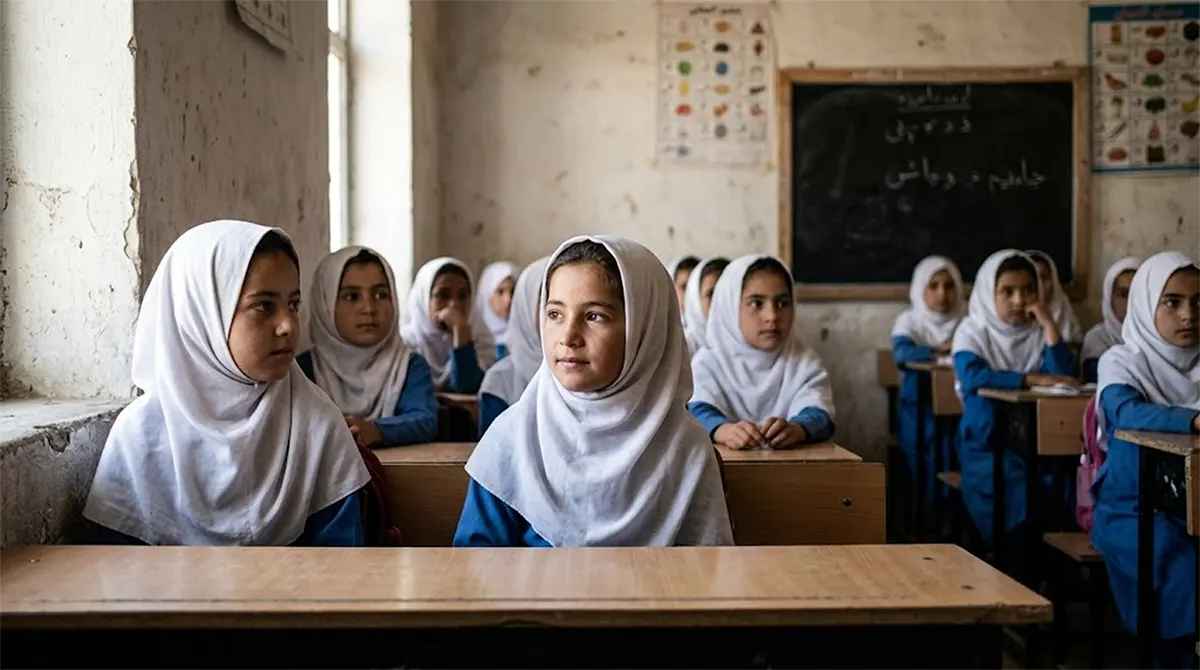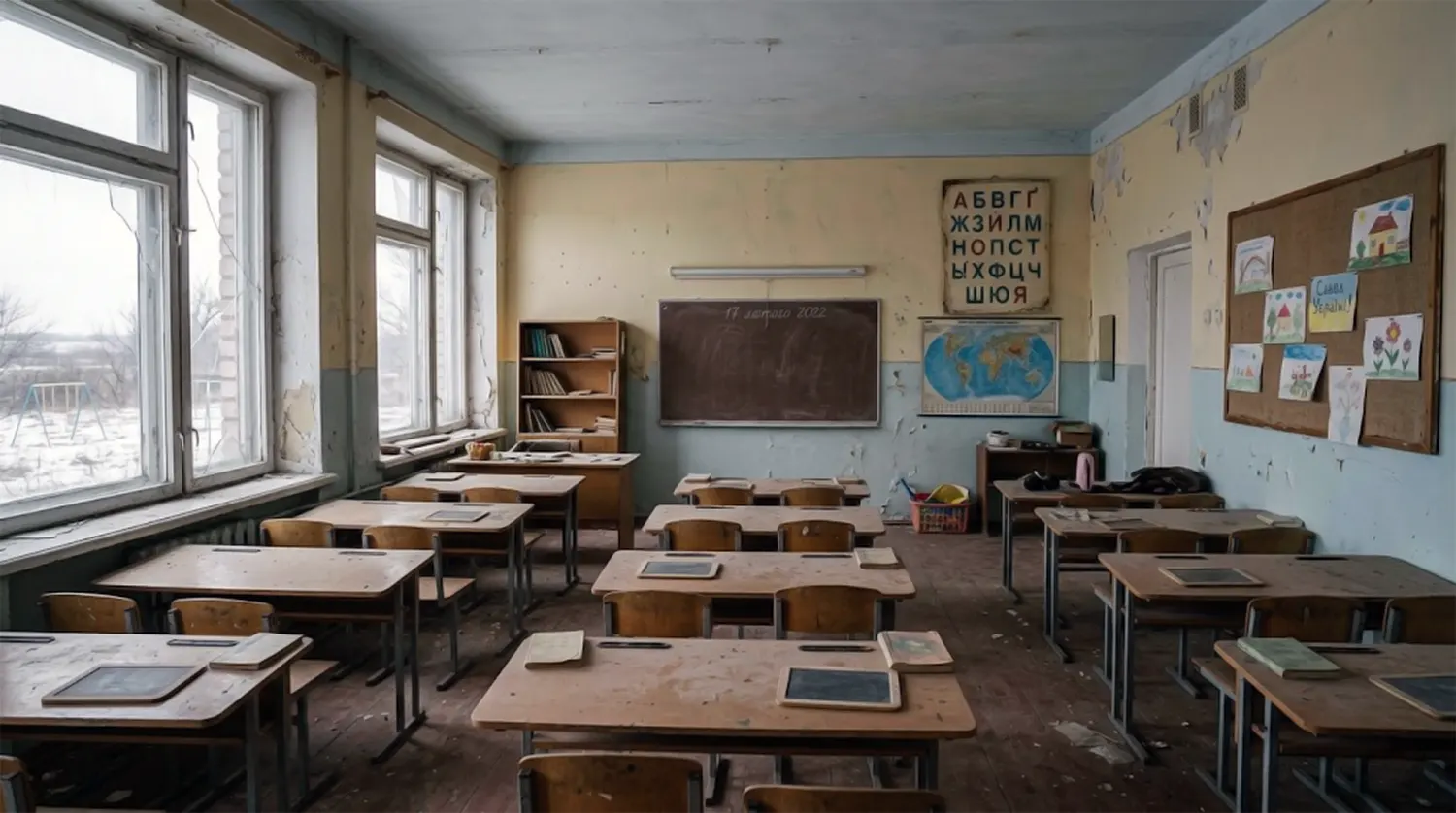
They were taken from hospitals, orphanages, summer camps, and filtration checkpoints. Some were infants. Some were teenagers. Most of their parents are still waiting. As of May 2026, more than 19,000 Ukrainian children remain inside Russia and the international community has stopped debating whether this constitutes a crime.
In March 2026, the UN Independent International Commission of Inquiry on Ukraine released its most comprehensive findings to date, formally classifying Russia’s deportation and forcible transfer of Ukrainian children as both a war crime and a crime against humanity. The ICC arrest warrants for Vladimir Putin and children’s rights commissioner Maria Lvova-Belova, first issued in 2023, remain active with no expiration date. And on May 11, 2026 just this week the European Union imposed a fresh wave of sanctions targeting 16 individuals and 7 entities directly involved in the abductions.
This is no longer a matter of competing claims. It is a documented, legally classified, systematically executed policy. And for the children still inside Russia, the clock has been running for years.
How Children Were Taken and Who Was Targeted
The deportations did not happen in a single sweep. They unfolded in stages, through multiple mechanisms, targeting children across every stage of childhood from infants as young as four months old to teenagers of seventeen.
The youngest children toddlers and those under ten were prioritized for adoption. Russian authorities moved them quickly into the federal adoption database, in many cases altering their names and birthplaces on new Russian birth certificates. The goal, documented by investigators, was straightforward: erase their Ukrainian identity before they were old enough to remember it.
Older children, particularly those between eight and seventeen, were funnelled into “re-education” camps at least 43 facilities identified by Yale University’s Humanitarian Research Lab, with some 2026 estimates placing the number above 70. These camps, spread across 21 Russian regions from occupied Crimea to Magadan in the Russian Far East nearly 4,000 miles from the Ukrainian border subjected children to pro-Russian curriculum, banned the Ukrainian language, and enrolled them in Yunarmiya, Russia’s paramilitary youth program.
Three groups were targeted most systematically. Children already in state institutions orphanages and residential schools were among the first moved, often before the full scale invasion had even begun. Children separated from parents at filtration checkpoints were labelled “unaccompanied” the moment their parent was detained for questioning, and placed on separate buses into Russia. And children sent to “summer camps” sometimes with parental consent obtained under duress, sometimes without were simply never brought back, with Russian authorities citing “safety concerns” each time the camp period ended.
The filtration process itself is central to understanding how separations happened. Human rights investigators from the UN and OSCE documented cases where parents were held for hours or days of interrogation while children were moved. Some children were told their parents had abandoned them. Others were told Ukraine no longer existed as a country.
Where They Are Now
The children are not held in one place. That dispersal is deliberate.
International investigators have geo-located children across more than 210 facilities inside Russia and Russian-occupied territory. The primary hub in occupied territory is Artek, the Soviet era youth camp in Crimea, now repurposed to process children from the Kherson and Zaporizhzhia regions. From there, children move deeper into the Krasnodar and Stavropol regions along the Black Sea coast, further into Moscow and Vladimir oblasts where they enter the adoption pipeline, and in some cases all the way to Siberia, the Urals, and the Russian Far East.
A March 2026 report from Yale added a significant new detail: Russian state corporations including Gazprom and Rosneft have been identified as logistical enablers providing transport and funding for the programs that keep children in these facilities indefinitely.
Finding them is made deliberately difficult. Russia provides no centralized list of names. Children’s legal status is changed to Russian citizen upon arrival. They are moved between facilities to stay ahead of NGO tracking. And once a child is adopted and renamed, they effectively disappear from every database that international investigators use to locate them.
Russia’s Official Position and Why International Law Rejects It
Russia does not deny that children were moved. It denies the intent.
The Kremlin’s consistent position is that these were humanitarian evacuations temporary removals from active combat zones to protect children from Ukrainian shelling. Russian officials describe the children as orphans or abandoned minors being given safety and stability. They frame the international response as political interference in Russia’s protection of its own citizens because under Putin’s fast-track citizenship decrees, these children are now legally Russian.
International humanitarian law is unambiguous on this point. Under the Geneva Conventions, an occupying power may only evacuate children temporarily, for urgent safety reasons, and must return them immediately once the danger has passed. Changing a child’s citizenship, placing them in a permanent adoption system, and refusing to disclose their location does not constitute evacuation. It constitutes illegal deportation and, increasingly, investigators are using a heavier word.
The UN Commission’s 2026 report documented Russia’s refusal to provide information on children’s whereabouts as a distinct crime: enforced disappearance. A separate legal push is now underway at the UN to examine whether the deportations meet the threshold of genocide under Article II(e) of the Genocide Convention, the clause specifically addressing the forcible transfer of children from one group to another.
The Slow, Dangerous Work of Bringing Children Home
As of May 11, 2026, approximately 2,130 children have been returned to Ukraine. Against a documented total exceeding 19,000, that figure illustrates the scale of what remains undone.
Returns happen through three channels, none of them simple.
Qatar and Saudi Arabia serve as the primary diplomatic intermediaries, since Ukraine and Russia maintain no direct relations. Qatari diplomats negotiate specific lists with Russian officials; approved children are brought to the Qatari Embassy in Moscow and transported through Doha or via Baltic states back to their families. This channel produces the most visible results but moves slowly, group by group.
NGO-led rescues account for a significant portion of returns. Save Ukraine alone has facilitated the return of over 1,290 children through a process that requires mothers or legal guardians to travel from Ukraine through Poland and the Baltic states into Russia facing FSB interrogations that can last twelve to fifteen hours at the border. Russian authorities frequently claim the child has already been adopted, or that the parent has no legal standing to retrieve them.
Ukraine’s “Bring Kids Back UA” initiative, co-chaired with Canada through the International Coalition for the Return of Ukrainian Children, uses AI assisted open source intelligence to track children through Russian social media posts and adoption databases. It provides families with the legal documentation they need to prove guardianship to Russian authorities who have often reclassified children as orphans.
A typical successful return in 2026 follows a route of: Kyiv to Warsaw to Riga to Moscow, a confrontation with Russian social services, and the same long journey back through the Baltic states if the extraction succeeds. Many do not.
Children who make it home return to a one-time government grant of 50,000 UAH and an eighteen-month reintegration program designed to help them recover from years of enforced Russian curriculum and identity erasure.
What the International Community Has Done and What Comes Next
The legal and economic response has escalated significantly in 2026, moving from documentation to active prosecution and financial punishment.
The ICC warrants for Putin and Lvova-Belova carry no expiration date. Their practical effect has been to restrict Putin’s international travel to countries outside the Rome Statute, a growing list of diplomatic constraints that compound Russia’s isolation. EU member states including Germany and Poland are now pursuing universal jurisdiction cases against individual camp directors, meaning those officials can be arrested anywhere outside Russia regardless of ICC membership.
The EU’s sanctions package announced May 11 brought the total number of individuals sanctioned for child deportations to over 130, including Lilya Shvetsova, head of the “Red Carnation” camp in occupied Crimea. The accompanying “Warrior” package targets Russian paramilitary youth organizations involved in the Russification programs designed to freeze assets and block international travel for anyone administering the re-education infrastructure.
Looking forward, the most consequential proposal under active debate in the EU would link the release of frozen Russian central bank assets directly to the return of children making repatriation a financial condition rather than a diplomatic request. A dedicated claims category within the Register of Damage for Ukraine, based in The Hague, is already collecting family submissions for eventual reparations funded from those frozen assets.
The coalition is also working to pressure Russia’s remaining international partners. The 2026 strategy asks countries like Brazil, India, and China which maintain functioning bilateral relationships with Moscow to raise the children’s return as a humanitarian minimum in their own direct conversations with Putin, deliberately separating the issue from broader territorial disputes where those governments have less appetite for confrontation.
A Decade of Waiting
The international community’s own assessment is sobering. Without a fundamental shift in Russian leadership or a decisive military outcome, the return of the remaining children will likely be a case by case process spanning a decade or more.
Every child still inside Russia is older now than when they were taken. The infants moved in 2022 are four years old, raised with Russian names in Russian families. The teenagers sent to summer camps have spent years in facilities where the Ukrainian language was banned and their country was described as a fascist fiction. The window for some of them in terms of cultural memory, language, identity is narrowing with each year that passes.
The UN has verified 1,205 cases with full documentation of age, origin, and current Russian location. Ukraine’s government has identified over 20,500 children by name. The gap between those two numbers between what can be proven in a court and what families know to be true is where most of the children still live.
Over 19,000 children. Approximately 2,130 returned. The rest remain.
The warrants are active. The sanctions are expanding. The coalitions are meeting. And in facilities spread from Crimea to the Pacific coast of Russia, Ukrainian children are growing up inside a country that has legally renamed them its own.