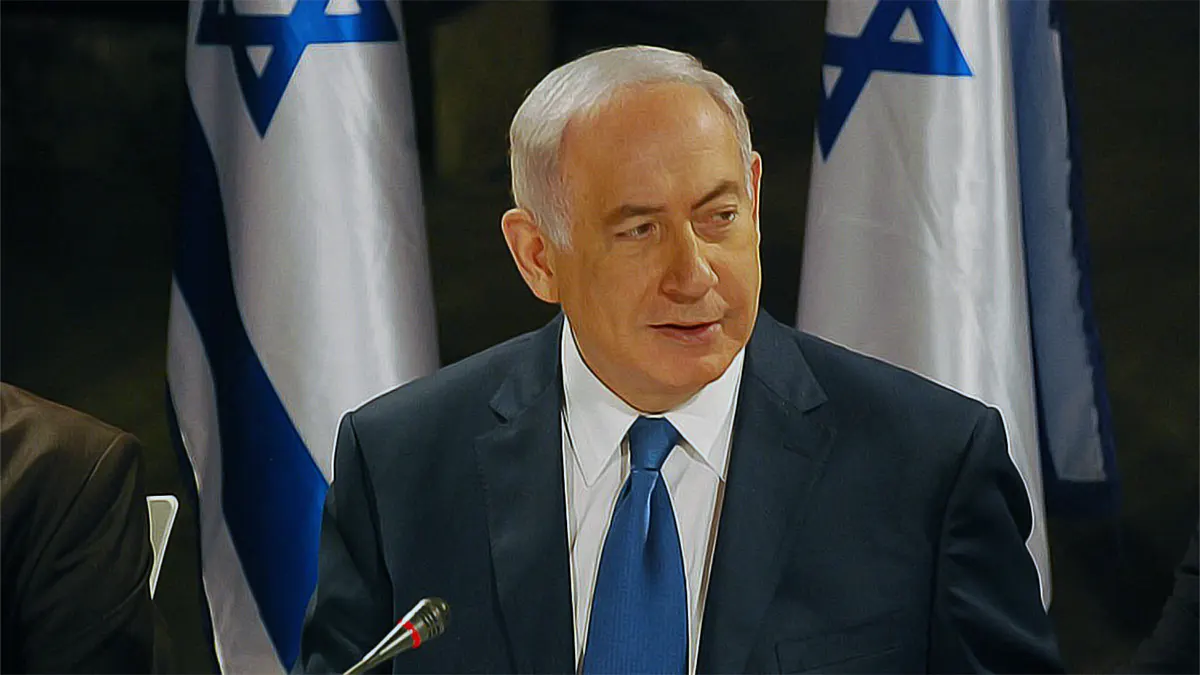
Benjamin Netanyahu has survived political crises that would have finished most leaders. He’s been nicknamed “The Magician” in Israeli politics, a man who always finds a last-minute deal, a surprise coalition partner, or a dramatic pivot to stay in power. But what’s unfolding in Israel right now is different. The walls are closing in from every direction at once, and even his most loyal allies are publicly saying the government’s days are numbered.
The Draft Exemption That Finally Broke the Coalition
To understand why Netanyahu’s government is collapsing, you need to understand one explosive issue that has been building for years: whether ultra-Orthodox (Haredi) Jewish men should serve in the military.
Israel’s Supreme Court ruled that existing draft exemptions for the Haredi community are unlawful. After the intense strain of ongoing military operations in Gaza and continued friction with Iran, the broader Israeli public has had enough, they want the burden of military service shared equally. Millions of ordinary Israelis have been repeatedly called up for reserve duty, putting their jobs, families, and livelihoods on hold. Meanwhile, the ultra-Orthodox community remained legally exempt.
Here’s the political trap Netanyahu walked into: his entire parliamentary majority depends on ultra-Orthodox religious parties. These parties told him clearly protect our exemptions by law, or we pull out of the coalition. When Netanyahu admitted he simply didn’t have the votes to pass that protection law, the coalition effectively shattered. What followed was a stunning 110–0 vote in the Knesset, Israel’s parliament in a preliminary reading to dissolve itself and call snap elections, potentially as early as September.
That unanimous vote tells you everything. Even Netanyahu’s own coalition members backed it.
A New Political Rival Just Changed the Odds Against Him
As if the coalition collapse wasn’t enough, Netanyahu is now facing a formidable new opposition alliance that didn’t exist until recently. Right-wing politician Naftali Bennett and centrist Yair Lapid announced they are merging their forces into a single new party called Beyachad, Hebrew for “Together.”
This isn’t just a symbolic gesture. Recent Israeli polling shows this new alliance is actually outperforming Netanyahu’s Likud party. For a man who has dominated Israeli politics for nearly two decades, that’s a seismic shift. Netanyahu has outlasted rival after rival, but he’s never faced an opposition that combined Bennett’s right-wing credentials with Lapid’s centrist base into one unified bloc.
The Anger on the Streets Is Coming From Every Direction
The political collapse didn’t happen in a vacuum, it was forced by massive, sustained public pressure from Israelis who are furious, and for very different reasons.
The most widespread anger is over military draft inequality. Secular and moderate Israelis, many of whom have served multiple reserve stints during the Gaza conflict are marching in the streets with signs calling Netanyahu’s government a “government of debacle and disaster.” They accuse him of protecting ultra-Orthodox exemptions purely to save his own political skin.
But ironically, the ultra-Orthodox community is also furious just at the opposite end. Their religious leaders feel Netanyahu failed them by not securing the exemption law, and they’re angry at the Supreme Court for freezing their community’s educational funding as a consequence of non-compliance with the draft.
Then there’s the Iran ceasefire backlash. When Netanyahu accepted a U.S.-brokered ceasefire with Iran earlier this year, he was hammered by both far-right and centrist politicians who accused him of throwing away military gains and letting Iran emerge from the conflict with a strategic advantage, all to comply with Washington’s demands.
And underneath all of it runs the deepest wound of all: accountability for the October 7, 2023 attacks. Weekly protests organized by civil groups, bereaved families, and military veterans have been demanding an independent State Commission of Inquiry into the security and political failures that allowed the worst attack in Israel’s modern history to happen. Netanyahu has consistently resisted a formal state probe and his administration is simultaneously dealing with a separate scandal involving a police investigation into his chief of staff for allegedly leaking classified documents to manipulate media coverage.
Why He Can’t Simply Stall His Way Out This Time
Netanyahu’s go to strategy in past crises was time. Delay, negotiate, wait for the moment to pass. He’s doing it again now quietly working behind the scenes to slow-walk the dissolution bill through the parliamentary committee stage, hoping to buy weeks or months to craft a backdoor deal with his Haredi partners or find a dramatic security development that could put politics on hold.
But the calendar is working against him in a way it never has before. Standard national elections were already legally required by October 27. Under Israeli law, a finalized dissolution bill automatically starts a 90-day countdown meaning even if the bill passes in full, it only moves the election a few weeks earlier than it was already scheduled. The formal campaign has effectively already begun.
Making things worse, his own coalition is publicly giving up. Coalition Chairman Ofir Katz, Netanyahu’s own parliamentary floor manager openly stated after the vote: “This coalition has completed its days.” When the people whose job it is to keep lawmakers unified are announcing the end publicly, keeping discipline behind closed doors becomes nearly impossible.
The opposition is further boxing him in by framing the upcoming election as the “October 7th elections”, a direct public referendum on Netanyahu’s leadership during the worst security failure in the country’s modern history. That framing is politically toxic for him, and it’s sticking.
The Man Who Built His Career on Survival and the Trial That Never Goes Away
To fully grasp the magnitude of this moment, you need to know who Benjamin Netanyahu actually is in Israeli history. He is the longest-serving prime minister in Israel’s history more than 18 years in office across three separate stints, surpassing even David Ben-Gurion, the country’s founding father. His current government, which came back to power in December 2022 after a year and a half out of office, represents his third dramatic political comeback.
But running in parallel to his entire political career for the past several years is something no Israeli leader has ever faced: a criminal trial as a sitting prime minister.
Netanyahu was formally indicted in 2019. His trial began in 2020, making him the first sitting Israeli PM to face criminal prosecution. The trial is currently in the defense phase, with Netanyahu himself taking the witness stand to testify. He is facing charges across three separate cases.
Case 1000 — the luxury gifts case, alleges he and his family accepted hundreds of thousands of dollars worth of lavish gifts including expensive cigars, champagne, and jewelry from wealthy international businessmen in exchange for political favors.
Case 2000 — the newspaper collusion case, centers on recorded conversations with the publisher of one of Israel’s biggest newspapers, where Netanyahu allegedly offered to damage a rival paper legislatively in exchange for favorable coverage.
Case 4000 — the most severe charge, accuses him of bribery. Prosecutors allege he granted massive regulatory favors worth hundreds of millions of dollars to the Bezeq telecom company in exchange for editorial control over how a news website owned by Bezeq’s boss covered him and his family.
Netanyahu has denied all charges, calling them a “witch hunt” orchestrated by biased media and police. But his critics argue there is a direct conflict of interest at the heart of his grip on power: that his determination to stay in government including his alliance with far-right and religious parties is at least partly driven by a need to pass legislation that could freeze his trial, grant immunity, or allow him to appoint friendly figures to key institutions.
He is, in effect, managing an active war, a collapsing coalition, and a criminal bribery trial simultaneously with court hearings happening on a weekly basis, frequently cut short due to “security and political scheduling.”
What Comes Next
The dissolution bill still needs three more formal Knesset votes before it becomes final. Netanyahu will fight for every inch of delay he can find, and few people would bet against him finding at least some breathing room in the short term. He has earned his reputation.
But the structural forces this time are unlike anything he’s faced before. His coalition partners are walking out the door. A unified, polling-ahead opposition is waiting. The public is furious on multiple fronts. A criminal trial is ongoing. And the calendar leaves very little room to maneuver.
Israel is almost certainly heading to the ballot box later this year. And for the first time in a long time, the outcome is genuinely uncertain.