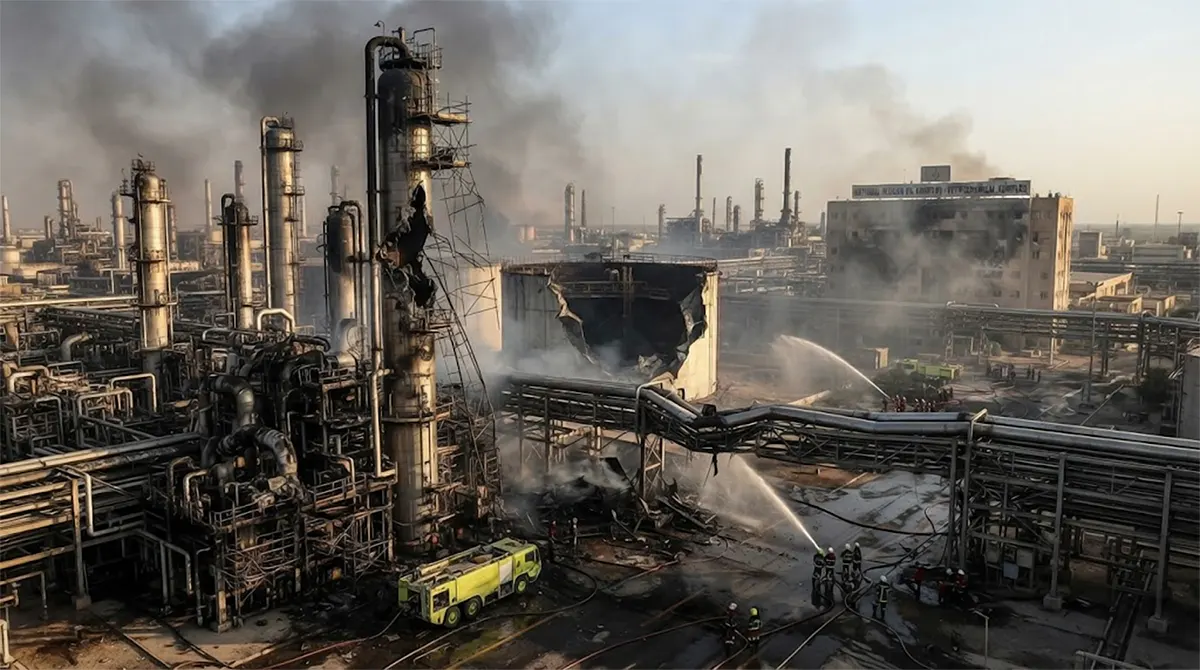
A gas explosion deep in Shanxi Province has killed at least 90 miners, with 9 still missing and a history of ignored safety warnings is now under a criminal microscope.
The Blast That Shook the Tunnels on a Friday Night
At 7:29 PM on Friday, May 22, 2026, an explosion tore through the underground shafts of the Liushenyu coal mine in Qinyuan County, Shanxi Province. The force of the blast rippled through tunnels where 247 workers were on active shift, triggering one of the worst mining disasters China has seen since 2009.
State media initially reported only eight deaths. But as rescue teams fought through dangerously elevated toxic gas levels to reach deeper sections of the mine, the death toll surged climbing to at least 90 confirmed dead. Nine workers remain missing. Of the 247 underground that night, only 156 have been brought to the surface alive.
Carbon Monoxide Spiked. The Warning Came Too Late.
Investigators say the explosion wasn’t without warning, it just wasn’t acted on fast enough. Moments before the blast, the mine’s automated monitoring systems triggered a critical alert showing that carbon monoxide levels had severely exceeded legal safety thresholds.
The gas had already built up to a catastrophic concentration. An ignition source likely electrical equipment or mining machinery set it off before workers could be evacuated. The resulting explosion sent a lethal wave of toxic gas flooding through the tunnels, leaving many survivors suffering severe CO inhalation, several in critical condition.
Five Months Before the Explosion, This Mine Was Already Flagged
What makes this disaster harder to accept is what was already on record. Just five months before the explosion, in December 2025, the mine’s operator Liu Xianyu Coal Mining Co. was formally fined and penalized by the Qinyuan County Emergency Management Bureau for safety violations.
The documented failures were serious:
- Malfunctioning emergency stop devices on underground transportation equipment
- Failure to reinforce visibly damaged sections of the mine ceiling
These weren’t unknown risks. They were flagged, ticketed and apparently left unresolved. That paper trail is now central to a criminal negligence investigation, and top executives of the company have already been detained by local police.
Beijing’s Response Goes All the Way to the Top
The scale of the catastrophe triggered an immediate and highly visible response from China’s national leadership.
President Xi Jinping issued a sweeping directive demanding rescue teams “spare no effort” and calling on regional governments across China to draw lessons from Shanxi and urgently step up workplace safety inspections. Premier Li Qiang followed with a public demand for strict accountability and the timely, accurate release of casualty information. Vice Premier Zhang Guoqing was dispatched directly to Qinyuan County to oversee the rescue operation on the ground.
On the response side, over 870 emergency personnel including specialized underground rescue teams, medical staff, and police were deployed to the mine. Given the nature of the blast, dedicated medical corridors were established to fast-track CO-poisoning survivors to regional hospitals.
Shanxi’s Coal Curse: Why This Keeps Happening
Shanxi Province produces nearly one-third of China’s total coal output. That makes it economically indispensable and historically dangerous. The pressure to produce quickly, especially during high energy demand periods, has repeatedly translated into corner cutting that costs lives.
This is not the first time Shanxi has been at the center of a disaster like this. In November 2019, a gas explosion at a coal mine in Pingyao County, the same province killed 15 workers and injured 9, with deficient ventilation and corporate greed cited as root causes. The parallels with today’s tragedy are uncomfortable:
| 2019 — Pingyao, Shanxi | 2026 — Qinyuan, Shanxi | |
|---|---|---|
| Cause | Gas buildup, illegal mining in unsuitable areas | CO buildup exceeding legal limits |
| Workers underground | 35 | 247 |
| Core failure | Ventilation bypassed for profit | Failing safety equipment left unrepaired |
China’s mining safety record has genuinely improved since the early 2000s when accidents routinely killed hundreds each year. But the Liushenyu disaster is a blunt reminder that tighter laws on paper don’t automatically mean safer mines underground, especially when enforcement gaps and corporate pressure continue to coexist.
The fact that this mine was fined for broken emergency equipment just five months ago and was still running at full capacity with 247 workers underground is exactly the kind of accountability failure the government now says it wants to end.
Whether that promise holds beyond this tragedy is a question Shanxi has heard before.