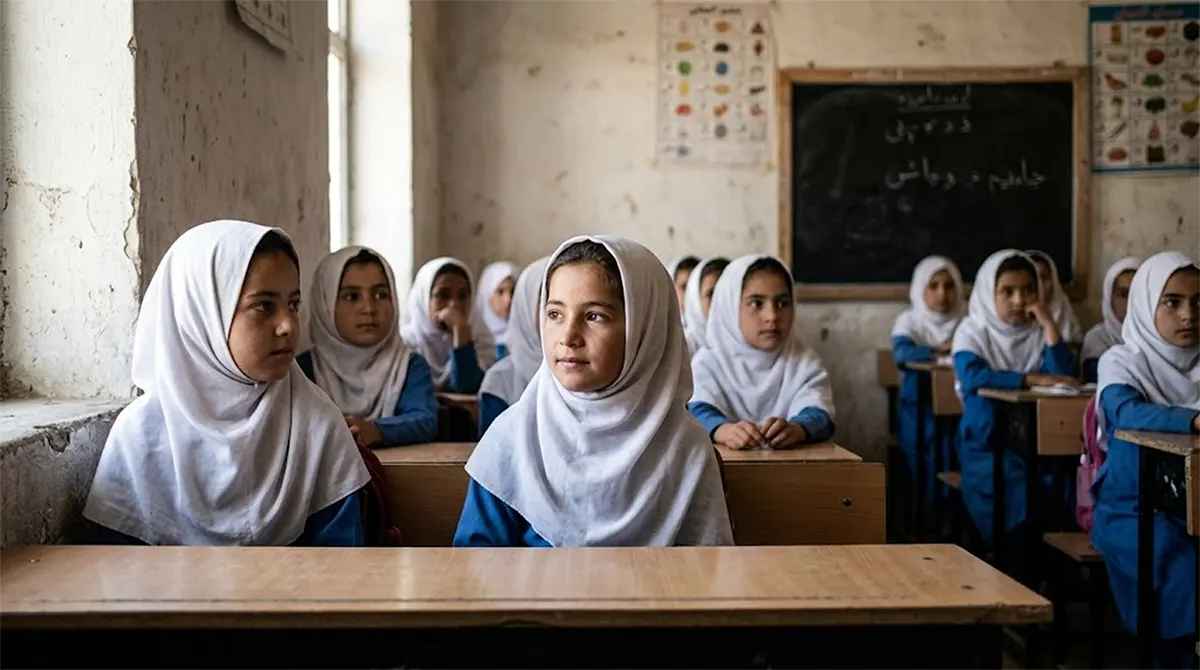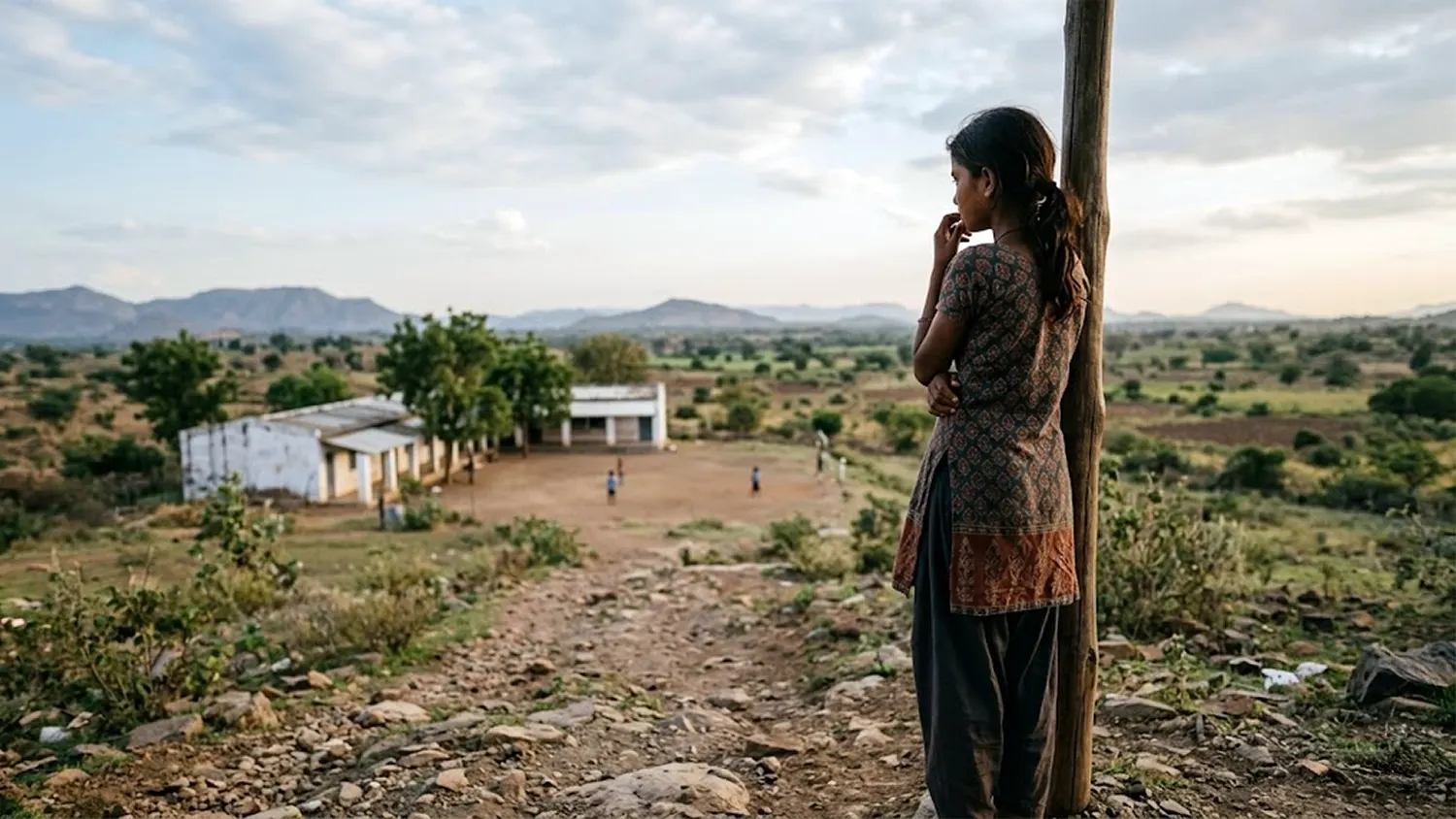
Somewhere in the world right now, a young girl is being legally married off. Not in secret. Not illegally. With the full blessing of her country’s laws, her family’s approval, and often a religious court’s stamp. By the time you finish reading this article, it will have happened to dozens more.
Child marriage defined by the United Nations as any formal marriage or informal union where at least one party is under 18 remains one of the most widespread human rights violations on the planet. And unlike many global crises, it is not hidden. In many places, it is simply law.
| 12M Girls married before 18 every year | 640M Women alive today married as children | 1 in 3 Girls in Sub-Saharan Africa married before 18 | 5x Higher risk of death in childbirth for girls under 15 |
Where the numbers are coming from
The sheer scale is staggering. According to UNICEF and the World Bank, roughly 12 million girls are married before their 18th birthday every single year that works out to approximately 22,800 girls every day, or one every three seconds. There are currently over 640 million women and girls alive today who were married during their childhood. Child marriage also affects boys, an estimated 115 million men and boys were married before 18 but girls bear the overwhelming majority of the burden.
A decade ago, roughly 25% of young women aged 20–24 had been married as children. Today that figure sits at around 21%. Progress exists, but it is uneven and under threat. UNICEF warns that unless global progress accelerates by 12 times its current pace, over 9 million girls will still be married in the single year of 2030 alone.
| Region | Rate (women 20–24) | Trend |
|---|---|---|
| Sub-Saharan Africa | ~31–32% 1 in 3 | Now the global epicenter. 7 of the 10 worst-affected countries are in West and Central Africa. |
| South Asia | ~26% 1 in 4 | Largest absolute numbers, but fastest rate of decline — driven heavily by India. |
| Latin America & Caribbean | ~21% | Progress has stalled. Informal unions among minors are quietly rising. |
How countries make it legal and why it’s so hard to stop
Most people assume child marriage is a failure of law enforcement that governments have rules against it but simply don’t enforce them. In many cases, the opposite is true. The law itself permits it.
A handful of countries Yemen, Saudi Arabia (historically), Somalia, and Equatorial Guinea have civil laws that set no numerical minimum age at all. Instead, marriageability is determined by puberty or “maturity,” which is assessed by a religious judge or the girl’s male guardian. Since the biological onset of menstruation can occur as early as age 9, girls that young have been legally married under this framework.
Among countries that do specify a number, the lowest thresholds sit at Sudan (age 10, with judicial consent), Iran (age 13 for girls, with guardian loopholes that go lower), and Lebanon (age 13 under certain Shiite religious courts). Even nations with an official age of 18 on paper like the Philippines and Tanzania contain religious or customary exemptions that slash that age dramatically for specific communities.
Case study — Nujood Ali, Yemen, 2008
At 10 years old, Nujood Ali was legally married to a man in his 30s. Because Yemen had no minimum age law, the marriage was entirely valid. Nujood walked into a Sana’a courthouse alone and demanded a divorce, an act of extraordinary courage that made global headlines and triggered parliamentary debate. Conservative factions blocked the proposed minimum age of 17, citing religious tradition. With civil war consuming the country, those efforts collapsed. The law remains unchanged to this day.
The legal mechanism at work is not an accident. Many of these state laws deliberately defer to religious or customary authorities on family matters. The state isn’t forgetting to set an age limit, it is actively choosing to hand that authority to guardians and religious courts. In places like Yemen, the law only requires two things for a marriage to be valid: the consent of the girl’s male guardian, and a judge’s assessment that she is “ready.” With no numerical floor, girls as young as 8 or 9 have been married under this reasoning.
Internationally, the picture is clear: most of these countries have signed the UN Convention on the Rights of the Child, which defines anyone under 18 as a child. But national sovereignty means domestic law wins. A signed treaty does not override a parliament.
What it actually does to a child’s body and mind
The medical and psychological evidence is not ambiguous. Forcing a child into marriage is not just a cultural tradition, it is in the words of international health organizations, a form of institutionalized abuse.
| Physical toll |
| Girls under 15 face a 5x higher risk of dying in childbirth than women in their 20s |
| Obstetric fistula a catastrophic internal injury from obstructed labor causes chronic incontinence and social rejection |
| Child brides face significantly higher HIV exposure with zero power to negotiate safe sex |
| Their babies face a 50% higher risk of stillbirth or newborn death |
| Psychological toll |
| The wedding night is frequently a state-sanctioned assault, causing lasting PTSD |
| Crushing rates of severe depression and panic disorders |
| Removal from school and peers creates total social isolation |
| “Learned helplessness” a state where the child stops trying to escape because escape feels impossible |
| Generational cycle |
| Marriage ends education almost immediately, removing any path to financial independence |
| Malnourished child mothers statistically raise malnourished children |
| Poverty, stunting, and early mortality pass to the next generation |
| Communities become trapped in cycles that take decades to break |
The people fighting back and what they’re actually doing
What mainstream coverage often misses is that the resistance is fierce, organized, and operating at every level simultaneously.
In Iraq, when conservative factions pushed to amend the Personal Status Law in ways that could legalize marriages for girls as young as 9, a powerful coalition of women’s rights groups, activists, and female MPs formed Alliance 188 named after the original 1959 protective law. They staged street protests in Baghdad, launched digital campaigns, and faced down violent clashes with law enforcement. Human Rights Watch and Amnesty International amplified the pressure globally. Their efforts succeeded in stripping some of the most explicitly harmful language from the initial drafts.
Globally, Girls Not Brides, a network of over 1,400 civil society organizations across more than 100 countries coordinates the world’s largest sustained campaign against the practice. Thanks to pressure from coalitions like this, Sierra Leone passed a historic law in 2024 banning marriage under 18 with zero legal exceptions. Malawi overhauled its constitutional age framework entirely.
“NGOs have realized that Western lecturing doesn’t work in highly traditional areas. You have to empower local heroes.”
— Human rights practitioners on community-led interventions
On the ground, organizations fund what are known as Community Led Anti Violence Teams (COMBAT) across West Africa and South Asia, local citizens who confront families and adult grooms directly, using formal letters, community pressure, or local police to physically stop a marriage before it is finalized. In Malawi, Senior Chief Theresa Kachindamoto used her traditional authority backed by women’s rights networks to personally annul over 3,500 child marriages and send the girls back to school. In active conflict zones like Yemen, where laws have collapsed entirely, NGOs shift to survival mode: underground safe houses, legal aid, psychological counseling, and girls’ clubs in schools that teach young girls their rights and how to safely seek help.
The UN, meanwhile, has embedded the fight into its Sustainable Development Goals under Target 5.3, tying development funding to how well countries protect women and children. UNICEF and UNFPA run joint programs keeping girls in school with direct financial incentives to families while engaging local imams, priests, and tribal elders to reshape cultural norms from within. Over the past decade, these combined efforts have averted an estimated 25 million child marriages.
But the gains are fragile. Climate disasters, active wars, and economic collapse are pushing vulnerable families back toward child marriage as a survival strategy. The fight is not close to over.