.webp "The Federal Reserve: An Institution Under Pressure (2026)")
The leadership transition at the Federal Reserve is no longer a routine policy handoff. It has become a constitutional confrontation, a market risk event, and a global stress test for central bank independence.
President Trump’s nomination of former Fed Governor Kevin Warsh to replace Jerome Powell comes amid criminal subpoenas, Senate resistance, and rare public intervention from foreign central banks. What should have been a technocratic succession now threatens to reshape the institutional architecture of U.S. monetary policy.
This is not just about who sets interest rates. It is about whether the Federal Reserve remains an independent macroeconomic authority or evolves into a politically aligned policy arm of the executive branch.
From Policy Dispute to Legal Escalation
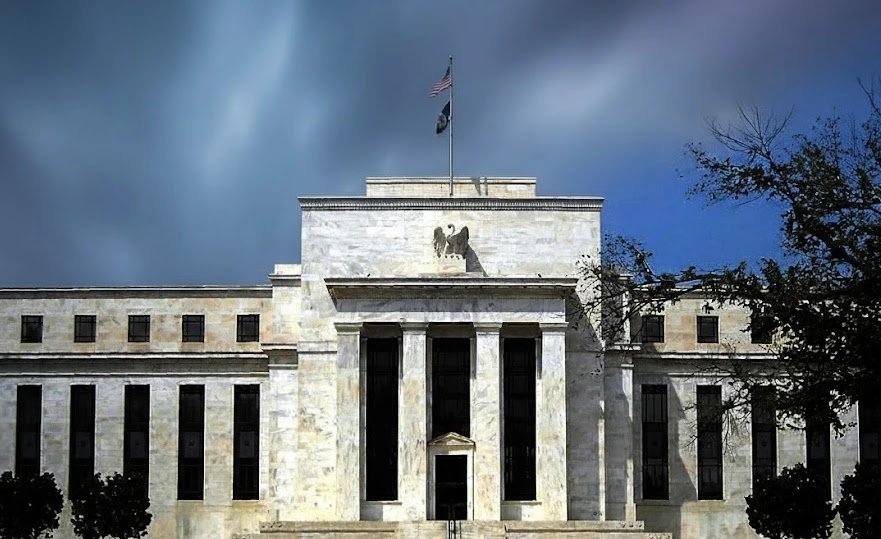
The immediate flashpoint is a federal investigation into the $2.5 billion renovation of the Fed’s historic headquarters in Washington. Administration officials allege cost overruns and mismanagement.
Powell argues the investigation is a pretext, citing post-pandemic construction inflation and hazardous material remediation as the true drivers of higher costs.
The unprecedented element is Powell’s public response. He has stated that legal threats are a “consequence” of the Fed refusing to cut rates in line with presidential demands. That assertion transforms the issue from administrative oversight into a potential use of prosecutorial power
as monetary policy leverage, a line markets consider systemically dangerous.
If the threat of criminal indictment becomes a leverage point for monetary policy, the very concept of the Rule of Law in U.S. finance will require immediate repricing.
Why Interest Rates Are the Real Battlefield
At the center of the conflict is the Fed’s decision to keep policy rates in the 3.5%–3.75% range.
- Powell’s position: Policy may not yet be sufficiently restrictive if tariff effects or supply constraints trigger a second inflation wave.
- Trump’s position: Rates should fall sharply to reduce federal interest costs, accelerate growth, and amplify industrial policy.
This is a classic macroeconomic trade off: inflation risk management versus growth maximization. What makes it extraordinary is that the disagreement has shifted from economic debate to personal attacks and public calls for the Fed’s board to override its chair.
Yet the most important data point is internal: the recent vote to hold rates was 10–2.
Powell is not acting alone; the institution broadly shares his caution.
The Senate Becomes the Institutional Firewall
The nomination of Kevin Warsh was intended to stabilize markets by offering an experienced insider acceptable to Wall Street. Instead, it has collided with Senate resistance led by Republican Senator Thom Tillis.
Tillis and a small group of institutionalist Republicans argue that confirming a successor while the sitting chair faces politically charged subpoenas would legitimize coercion of the central bank.
With a slim majority, Senate leadership cannot easily bypass this block.
The result is a high probability confirmation stalemate.
The “Two-Headed Fed” Risk
Jerome Powell’s term as Chair ends in May 2026, but his term as a Fed Governor extends to 2028.
If he remains on the Board and no successor is confirmed, the system could split into dual authority centers:
- An Acting Chair managing administrative leadership
- Powell retaining a vote on rates
- The Federal Open Market Committee potentially re electing Powell as its internal leader
This creates a structural paralysis where the individual influencing interest rate decisions may not be the formal head of the institution. For markets, unclear command structure equals higher risk premiums, not lower rates.
Global Central Banks Issue a Warning
Foreign central banks rarely comment on U.S. internal politics. Their coordinated defense of Fed independence signals systemic concern.
Their logic is straightforward:
-
If U.S. monetary policy becomes politically directed, the dollar’s reserve status weakens.
-
Investors demand higher long term yields to compensate for political risk.
-
Global inflation volatility rises as exchange rate stability erodes.
Ironically, forcing lower short term rates could produce higher long term borrowing costs.
Who Is Kevin Warsh?
Warsh is not an outsider ideologue. He is a former Fed Governor and Wall Street banker with crisis era experience. Markets see him as technically fluent and operationally competent.
However, his policy philosophy differs sharply from Powell’s era:
- Aggressive balance sheet reduction
- Greater reliance on market signals over academic models
- A proposed “New Accord” aligning Fed and Treasury policy more closely
- A belief that AI driven productivity allows faster growth without inflation
This makes him a bridge figure institutionally credible but open to a structural realignment of monetary policy toward executive priorities.
The Structural Question for Markets
Investors are no longer pricing just inflation, employment, or GDP. They are pricing institutional durability.
The central question is not “Where will rates be?”
but “Who ultimately controls rate policy an independent committee or the political cycle ?”
If markets conclude the Fed can be pressured through legal or political channels, the long-term implications include:
- Higher Treasury term premiums
- Increased currency volatility
- Reduced policy credibility during future crises
- More fragile global financial stability
The Bottom Line
The Powell–Warsh transition has evolved into the most serious test of Federal Reserve independence in decades. The legal confrontation, Senate resistance, and potential dual-leadership scenario introduce governance risk rarely associated with the world’s most important central bank.
For investors, this is no longer a policy cycle story. It is a regime risk story.
And regime risk is always repriced slowly, until it isn’t.