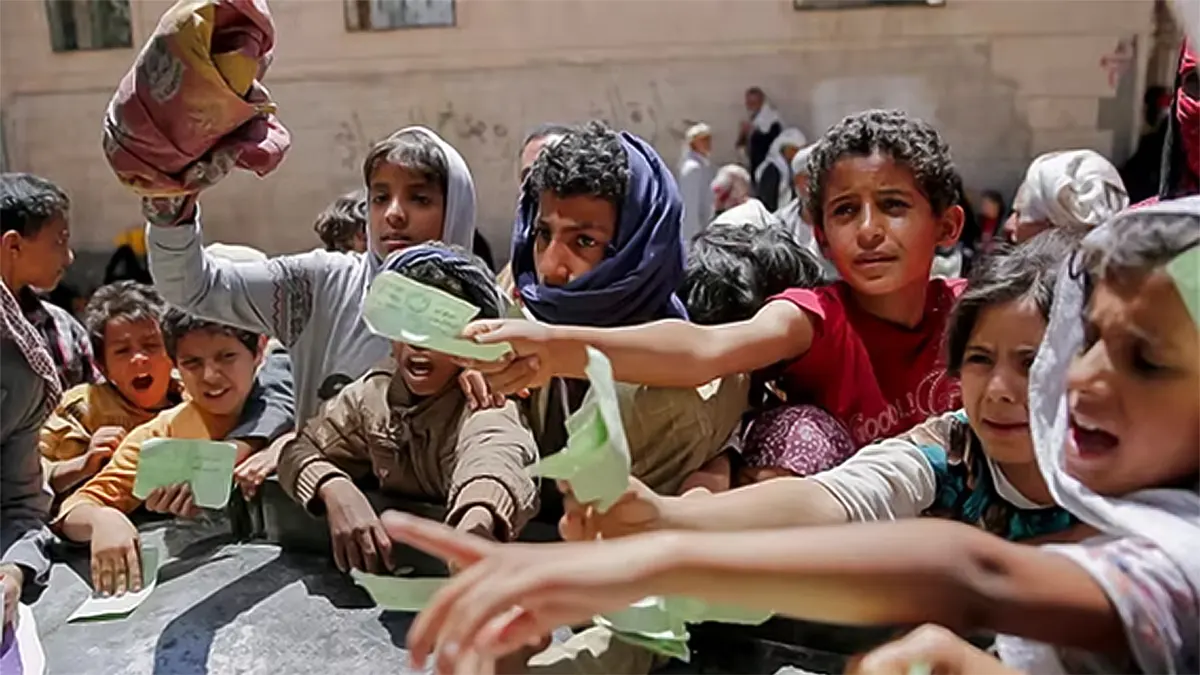
Yemen is once again moving closer to a humanitarian disaster. After more than 10 years of conflict, millions of people across the country are struggling to find enough food, clean water, and medical care. Now, with international aid funding rapidly declining, humanitarian groups warn that the situation could soon spiral into a full-scale famine.
According to recent humanitarian reports, more than 18 million Yemenis are facing acute hunger, while aid agencies are being forced to reduce or completely stop life-saving programs due to severe funding shortages.
Millions Struggling to Survive Daily Hunger
The humanitarian crisis in Yemen has reached one of its worst points in years. Data from food security experts shows that over half of the country’s population is now experiencing serious food insecurity.
Even more alarming, around 41,000 people are expected to face catastrophic hunger, the highest and most dangerous level of famine conditions where starvation becomes a direct threat to life.
Children are suffering the most. More than 2.3 million children under five are acutely malnourished, and over 500,000 of them are considered at risk of death if they do not receive urgent treatment.
In many areas, families can no longer afford basic meals. The World Food Programme says some households are unable to meet even the minimum daily food needs, marking one of the worst hunger levels ever recorded in Yemen.
War and Economic Collapse Continue to Fuel the Crisis
The roots of Yemen’s crisis go far beyond food shortages alone. Years of war between Houthi forces and the internationally recognized government have devastated the country’s economy and infrastructure.
Hospitals, roads, schools, and public services have been heavily damaged or destroyed. At the same time, Yemen’s currency has sharply lost value, causing food and fuel prices to skyrocket.
For ordinary families, even bread, rice, and cooking oil have become increasingly difficult to afford.
The collapse of the Yemeni rial has also made imported goods far more expensive, worsening inflation and pushing millions deeper into poverty.
Aid Groups Forced to Make Painful Decisions
While humanitarian needs continue to rise, global support for Yemen is shrinking.
The 2025 Humanitarian Needs and Response Plan requires $2.47 billion to maintain critical aid operations. However, only around 20% of the needed funding has been secured, leaving a massive gap in emergency assistance.
Aid organizations say they are now being forced to make heartbreaking choices about which communities receive help and which programs must be cut.
In some regions, food rations have already been reduced by as much as 50%.
Several health programs have also been shut down after funding cuts. The United Nations Population Fund confirmed that the loss of US funding forced the closure of dozens of health facilities, leaving more than 1.5 million women without essential reproductive healthcare services.
Healthcare and Clean Water Systems Near Collapse
The crisis has severely damaged Yemen’s healthcare system. More than half of the country’s medical facilities are no longer fully operational, leaving millions without access to proper treatment.
At the same time, shortages of clean water have triggered outbreaks of preventable diseases such as cholera and dengue fever.
Malnourished children are particularly vulnerable, as weakened immune systems make it harder for them to survive infections and disease outbreaks.
For many families, survival now depends on extreme coping measures. Parents are skipping meals so their children can eat, while others are forced to borrow money or sell the few possessions they have left.
Global Attention Shifts Away From Yemen
Humanitarian experts warn that Yemen is also suffering from what many describe as “global funding fatigue.”
As international attention focuses on conflicts in places like Ukraine and Gaza, Yemen’s crisis has received far less political and financial support.
Despite the growing risks, aid agencies say donor contributions have continued to decline year after year.
The lack of funding is making it harder for humanitarian workers to reach vulnerable communities, especially with ongoing security threats, restrictions on aid movement, and political interference inside the country.
Calls for Urgent International Action
The United Nations and humanitarian organizations are now urging the international community to act quickly before conditions worsen further.
UN Special Envoy for Yemen Hans Grundberg recently warned that the country’s crisis threatens regional stability and stressed the importance of restarting peace negotiations.
Aid agencies are calling for three urgent steps:
- Immediate funding support to prevent more aid cuts
- Safe humanitarian access across conflict zones
- Renewed diplomatic efforts to reach a long-term political solution
Humanitarian workers say emergency aid alone cannot solve Yemen’s suffering permanently. Without peace and economic recovery, millions of people will remain trapped in an endless cycle of hunger and displacement.
Yemen Nears a Dangerous Turning Point
For millions of Yemenis, the coming months could determine whether the country avoids another devastating famine.
Unless global funding increases and humanitarian access improves quickly, aid groups warn that the crisis may soon become impossible to contain.
After a decade of war, poverty, and displacement, Yemen’s people are running out of time and the world’s response may decide how many lives can still be saved.