It started with outrage over politicians giving themselves a pay raise. It ended at least for now with six people dead, dozens injured, and more than 20 others missing after security forces moved against protesters across Indonesia’s major cities.
The United Nations is watching. And it isn’t staying quiet.
What Triggered Nationwide Anger
The spark was a parliamentary decision that landed like a slap to millions of Indonesians already struggling with rising food and fuel prices. Lawmakers approved a monthly housing allowance of 50 million rupiah roughly $3,075 for themselves. That figure is nearly ten times Jakarta’s minimum wage.
For ordinary Indonesians, the optics were intolerable. While households cut back on essentials, their elected representatives were voting themselves perks that most people couldn’t earn in a year of work.
Then a video went viral. Footage spread rapidly online showing a police vehicle running over and killing a motorcycle taxi driver, a man who wasn’t even part of the protests. That video pulled more people into the streets than any political organizer could have managed. The demonstrations, already growing, exploded.
Security Forces Responded With Live Rounds
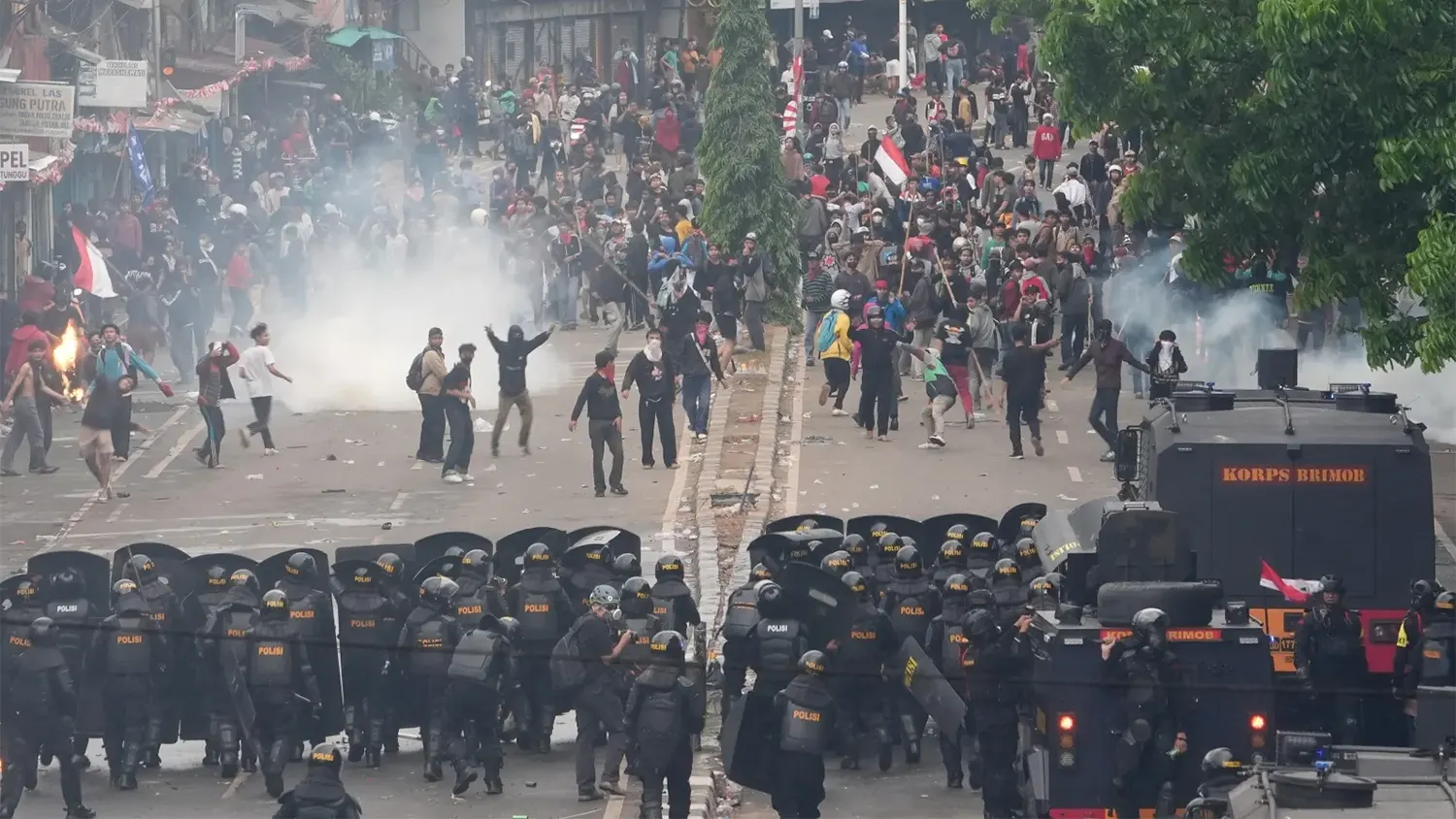
What followed was a crackdown that human rights monitors say went far beyond what was justified. Tear gas, water cannons, and live ammunition were used to disperse crowds including, according to eyewitnesses and video evidence, gatherings that had been entirely peaceful.
Social media footage showed demonstrators fleeing through thick tear gas clouds, some collapsing in the streets. The violence spread across Jakarta, Surabaya, and Medan, three of Indonesia’s largest cities.
Six people were confirmed dead. Dozens were hospitalized. And then came the missing persons reports.
More Than 20 People Have Vanished
Local NGOs say that at least 20 people remain unaccounted for since the protests intensified and the word being used by rights groups is not “missing.” It’s enforced disappearances.
Families have gathered outside police stations demanding to know where their relatives are. Authorities have offered no clear answers. Indonesia’s Commission for the Disappeared and Victims of Violence, known as KontraS, has raised fears that some of the missing may be in unlawful detention or worse.
“The disappearances are deeply alarming,” a KontraS representative said. “We fear that some may be in unlawful detention, or worse.”
The UN Steps In
From Geneva, the UN Human Rights Office made its position clear. Spokesperson Ravina Shamdasani said the organization was closely monitoring the violence and was “deeply concerned about allegations of unnecessary or disproportionate force by police and military units.”
The UN laid out three urgent demands: a full, independent investigation into the killings and injuries; protection of citizens’ right to peaceful assembly under international law; and guarantees that journalists can report freely without intimidation or censorship.
Amnesty International and Human Rights Watch have echoed those calls, adding international weight to what is fast becoming a significant test of Indonesia’s democratic credentials.
Prabowo’s Response Isn’t Convincing Anyone
President Prabowo Subianto moved quickly to cut lawmakers’ housing perks once the scale of public anger became clear. On the surface, it looked like a concession. Rights groups aren’t buying it.
“Reducing lawmakers’ perks is a cosmetic concession,” said one Jakarta based activist. “The real issue is the use of deadly force against citizens exercising their democratic rights.”
At the same time Prabowo was trimming perks, he was also ordering security forces to take “firm action” against what he called rioters and anarchic groups language that critics say gives cover for continued heavy handed policing of what are, at their core, legitimate democratic protests.
The mixed signals haven’t calmed the streets. They’ve deepened suspicion about whether the government is genuinely willing to be held accountable.
Indonesia’s Reputation Is Now on the Line
Southeast Asia’s largest democracy has spent years cultivating an image as a stable, investment-friendly nation with functioning democratic institutions. That image is taking damage in real time.
Foreign investors are paying attention. Political analysts in Jakarta warn that prolonged unrest especially if accompanied by credible evidence of enforced disappearances and state violence against peaceful protesters could shake confidence in Indonesia’s political stability at a critical moment for its economic ambitions.
The international scrutiny now bearing down on Jakarta isn’t just moral pressure. It carries real economic and diplomatic consequences.
A Government at a Crossroads
The path forward for the Prabowo administration is narrowing. It can escalate the crackdown, a choice that risks further deaths, more international condemnation, and a deeper erosion of public trust. Or it can open genuine dialogue with civil society, commit to independent investigations, and account for the missing.
The second path is harder politically. But it’s the only one that doesn’t lead somewhere far worse.
For the families still waiting outside police stations for news of their loved ones, the government’s choice is not an abstract policy question. It is the most urgent thing in their lives right now and the world is watching how Indonesia answers it.