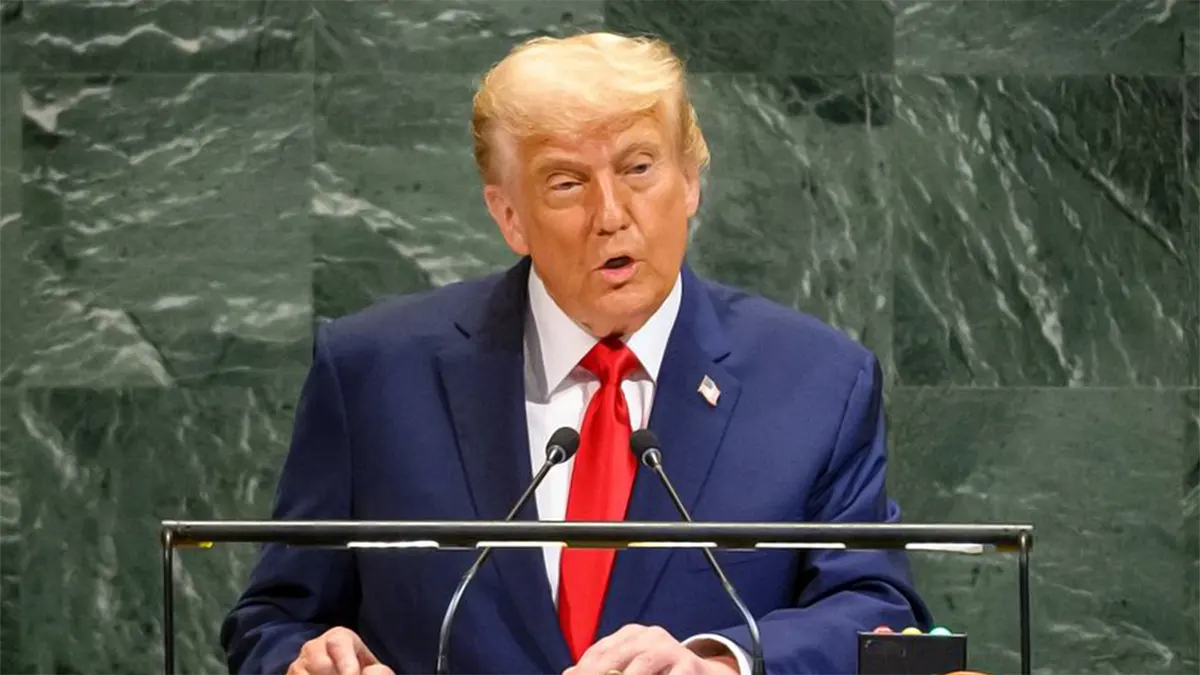
President Donald Trump ignited controversy at the United Nations General Assembly after delivering a fiery speech attacking Europe’s immigration and climate policies. Speaking before world leaders in New York on September 23, 2025, Trump accused several European nations of pushing policies that he claimed were damaging their economies, cultures, and national security.
The speech quickly became one of the most talked-about moments of the UN gathering, drawing sharp criticism from European officials, climate experts, and humanitarian groups.
Trump Warns Europe Over Immigration Policies
One of the strongest moments of Trump’s address came when he criticized Europe’s approach to migration and border security. He argued that what he called “open border policies” were weakening national identity and creating long-term social problems.
In a line that immediately triggered global headlines, Trump told European leaders, “Your countries are going to hell.”
He claimed European governments were allowing large numbers of migrants into their countries without proper control or integration. According to Trump, this would eventually create economic and cultural instability across the continent.
The remarks were quickly condemned by human rights organizations, which argued that the comments ignored the humanitarian causes behind migration, including war, poverty, and political instability.
Climate Policies Become Another Major Target
Trump also used the speech to attack Europe’s climate agenda and renewable energy transition. He dismissed green energy programs as a “green energy scam” and warned that aggressive climate regulations were hurting businesses and increasing energy costs.
The former president argued that heavy investment in wind and solar energy could weaken Europe’s industrial competitiveness and damage economic growth.
His comments reflected the continued focus of his “America First” political strategy, which prioritizes domestic energy production and reduced reliance on international climate agreements.
While supporters praised the remarks as a defense of economic realism, environmental experts strongly disagreed. Scientists and climate organizations pointed to growing evidence of global warming, rising sea levels, and extreme weather disasters as proof that climate action remains necessary.
Trump Questions the Role of the United Nations
Beyond criticizing Europe, Trump also turned his attention toward the United Nations itself. He accused the organization of becoming ineffective and disconnected from real global challenges.
According to Trump, the UN spends too much time on political speeches and not enough on practical solutions. The criticism matched his long-standing skepticism toward multinational institutions and international agreements.
For many diplomats, the comments highlighted the widening divide between Trump’s nationalist approach and the cooperative policies favored by many US allies.
International Reaction Was Immediate
European leaders and political analysts reacted swiftly after the speech. Several officials described Trump’s language as inflammatory and divisive, warning that it could deepen tensions inside Europe at a time when many countries are already struggling with debates over immigration, inflation, and energy prices.
Meanwhile, climate experts pushed back against Trump’s claims about renewable energy, saying scientific evidence overwhelmingly supports the reality of climate change and the need for long-term environmental action.
Political observers noted that Trump’s aggressive tone appeared aimed not only at foreign governments but also at his domestic political base ahead of future elections.
A Speech That Highlights a Growing Global Divide
Trump’s UN address did more than criticize European policies. It underscored the growing clash between nationalist politics and international cooperation on issues such as immigration, climate policy, and global governance.
The speech is likely to fuel further debate over America’s role on the world stage and could complicate future international discussions involving climate agreements, migration reform, and geopolitical cooperation.
As reactions continue worldwide, the address has already become one of the defining political moments of this year’s UN General Assembly.