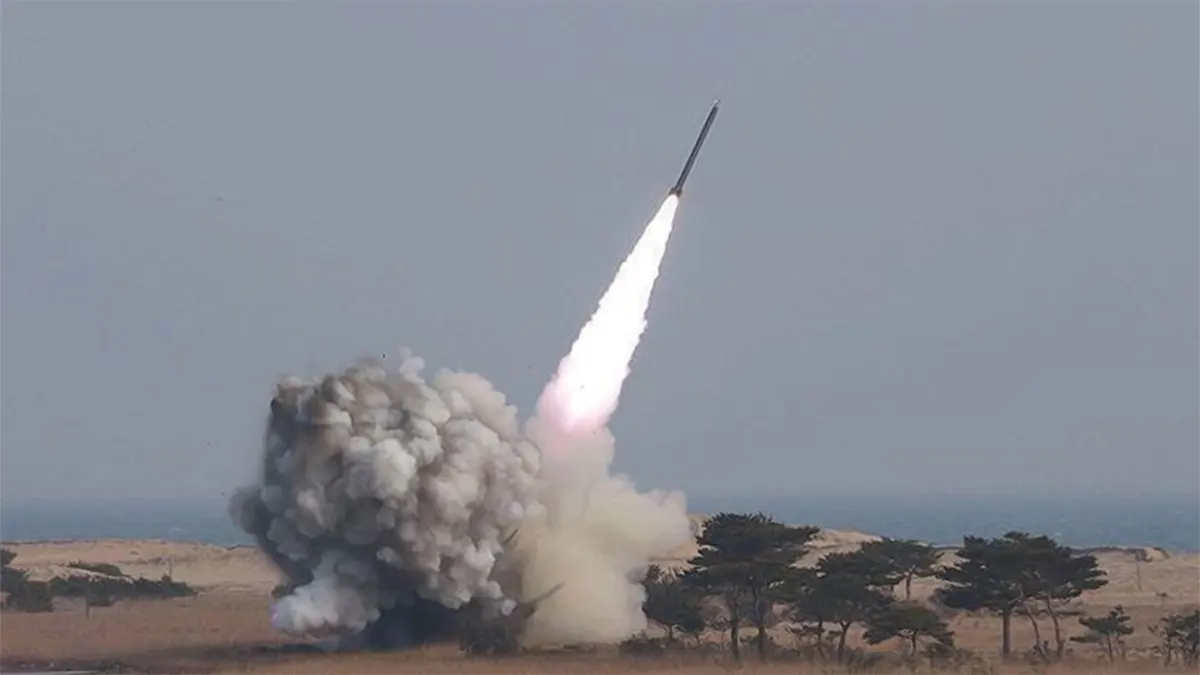
Israel’s air defense systems intercepted a ballistic missile launched from Yemen early Saturday morning, marking another major escalation tied to the ongoing regional fallout from the Gaza conflict.
The missile, fired by Iran-backed Houthi forces, triggered air raid sirens across central Israel, including areas around Tel Aviv, forcing residents to rush into shelters before the projectile was destroyed midair.
Although no major damage was reported, the attack highlights the growing reach of regional militant groups and raises fresh concerns about the possibility of a wider Middle East conflict.
Air Raid Sirens Echo Across Central Israel
According to the Israel Defense Forces, the missile was launched from Yemen toward Israeli territory before being intercepted by Israel’s missile defense network.
Warning sirens sounded across several cities, including Rishon LeZion, Holon, and southern parts of Tel Aviv, prompting emergency responses and temporary public panic.
Israeli emergency officials said at least nine people suffered minor injuries while running to shelters or dealing with stress-related symptoms during the alert.
The interception once again demonstrated the effectiveness of Israel’s layered air defense systems, which include:
- Iron Dome
- David’s Sling
- Arrow missile interceptors
These systems are designed to defend against threats ranging from short-range rockets to long-range ballistic missiles.
Houthis Claim Use of a “Hypersonic” Missile
Shortly after the launch, Houthi military spokesperson Yahya Sarea claimed the group had used a new hypersonic ballistic missile capable of carrying multiple warheads.
He stated the attack targeted “sensitive sites” near Jaffa in southern Tel Aviv and claimed the missile successfully achieved its objectives.
However, Israeli officials and independent defense analysts have not confirmed those claims.
Military experts note that truly hypersonic weapons require speeds above Mach 5 along with advanced maneuverability capabilities. Most analysts believe the Houthis are likely using modified Iranian-made ballistic missiles such as the Burkan-3 or Zulfiqar systems, which do not meet the technical definition of hypersonic weapons.
Even so, the attack remains significant because the missile traveled more than 1,500 kilometers before reaching Israeli airspace.
Yemen’s Houthis Expand Their Role in the Conflict
The latest launch is part of a broader pattern of Houthi attacks linked to the war between Israel and Hamas.
Since October 2023, the Houthis have increasingly positioned themselves as part of the Iran-aligned “Axis of Resistance,” alongside groups such as Hezbollah and other regional militias.
Their operations have included:
- Long-range missile launches toward Israel
- Drone attacks
- Strikes targeting commercial shipping in the Red Sea
Those attacks have disrupted global trade routes, forcing many shipping companies to reroute vessels around southern Africa instead of using the Red Sea and Suez Canal corridor.
The United States and the United Kingdom have responded with airstrikes against Houthi-controlled sites in Yemen, while Israel has also carried out limited retaliatory operations.
Rising Concerns Over Regional Escalation
While Israel successfully intercepted the missile, the incident carries wider strategic implications.
Security analysts say the biggest concern is not just the weapon itself, but what the attack represents politically and militarily.
By launching missiles from Yemen toward Israel, the Houthis are demonstrating their ability to threaten Israeli territory from a considerable distance. That creates additional pressure on Israel’s defense systems and expands the conflict far beyond Gaza.
The repeated use of terms like “hypersonic missile” may also be part of a broader psychological strategy designed to amplify fear and uncertainty.
Even if the weapon was not truly hypersonic, experts warn that larger coordinated attacks involving drones and ballistic missiles could eventually challenge even advanced defense systems.
Netanyahu Warns of a Strong Response
Israeli Prime Minister Benjamin Netanyahu condemned the missile launch and repeated previous warnings that attacks against Israel would be met with force.
In earlier statements, Netanyahu said the Houthis would “pay a heavy price” if strikes on Israeli territory continued.
For now, Israeli officials appear focused on strengthening defensive readiness while avoiding direct large-scale military involvement in Yemen.
However, the increasing frequency of missile and drone attacks may eventually force Israel to reconsider its approach.
The Gaza Conflict Is Becoming Regional
The missile interception underscores how the Gaza war has evolved into a much broader regional confrontation.
What began as fighting centered around Gaza now increasingly involves actors across:
- Lebanon
- Syria
- Iraq
- Yemen
- The Red Sea corridor
As tensions continue rising, the risks of miscalculation and wider escalation are growing.
Regional powers and international allies are now facing a more complex security environment where multiple fronts can ignite simultaneously.
A Warning Sign for the Middle East
Although Saturday’s missile caused limited physical damage, its political and strategic significance is much larger.
The incident highlights the growing capabilities of regional militant groups, the expanding influence of Iran-backed networks, and the fragile state of Middle Eastern security.
For Israel and its allies, the challenge is no longer limited to defending Gaza’s borders. The conflict is increasingly stretching across the wider region, creating new risks that could reshape the balance of power in the Middle East.