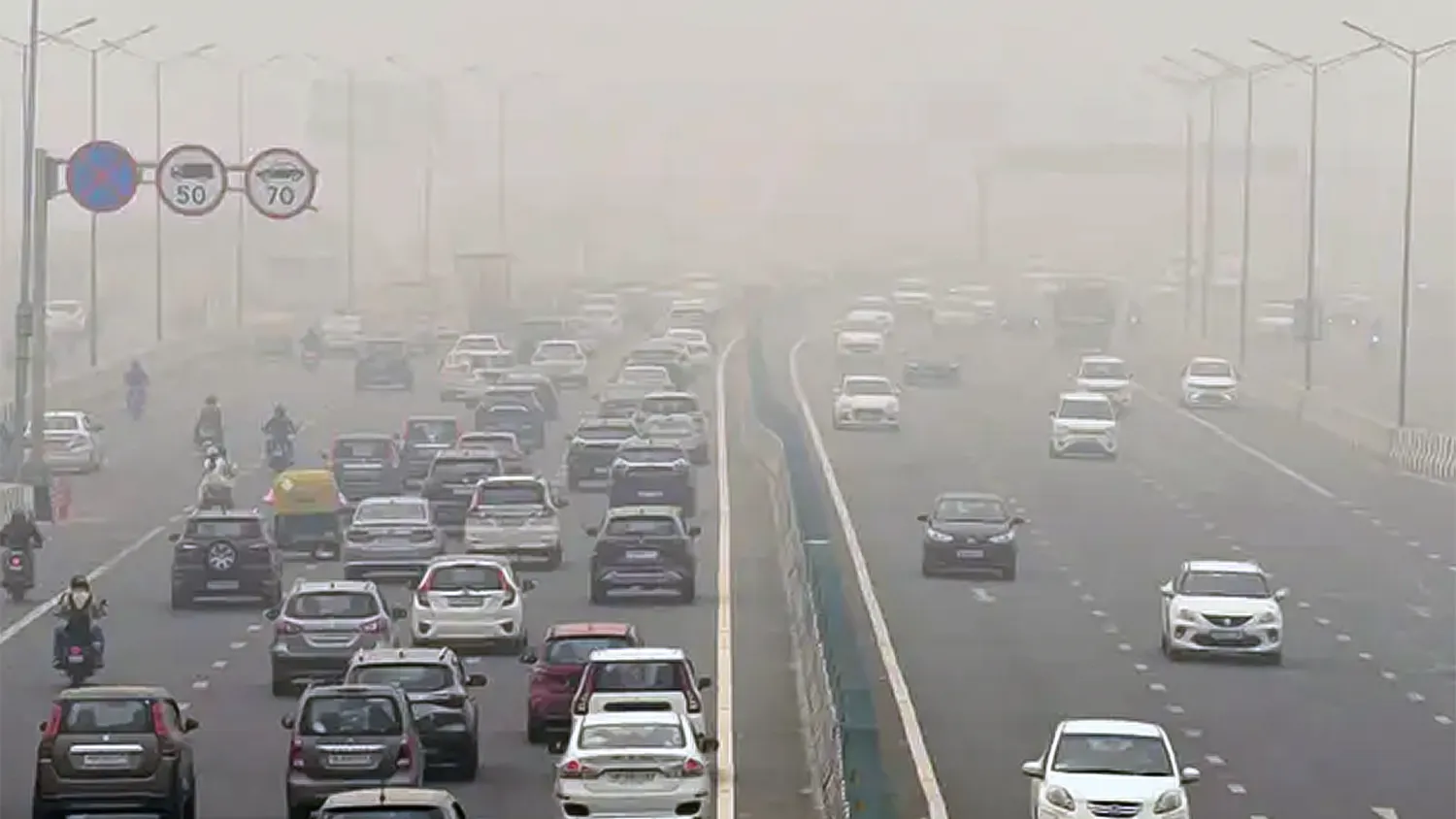
For another year running, New Delhi holds a title no city wants: the most polluted urban center on the planet. The Air Quality Life Index 2025, released by the Energy Policy Institute at the University of Chicago, doesn’t just confirm the ranking, it puts a number on what that pollution actually costs the people living there.
More than eight years of life expectancy. That’s what Delhi residents stand to lose if current air quality levels persist. Not quality of life actual years of life, gone, because of the air they breathe every single day.
The Invisible Killer Blanketing the City
The primary culprit is fine particulate matter, known as PM2.5, microscopic particles so small they bypass the body’s natural defenses and embed deep into the lungs and bloodstream. Long-term exposure doesn’t just cause discomfort. It drives chronic respiratory illness, heart disease, strokes, and in children, developmental delays and weakened immune systems.
Delhi’s toxic air is a year-round problem, but it peaks brutally in winter, when a lethal combination of factors converges: crop stubble burning from farms in the surrounding northern states, vehicle exhaust from one of the world’s largest urban populations, industrial emissions, and construction dust, all trapped under cold, stagnant air that has nowhere to go.
Delhi Is the Worst, But India’s Problem Is Much Bigger
It would be a mistake to frame this as Delhi’s problem alone. The AQLI 2025 report and the World Air Quality Report 2024 from IQAir tell a story that stretches across the entire country.
Every single one of India’s 1.4 billion people lives in a region where pollution levels exceed WHO safety guidelines. Not most Indians. Not urban Indians. All of them. India ranked as the fifth most polluted country in the world in 2024, and the northern states home to hundreds of millions remain the most severely affected.
Some cities are making progress. Mumbai, Kolkata, and Chennai have recorded incremental improvements through cleaner fuels and tighter emission controls. But northern India is moving in the wrong direction, and the scale of the problem dwarfs the pace of the solutions being applied.
Pollution and Climate Change Are Making Each Other Worse
Here’s what makes this crisis particularly difficult to solve: air pollution and climate change aren’t separate problems. They’re locked in a cycle that makes each one harder to fight.
Pollution accelerates warming. Black carbon the soot released by burning acts as a short lived but powerful greenhouse gas, trapping heat in the atmosphere. Ground level ozone does the same. Together, they speed up ice melt, damage crops, and intensify droughts.
Then warming turns around and makes pollution worse. Higher temperatures accelerate the formation of ground-level ozone. Stagnant heat traps pollutants near the ground instead of dispersing them. And climate-driven wildfires, dust storms, and extreme weather events pump enormous amounts of particulate matter back into the air.
The result is a self-reinforcing loop. You can’t meaningfully address one without addressing the other and right now, India is struggling to get ahead of either.
What Experts Say Needs to Happen
The prescription from scientists, doctors, and policy analysts is not complicated but it requires political will and sustained investment at a scale India hasn’t yet committed to.
The priorities are consistent across experts: a faster transition to solar, wind, and other clean energy sources to reduce dependence on coal and diesel; widespread electric public transport to cut vehicle emissions in cities; strictly enforced industrial and construction standards that currently exist on paper but are poorly applied in practice; and urban greening trees, green belts, and air quality monitoring systems embedded into city planning rather than treated as afterthoughts.
Awareness matters too. Many Delhi residents, particularly in lower-income communities, have limited access to information about the specific health risks they face daily or the behavioral changes like avoiding outdoor exercise on high-pollution days that could reduce some of that exposure.
The Cost of Doing Nothing
Doctors in Delhi are already seeing the consequences of decades of inaction: hospitals strained by respiratory cases, children diagnosed with asthma at rates that would have seemed extraordinary a generation ago, and a steady erosion of the basic expectation that the air outside is safe to breathe.
Without a serious and sustained intervention, the trajectory is clear. Delhi risks becoming genuinely unlivable not as a dramatic metaphor, but as a measurable public health reality in which the environment itself becomes one of the leading causes of death and disability for its residents.
That’s not a distant scenario. For many Delhiites, it’s already their daily reality.
This Is a Global Warning, Not Just an Indian One
Delhi’s air quality crisis carries a message that extends far beyond South Asia. The mechanisms driving it fossil fuel dependence, rapid urbanization outpacing infrastructure, the compounding feedback loop between pollution and climate change are present in cities across the developing world, and increasingly in the developed world too.
What happens in Delhi when a megacity fails to get ahead of its air quality crisis is a preview of what other cities face if they follow the same path.
Clean air is not a luxury. For the people of Delhi, and for future generations everywhere, it has become a matter of survival and the window to act is narrowing faster than most people realize.