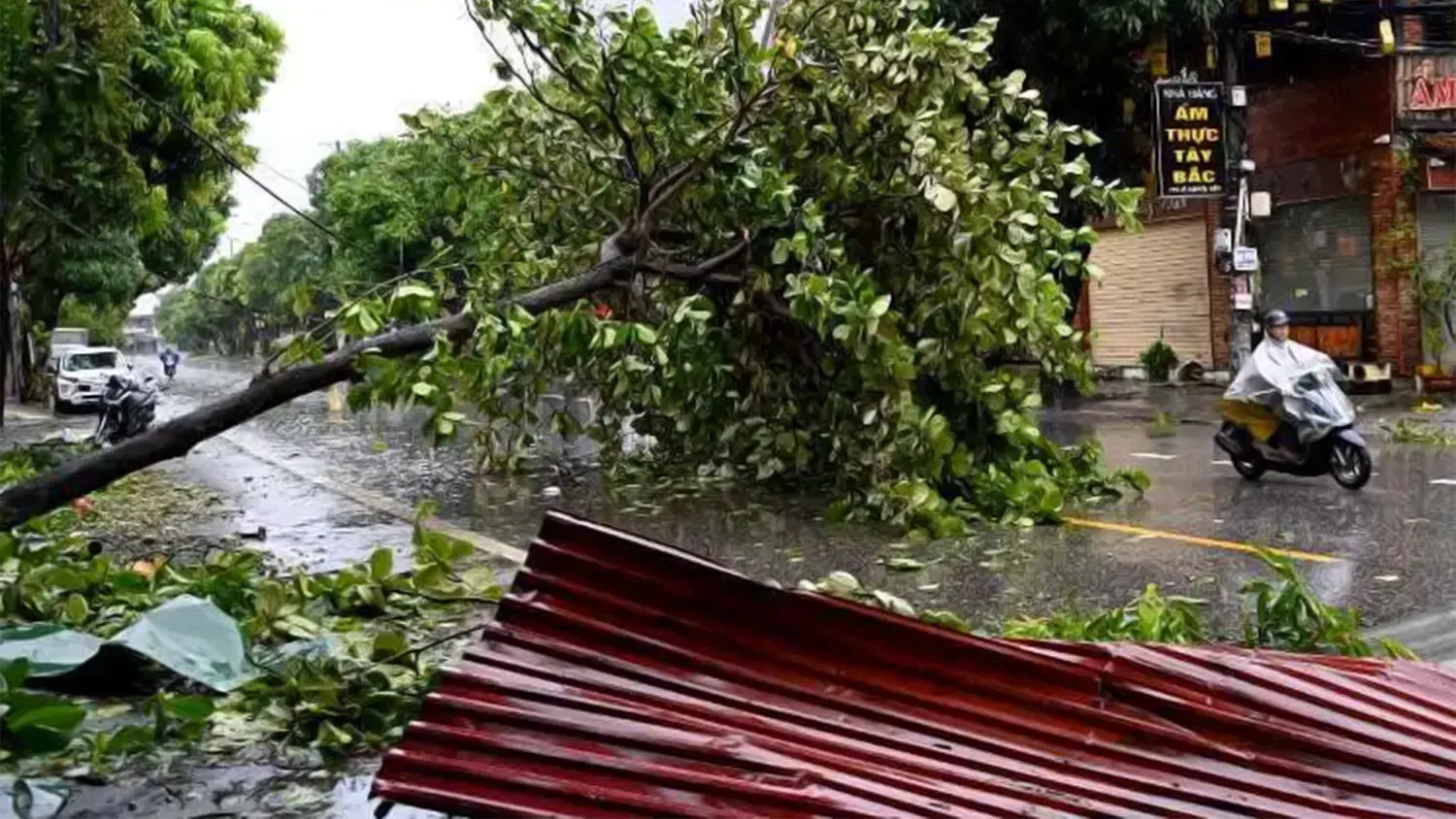
Typhoon Kajiki made landfall in central Vietnam on Monday with little mercy bringing walls of rain, fierce winds, and flooding that left a trail of damage across multiple provinces and plunged more than a million homes into darkness.
The Human Cost
Three people were killed. Among them, a man died after being electrocuted while trying to secure his roof as the storm bore down, a reminder of how quickly desperate decisions in a typhoon can turn fatal. At least 13 others were injured, with emergency services still working to reach affected areas and assess the full scope of casualties.
What Kajiki Left Behind
The numbers tell a grim story. Nearly 7,000 homes were damaged. Thousands of hectares of rice fields many representing entire seasons of income for farming families were submerged. More than 18,000 trees were uprooted, and 331 electricity poles brought down, cutting power to over 1.6 million residents across the region.
Schools in several provinces shut their doors. Two regional airports suspended operations entirely. For many communities in Kajiki’s path, daily life came to a complete stop.
Vietnam Moved Fast Before It Hit
To the credit of Vietnamese authorities, the evacuation response was swift. More than 44,000 residents were moved out of vulnerable coastal areas before landfall, a decision that almost certainly kept the death toll from climbing higher. It’s a reflection of how much Vietnam has invested in early warning systems and disaster preparedness over the years, even as the storms it faces keep getting harder to manage.
It’s Weakened, But the Danger Isn’t Over
Kajiki has since weakened into a tropical depression and pushed into Laos, but forecasters aren’t giving northern Vietnam the all-clear yet. Heavy rainfall is still expected, and with saturated ground and swollen rivers, the risk of flash floods and landslides remains very real in the days ahead. Communities that escaped the worst of the typhoon may still find themselves in the path of what it leaves behind.
A Worsening Pattern
Vietnam sits in one of the most typhoon-prone regions on the planet, and storm seasons have long been written into the rhythm of life here. But climate experts are increasingly concerned that what once felt predictable is becoming anything but.
Rising global temperatures are making typhoons more intense, more erratic, and harder to prepare for even for a country with as much hard-won experience as Vietnam. Kajiki is one storm. The broader pattern it fits into is what keeps disaster planners up at night.