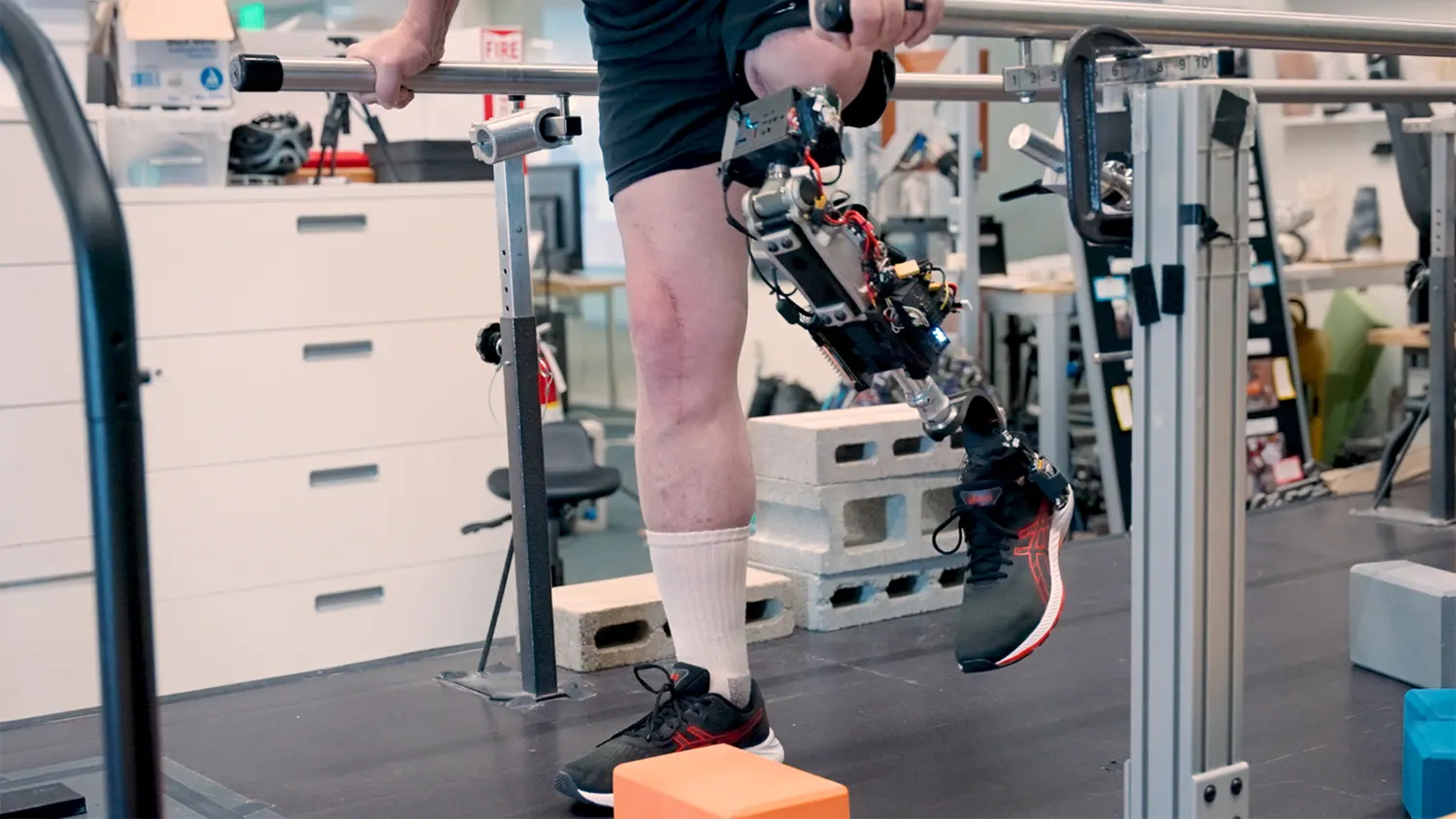
A major leap forward in bionic prosthetic technology is reshaping what’s possible for individuals with limb loss. Researchers at Massachusetts Institute of Technology have developed an advanced bionic knee that enables above the knee amputees to move more naturally, climb stairs with ease, and navigate obstacles with confidence.
This innovation goes beyond incremental improvement, it represents a fundamental shift in how prosthetic limbs interact with the human body.
A New Approach: Tissue Integrated Prosthetics
At the heart of this breakthrough is a tissue-integrated prosthesis design, which replaces the traditional socket based system. Instead of attaching externally, the prosthetic is anchored directly into the bone using a titanium rod implanted into the femur.
This system, known as the Osseointegrated Mechanoneural Prosthesis (OMP), provides:
- A stable skeletal connection for improved balance
- Elimination of socket related discomfort
- Greater control and durability
By removing the need for external sockets, users experience enhanced comfort and long term usability, addressing one of the most common challenges in prosthetic design.
Advanced Muscle Interface Enables Natural Control
What truly sets this innovation apart is its integration with the body’s natural muscle system. Led by Hugh Herr, the research team developed a surgical technique called the Agonist-Antagonist Myoneuronal Interface (AMI).
This procedure reconnects opposing muscle groups such as quadriceps and hamstrings allowing them to function in a natural push-pull dynamic.
The result:
- Intuitive prosthetic control through muscle signals
- Real time responsiveness during movement
- A more lifelike walking experience
This system allows the prosthetic knee to respond seamlessly to the user’s intent, rather than relying on pre programmed mechanical actions.
Sensory Feedback Restores Body Awareness
One of the most groundbreaking aspects of the technology is its ability to provide sensory feedback in prosthetics. The AMI interface generates electrical signals that not only control movement but also send information back to the brain.
Users report:
- A stronger sense of connection to the limb
- Improved balance and coordination
- A feeling that the prosthetic is part of their body
This concept of prosthetic embodiment represents a major psychological and functional advancement over traditional devices.
Clinical Results Show Significant Improvements
Early clinical trials have delivered promising outcomes. Participants using the OMP system demonstrated:
- Faster walking speeds and smoother gait
- Greater ease when climbing stairs
- Improved ability to navigate uneven terrain
Perhaps most notably, users experienced a heightened sense of confidence and independence key factors in improving overall quality of life.
Eliminating Pain Points of Traditional Prosthetics
Traditional socket-based prosthetics often cause friction, skin irritation, and discomfort. The OMP system eliminates these issues by anchoring directly to the bone.
This leads to:
- Reduced skin complications and irritation
- Increased comfort during extended use
- Better long term physical health outcomes
It’s a shift that not only improves performance but also addresses long standing usability concerns.
What’s Next for This Groundbreaking Technology?
While the results are encouraging, the technology is still in development. The MIT team is now preparing for larger clinical trials and working toward regulatory approval.
The process may take several years, but the potential impact is significant. As research progresses, this innovation could set a new standard for next generation prosthetic solutions worldwide.
A New Era for Prosthetic Innovation
The MIT bionic knee represents a transformative step in prosthetics, combining advanced engineering with human biology to deliver a more natural and intuitive experience.
As this technology evolves, it offers hope for a future where prosthetic limbs are not just functional tools but true extensions of the human body. For millions of amputees, that future could mean greater mobility, comfort, and independence.
The next phase will be critical, but one thing is clear: the future of prosthetics has already begun.