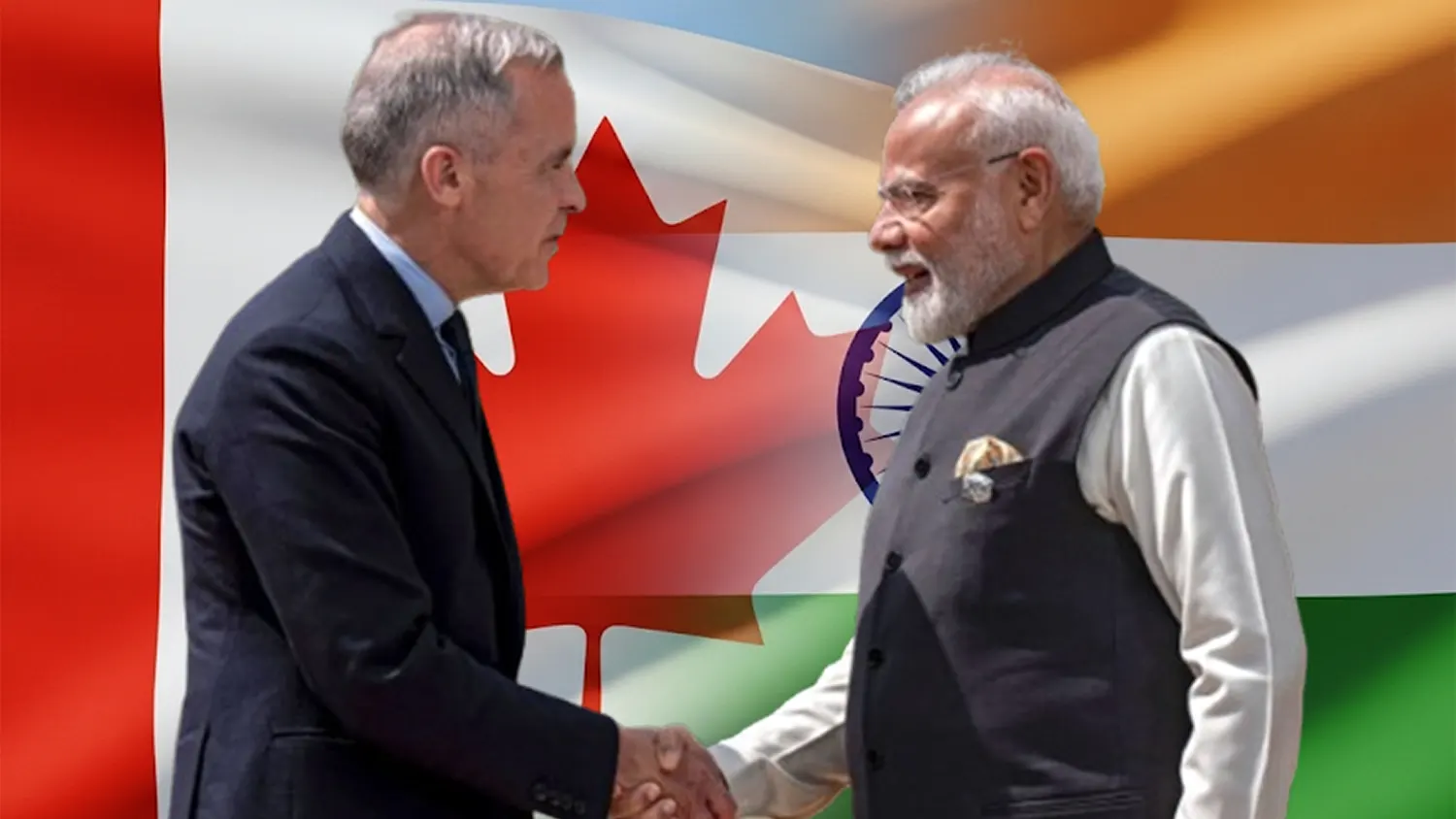
A little over a year ago, Canada and India were in the middle of one of the worst diplomatic crises in their shared history. Today, they are carefully and cautiously trying to put it back together.
New high commissioners have been appointed on both sides. The two countries’ leaders have met face to face. And the language coming out of both capitals, while measured, is no longer hostile. For a relationship that came remarkably close to breaking down entirely, that counts as real progress.
How a Single Allegation Unraveled Years of Diplomacy
The crisis traces back to June 2023, when Hardeep Singh Nijjar, a Canadian Sikh activist and outspoken advocate for Khalistan, a proposed independent Sikh homeland was shot and killed in British Columbia.
Three months later, then Prime Minister Justin Trudeau made a stunning public statement: Canadian intelligence agencies were investigating “credible allegations” that Indian government agents had been involved in the assassination.
India rejected the accusation outright, calling it “politically motivated” and accusing Ottawa of turning a blind eye to Sikh separatist activity on Canadian soil. What followed was a swift and damaging cascade of diplomatic fallout.
The Measures Both Sides Took Were Severe
The tit for tat response was serious enough to cripple the day to day functioning of the relationship. Senior diplomats were expelled from both countries. India temporarily suspended visas for Canadian citizens. New Delhi then ordered Canada to withdraw 41 of its diplomats, a move that gutted Ottawa’s ability to provide basic consular services in India. Bilateral trade talks, which had been gaining momentum, were shelved with no timeline for resumption.
It was, by any measure, an extraordinary rupture between two countries that had long maintained a stable and mutually beneficial partnership.
A Change in Leadership Opened a Door
The thaw didn’t come from any dramatic breakthrough, it came from a quieter shift in Ottawa’s political landscape.
With Mark Carney taking over as Prime Minister, India got a new interlocutor. Carney met with Indian Prime Minister Narendra Modi on the sidelines of the G7 summit in Alberta this past June, and the two leaders agreed to pursue what they called “calibrated and constructive” steps toward restoring diplomatic stability. The first concrete outcome: both sides would reinstate top level envoys.
Two New Diplomats Sent to Signal Renewed Intent
In a coordinated move, Canada and India have now each appointed new High Commissioners, the senior most diplomatic representatives exchanged between Commonwealth nations.
Canada is sending Christopher Cooter, a veteran diplomat with over 35 years of experience who has previously served in New Delhi, a choice that signals familiarity and seriousness of purpose. India, for its part, is dispatching Dinesh Patnaik, currently its ambassador to Spain, to take up the post in Ottawa.
These aren’t just bureaucratic appointments. In diplomatic terms, sending experienced, credible envoys after a prolonged standoff is a deliberate signal both countries are showing they want this to work.
Too Much Is at Stake for Either Side to Walk Away
The motivation to repair ties goes well beyond politics. The two countries are deeply intertwined in ways that make prolonged estrangement costly for both.
India is Canada’s largest source of international students and temporary workers, a pipeline that feeds Canadian universities, hospitals, and industries. For Canada, India also represents a significant opportunity to diversify trade relationships at a time when global supply chains are shifting and the pressure to reduce economic dependence on any single partner has never been higher.
For India, Canada sits within a network of Western alliances that New Delhi wants access to especially as it navigates its own complicated position in an increasingly multipolar world, balancing ties with the West against its own strategic priorities.
What This Means Beyond the Two Countries
The quiet normalization of Canada-India relations carries implications that reach further than either capital.
Canada has been deepening its alignment with U.S. and European partners on Indo-Pacific strategy, and a stable relationship with India is central to that effort. For India, maintaining functional partnerships with Western democracies even ones it has clashed with is part of its broader balancing act on the world stage.
Neither side is declaring victory or pretending the past year didn’t happen. But both appear to have concluded that the cost of staying estranged is higher than the discomfort of moving forward. In diplomacy, that’s often where reconciliation begins.