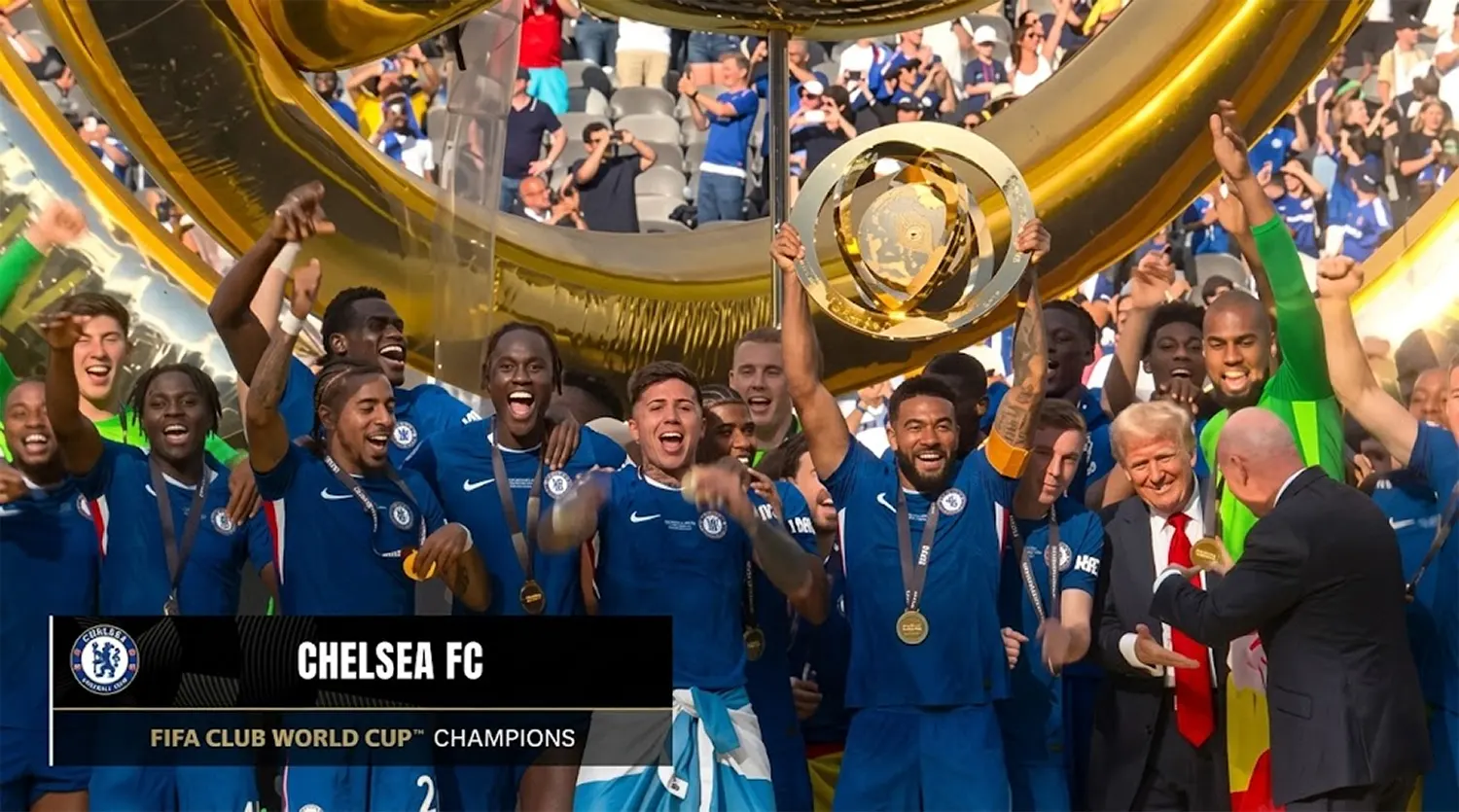
Chelsea FC defeated Paris Saint-Germain 3-0 on July 13, 2025, at MetLife Stadium to become the first champions of the newly expanded FIFA Club World Cup.
The victory marked a historic milestone, as Chelsea lifted the first title in the tournament’s new format, delivering a dominant performance in front of more than
81,000 fans.
More importantly, the result signaled the arrival of a new global era in club football
one defined by scale, competition, and worldwide reach.
Cole Palmer Delivers a Defining Performance
At the center of the final was Cole Palmer.
Palmer was directly involved in all three goals, scoring twice and providing an assist in a performance that earned him the tournament’s Golden Ball award.
He opened the scoring with a composed finish, before doubling the lead minutes later with another precise strike.
But the defining moment came just before halftime.
Palmer delivered a perfectly timed through ball, setting up João Pedro, who chipped the ball over goalkeeper Gianluigi Donnarumma to make it 3-0.
In less than 45 minutes, the game was effectively over.
A First Half Blitz That PSG Could Not Answer
The pace and control of the match left little room for a comeback.
Chelsea dominated from the opening minutes, pressing high and controlling possession against a PSG side that entered the final as Champions League winners.
By halftime, the three goal lead reflected total control, not just efficiency.
While the second half saw moments of frustration from PSG including a red card for João Neves, the outcome was never seriously in doubt.
Chelsea’s structure, discipline, and composure ensured they saw the match out comfortably.
A Tough Road to the Title
This victory did not come easily.
Chelsea’s path through the tournament was demanding:
- A 4-1 win over Benfica in the Round of 16
- A 2-1 victory against Palmeiras in the quarter finals
- A 2-0 win over Fluminense in the semi finals
Each match tested different aspects of the squad, from attacking depth to defensive resilience.
By the time they reached the final, Chelsea had already proven they could compete with top clubs from multiple continents.
More Than a Trophy A Statement of Global Dominance
This tournament carried added significance.
The 2025 edition marked the first expanded FIFA Club World Cup, designed to bring together elite clubs from around the world in a longer, more competitive format.
By winning it, Chelsea not only secured silverware but also set the benchmark for future champions.
It also marked their second Club World Cup title, following their 2021 triumph further cementing their place among the elite clubs in world football.
Individual Brilliance Meets Team Discipline
While Palmer stole the spotlight, the victory was a collective effort.
Goalkeeper Robert Sánchez played a crucial role throughout the tournament, earning the Golden Glove for his performances.
At the same time, manager Enzo Maresca’s tactical approach ensured the team remained balanced and consistent under pressure.
The combination of individual brilliance and tactical discipline proved decisive, especially in high stakes matches.
A New Era for Club Football Begins
The success of this tournament signals a shift in the global game.
The expanded Club World Cup introduces a new level of international competition, bringing together clubs from Europe, South America, and beyond in a single, high stakes format.
Chelsea’s victory now becomes part of that foundation.
As the first champions of this new era, they have set the standard both in performance and ambition.
And if this final is any indication, the future of global club football will be faster, bigger, and more competitive than ever before.