History is often told through kings, monuments, and grand achievements. But sometimes, the most powerful stories come from something far simpler.
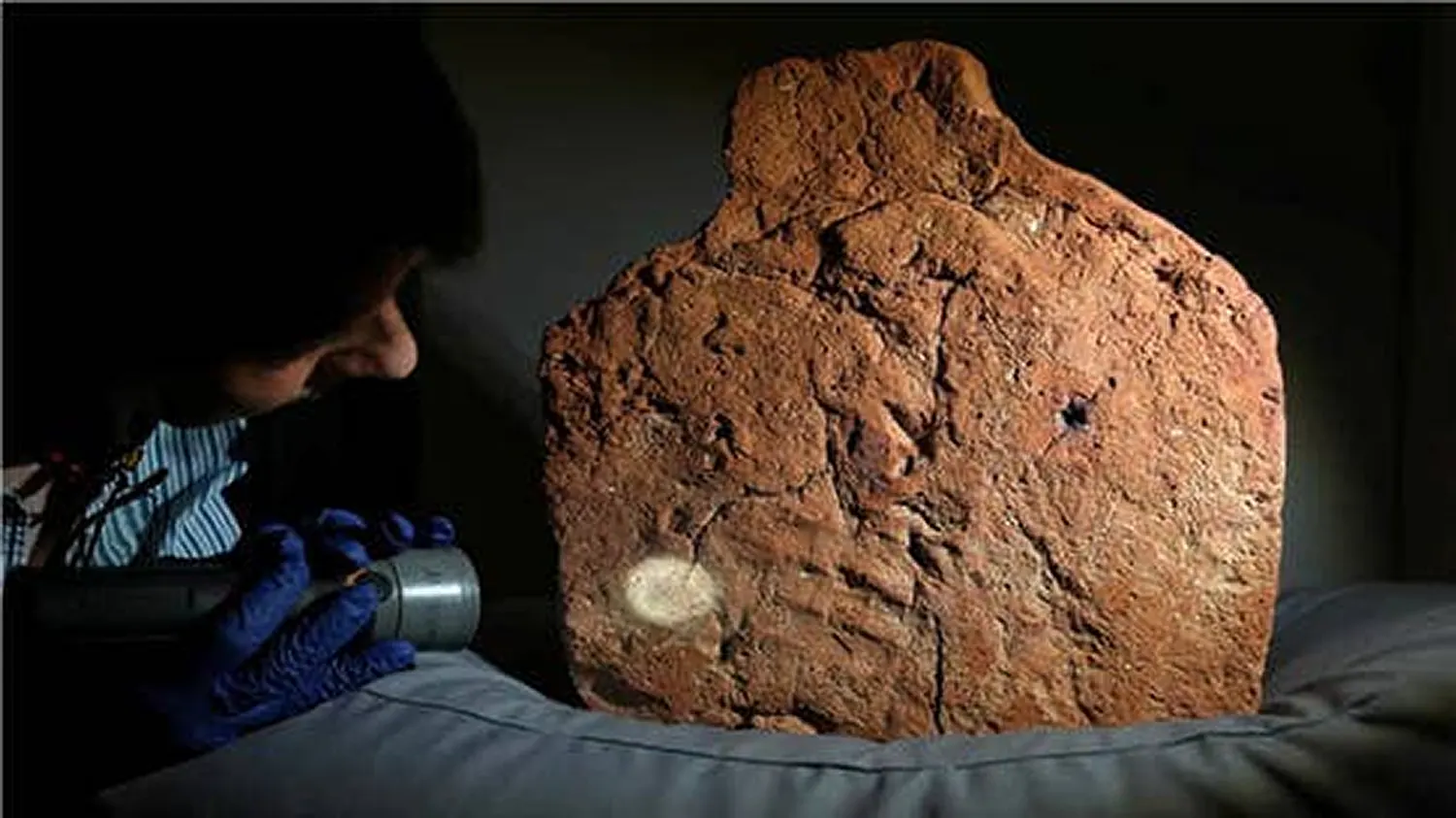
A 4,000 year old handprint discovered in Cambridge offers a rare and deeply human connection to ancient Egypt, one that feels almost personal.
Unlike towering pyramids or elaborate tombs, this small imprint brings us face to face with an individual who lived, worked, and left their mark thousands of years ago.
A Discovery That Feels Personal
The handprint was identified by researchers at a Cambridge museum during the careful study of ancient Egyptian artifacts.
At first glance, it may seem like a minor detail. But in reality, it is one of the most intimate traces of the ancient world ever found.
Pressed into soft material likely clay or plaster before it hardened, the handprint has survived for four millennia.
It captures a single, unplanned moment in time when someone paused, touched a surface, and unknowingly left behind a message for the future.
Beyond Kings and Monuments
When we think of ancient Egypt, we often picture pharaohs, temples, and monumental architecture.
But this discovery shifts the focus away from rulers and toward the people who actually built that world.
This handprint likely belonged to a worker, craftsman, or laborer someone whose name was never recorded in history books.
It is a reminder that behind every great civilization are countless unseen individuals whose efforts made it possible.
Why This Handprint Matters
What makes this discovery so remarkable is not its size or location but what it represents.
It captures a fleeting moment from 4,000 years ago, preserved with astonishing clarity.
It also reveals the physical reality of ancient work. The imprint may have been left during construction, pottery making, or while applying plaster to a wall.
In that sense, it tells a story of daily life of labor, routine, and human presence.
Most importantly, it offers undeniable proof of individuality.
This is not an abstract symbol or carved inscription. It is the exact shape of a human hand unique, physical, and real.
A Window Into Everyday Life
Because of this, the handprint does something rare. It bridges time.
It reminds us that people in ancient Egypt were not so different from us.
They worked with their hands. They built, created, and shaped their surroundings. And sometimes, without realizing it, they left behind traces of themselves.
These small details often overlooked are what bring history to life.
They turn distant civilizations into something familiar and relatable.
The Power of Small Discoveries
Modern archaeology often focuses on major finds tombs, treasures, and inscriptions.
But discoveries like this highlight a different truth.
Sometimes, the smallest traces carry the deepest meaning.
A simple handprint can reveal how materials were handled, how structures were built, and how people interacted with their environment.
At the same time, it creates an emotional connection that no artifact of gold or stone can match.
It allows us to see history not as something distant, but as something human.
The Bottom Line
This 4,000 year old handprint is more than an archaeological find, it is a direct connection to a real person from the ancient world.
It reminds us that history is not only shaped by rulers and empires, but by ordinary individuals whose lives often go unrecorded.
And perhaps most importantly,
it shows that even the simplest human action can leave a mark that lasts for thousands of years.