A New Shock to the Global Economy
A fresh wave of aggressive U.S. tariffs is rattling global markets and raising fears of inflation and supply chain disruption.
From India’s export sectors to the global semiconductor industry, Washington’s latest moves signal a sharp escalation in protectionist policy. Investors, corporations, and governments are now reassessing risks as the United States pushes to reshape international trade in its favor.
A Sharp Escalation: Tariffs on India Reach 50%
The most immediate impact is being felt in India.
The U.S. has imposed additional tariffs that bring total duties on many Indian exports to as high as 50%. This marks one of the most severe trade actions in recent years.
The decision is tied directly to India’s continued purchase of Russian oil, which Washington views as undermining its broader sanctions strategy against Moscow. As a result, trade policy has become a tool of geopolitical pressure.
Market Reaction and Economic Impact
At first glance, Indian markets appeared stable. Major indices like the Nifty50 and Sensex posted modest gains. However, beneath the surface, the strain is evident.
Export-driven sectors are absorbing the immediate shock.
- Textiles, gems and jewelry, seafood, and auto components have seen stock declines of up to 6%
- Analysts warn that a 50% tariff could effectively function as a trade embargo for low margin industries
- Investor sentiment is shifting toward domestic focused sectors such as telecom, cement, and hospitality
At the macro level, the outlook is also deteriorating.
Economists are already revising India’s growth forecasts downward.
Major institutions estimate the tariffs could reduce GDP growth by 40–50 basis points if sustained.
Semiconductor Tariffs: A Global Supply Chain Disruption
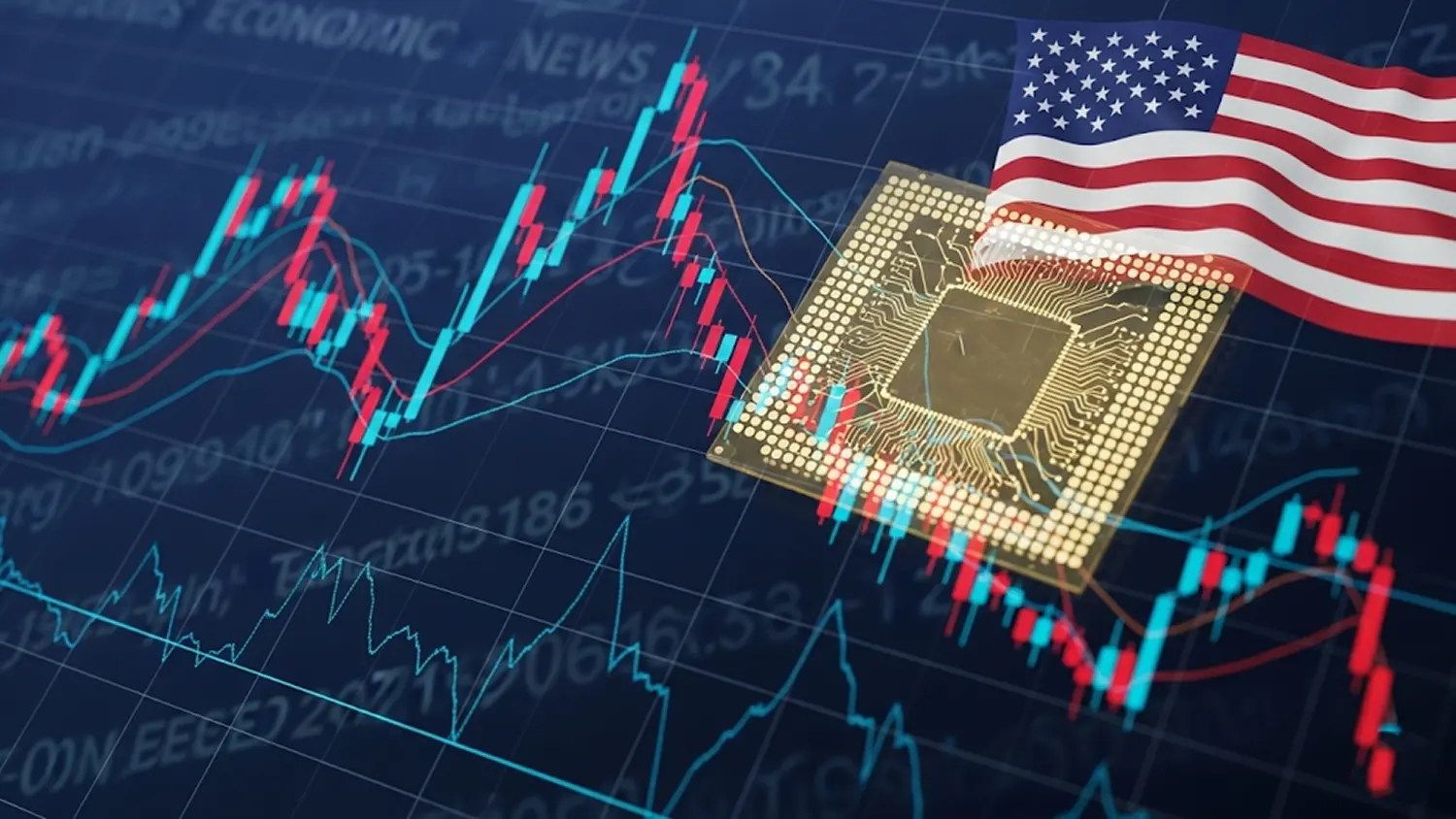
At the same time, Washington has taken aim at a far larger target: the global technology supply chain.
A sweeping 100% tariff on imported semiconductors has been introduced, marking a dramatic attempt to force companies to relocate production to the United States.
This policy strikes at the heart of a system long dominated by Asian manufacturing hubs.
Corporate Response: Invest or Pay the Price
The policy includes a critical exemption:
Companies that commit to U.S.-based manufacturing are spared the tariff.
This has triggered immediate reactions from major technology firms.
- Apple has pledged an additional $100 billion investment in U.S. chip manufacturing, bringing its total commitment to $600 billion
- The announcement drove a sharp rise in Apple’s stock, reflecting investor approval
- Other firms, including major chipmakers, are now reassessing global production strategies
However, the broader implications remain uncertain.
Wall Street is divided. While some companies benefit from exemptions, others face higher costs that could ripple across industries.
The key concern: rising prices for consumers.
From smartphones to cars and household electronics, higher input costs could translate directly into inflation.
A Fragile Global System: Limited Checks on Trade Conflict
These tariff moves are unfolding in an already unstable global environment.
The effective U.S. tariff rate is now at its highest level since the 1930s, signaling a structural shift in trade policy.
Research estimates suggest:
- U.S. GDP growth could decline by 0.5% annually
- The average household could face over $2,400 in annual income losses
Meanwhile, international institutions appear increasingly sidelined.
Brazil has filed a complaint with the World Trade Organization, but the organization’s dispute resolution system remains weakened due to a non functioning appellate body.
This lack of enforcement raises a critical concern: there is no effective referee in the global trade system.
What Happens Next: A Market on Edge
Looking ahead, the situation remains highly fluid.
Investors and policymakers are watching several key factors:
- Potential retaliatory tariffs from affected countries
- Corporate decisions on relocating manufacturing
- Ongoing negotiations tied to broader geopolitical tensions
The global economy is entering a period of strategic uncertainty, where trade policy, geopolitics, and market dynamics are increasingly intertwined.
The Bottom Line
The latest U.S. tariffs mark more than a policy shift, they signal a restructuring of global trade itself.
On one side is the promise of revived domestic manufacturing in the United States. On the other is the growing risk of inflation, fragmented supply chains, and escalating trade conflicts.
For markets, businesses, and consumers alike, the balance between these forces will define the next phase of the global economy.