Something significant is shifting between Asia’s two biggest powers. After years of military standoffs, suspended trade routes, and deep diplomatic frost following the deadly 2020 Galwan Valley clashes, India and China appear to be carefully, deliberately and perhaps cautiously rebuilding their relationship.
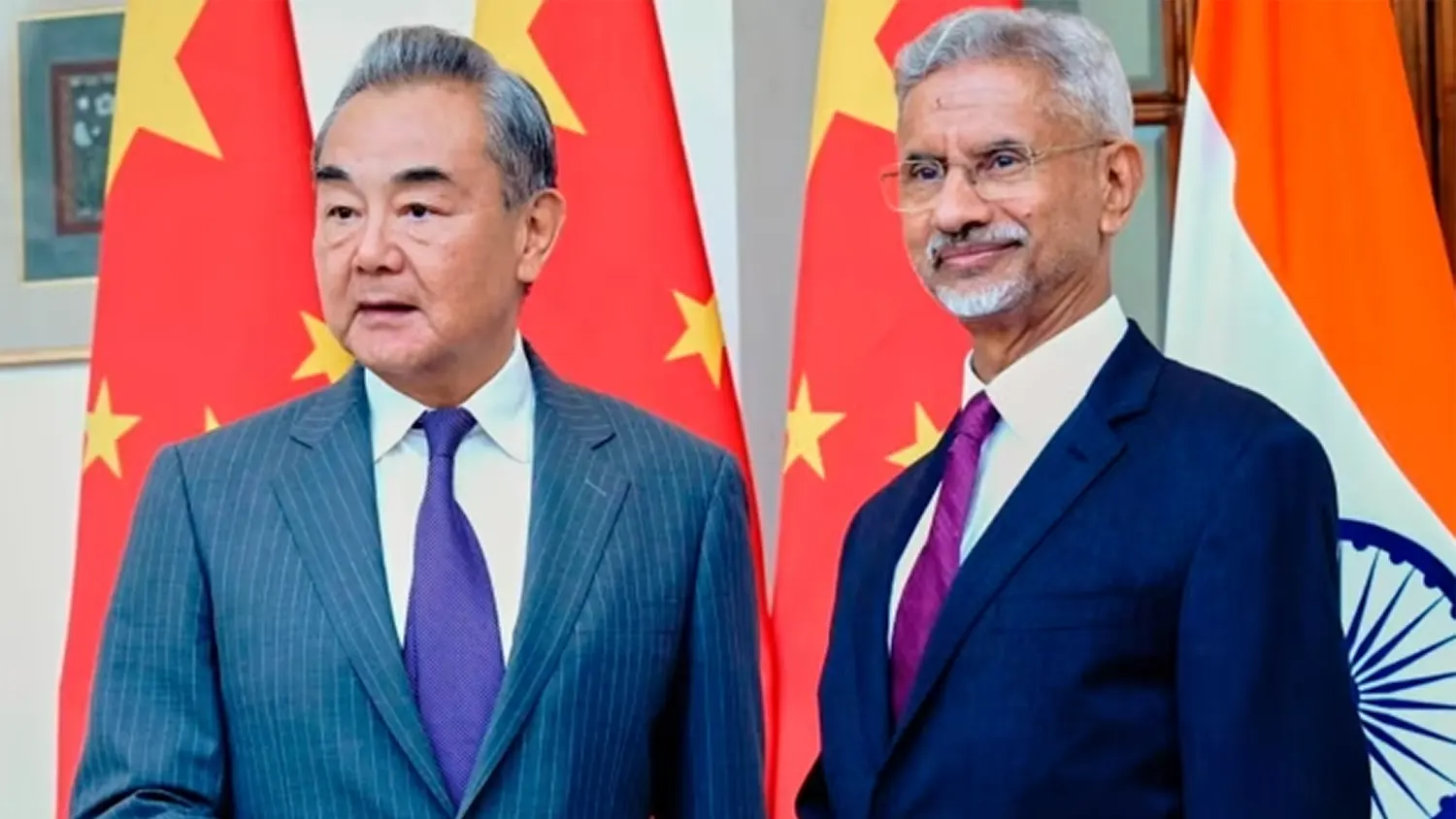
The recent visit of Chinese Foreign Minister Wang Yi to New Delhi has produced a set of concrete agreements that go well beyond symbolism. But whether this represents a genuine strategic realignment or simply a calculated marriage of convenience driven by external pressures is a question analysts are not yet ready to answer definitively.
What Was Actually Agreed And Why It Matters
The agreements coming out of Wang Yi’s New Delhi visit are tangible and significant. The two countries have decided to resume direct flight connectivity suspended since the 2020 clashes and to reopen three key border trade points at Lipulekh, Shipki La, and Nathu La.
These are not minor administrative moves. These crossings were deliberately shut down as punitive measures after Galwan. Reopening them is an explicit reversal of post conflict policy, and a clear signal that both governments are willing to put economic normalcy ahead of lingering grievances.
Both sides have also agreed to ease visa restrictions, clearing a path for the return of tourists, business travelers, and journalists, people to people links that had been all but severed for five years.
Politically, the most telling development is the formation of an expert group to explore “early harvest” options on border delimitation, a formal acknowledgment that both sides are willing to re engage on the very issue that has historically defined, and derailed, their relationship.
Adding to the diplomatic momentum, China has expressed support for India hosting the 2026 BRICS summit, with India reciprocating for China’s 2027 hosting. Within the BRICS framework, this mutual backing carries weight, a signal of a coordinated front against external economic and geopolitical pressure.
The Trump Factor: Pressure That’s Pushing Rivals Together
The timing of this diplomatic thaw is not accidental. It is unfolding against a backdrop of rising American protectionism under President Donald Trump, whose administration has imposed and threatened further steep tariffs on both Indian and Chinese goods.
When the world’s largest economy begins treating two of Asia’s biggest players as economic adversaries simultaneously, it creates an unexpected incentive for those players to find common ground. Analysts have noted that both India and China are actively seeking to diversify their trade relationships and reduce dependence on U.S.-controlled economic corridors.
The language in their joint statements is revealing. References to a “multipolar world” and a “rules-based trading system with the WTO at its core” read, in context, as a direct and deliberate counter-narrative to Washington’s “America First” posture.
In short: Trump’s tariff pressure may be doing more to bring India and China together than years of bilateral diplomacy managed to achieve.
Why the Optimism Should Stay Cautious
None of this means the India-China rivalry is over. It isn’t and both sides know it.
The border dispute remains fundamentally unresolved. The “early harvest” framing is itself a diplomatic acknowledgment that a comprehensive settlement is not imminent. Trust, once shattered by military confrontation and casualties, is not rebuilt by a single round of ministerial meetings.
China’s deep military and economic ties with Pakistan, India’s most fraught neighbor have not changed. Nor has Beijing’s expanding strategic footprint across Sri Lanka, Nepal, Bangladesh, and the Maldives, each of which India views as part of its own sphere of influence.
These are not footnotes. They are structural fault lines in the relationship that no flight route reopening or visa easing can paper over.
What is happening now is best understood as a tactical recalibration, two rival powers choosing, for the moment, to manage their competition rather than inflame it. The language of partnership is being deployed in service of parallel national interests, not shared vision.
What the Road Ahead Looks Like
The path forward will require sustained political will on both sides and a finely calibrated ability to manage differences without allowing them to escalate back into confrontation. That is a difficult balance to maintain, particularly when domestic politics in both countries have at times been served by nationalist posturing toward the other.
But the direction of travel, for now, is forward. Trade routes are reopening. Diplomats are talking. Expert groups are forming. After five years of deliberate estrangement, that is not nothing.
Whether this cautious rapprochement hardens into something more durable or fractures the moment the next border incident occurs will define one of the most consequential bilateral relationships in 21st-century geopolitics.
Asia’s two giants are not friends. But right now, they’ve decided it’s better to talk than to stare each other down. In a world growing more unstable by the month, that may be the most pragmatic kind of progress there is.