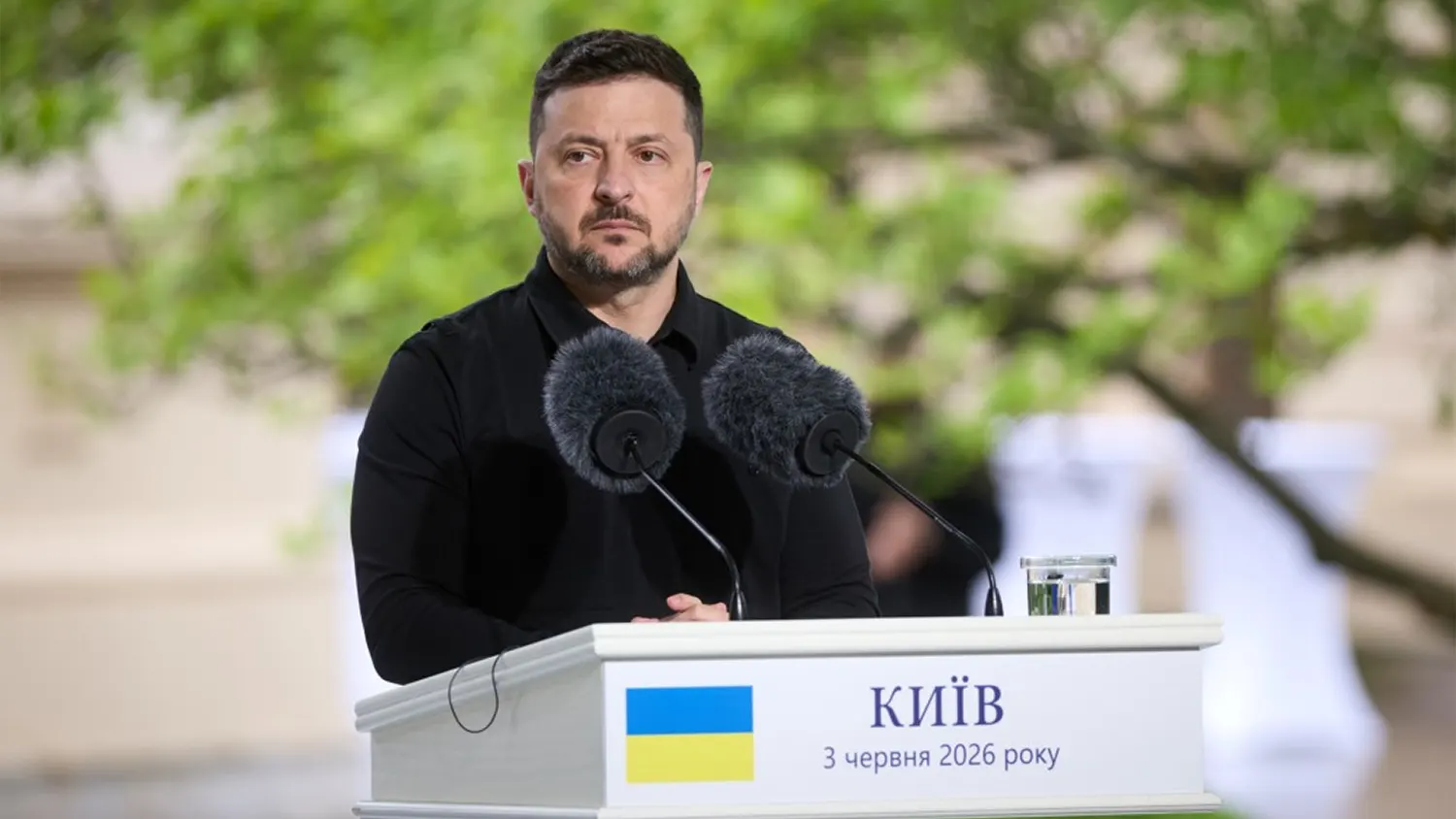
Ukrainian President Volodymyr Zelenskyy has signaled he’s willing to sit down with Vladimir Putin directly, face to face, no intermediaries. The announcement, made alongside NATO Secretary General Mark Rutte in Kyiv, sounds like a diplomatic breakthrough. But the reality is far more complicated, and understanding why the meeting hasn’t happened yet reveals a lot about how both sides view this war.
Ukraine Wants to Talk On Equal Terms
Zelenskyy didn’t just say he’s open to talks. He said Ukraine is now positioned to have them from a position of strength and that distinction matters enormously.
His reasoning: Ukraine’s deep-strike campaign against Russian territory, particularly against fossil fuel infrastructure, has given the country real military leverage. This isn’t just morale-building language. Ukraine has successfully used domestic Flamingo cruise missiles and advanced drone fleets to strike major Russian export hubs, including the Baltic ports of Ust-Luga and Primorsk. In early 2026, those strikes temporarily knocked out significant portions of Russia’s seaborne oil export capacity, costing Moscow billions in lost revenue within weeks.
Zelenskyy’s point is simple: a country that can do that doesn’t have to beg for a seat at the table. It can demand one.
He also raised another reason to move quickly. Global diplomatic attention especially from the United States has been steadily shifting toward other hotspots, particularly in the Middle East. Ukraine, Zelenskyy warned, can’t afford to wait “in line until everyone finishes all conflicts in the world.” The window for meaningful engagement may not stay open forever.
The Kremlin’s Counter: Show Up Only to Sign
Here’s where things break down. The Kremlin has never said it’s opposed to a Putin-Zelenskyy summit in principle. In fact, Moscow has previously acknowledged that Putin is open to a direct meeting. The catch? The Kremlin insists such a meeting should only happen to finalize a pre-agreed deal not to negotiate one.
Kremlin spokesperson Dmitry Peskov has framed it consistently: “serious work” must be done by lower-level delegations first, before the leaders even sit in the same room. What that “serious work” looks like in practice is Ukraine accepting Russian-occupied territories including much of the Donbas as a political reality before any summit takes place.
In other words, Moscow wants Kyiv to concede the territory before the handshake, not during it.
Zelenskyy’s position is the opposite: a direct meeting is the only way to break deadlocks on major issues like territorial sovereignty. Lower-level delegation talks have stalled repeatedly on exactly those questions. Skipping straight to the top, he argues, is the only way to cut through the gridlock.
This is the core clash. Ukraine sees direct dialogue as the starting point. Russia sees it as the finish line.
From Paper Sanctions to “Kinetic” Ones
To understand why Zelenskyy feels confident pushing for talks on equal footing, it helps to understand the strategy Ukraine has been quietly executing over the past year.
The shift is away from relying exclusively on Western economic sanctions, what analysts have started calling “paper sanctions” and toward what Ukraine is now doing with missiles and drones: physically dismantling Russia’s revenue engine.
The logic is brutal in its simplicity. Russia’s fossil fuel exports are its primary funding source for the war. Hit the pipelines, the refineries, and the ports, and you’re not just causing inconvenience, you’re cutting off the money that pays for the missiles hitting Ukrainian cities.
Ukraine’s strikes have already triggered domestic fuel crises inside Russia: localized gasoline shortages, price caps imposed by the Kremlin, and forced export bans as Moscow scrambles to keep its own military and civilian vehicles running. These aren’t just headlines, they’re signs that the campaign is reaching Russian civilians in ways that Western sanctions largely haven’t.
Why This Changes the Negotiating Table
For the first two years of the full-scale invasion, the Kremlin operated on a fairly straightforward assumption: time is on Russia’s side. Western resolve will crack. Ukraine will run out of weapons, money, or political will. Eventually, Kyiv will have to accept Russian terms.
Ukraine’s current strategy is designed to blow up that assumption entirely.
By making the war economically unsustainable for Russia from within its own borders, Ukraine is trying to force the Kremlin to view it not as a weakening opponent ripe for capitulation, but as a formidable adversary that must be taken seriously at the negotiating table.
Adding to that pressure are the security guarantees Zelenskyy referenced in his statement bilateral agreements and long-term defense frameworks locked in with NATO allies. These aren’t vague promises. They ensure Ukraine has a steady pipeline of intelligence, air defense, and economic support, making any Russian strategy of simply waiting Ukraine out much harder to execute.
The Real Obstacle Isn’t Willingness, It’s Conditions
Stripped down to its essentials, the situation looks like this: both leaders have, at least in principle, expressed some openness to a summit. The meeting hasn’t happened because neither side agrees on what the meeting is for.
Russia wants a ceremony. Ukraine wants a negotiation.
Until one side shifts or until the battlefield makes one side’s position untenable, direct talks remain blocked by a disagreement about the talks themselves. Zelenskyy’s announcement is less a breakthrough than a pressure move: a public signal to Moscow, to Washington, and to the world that Ukraine is ready, willing, and strong enough to sit across the table from Putin today.
Whether Putin believes that and whether the financial pain of Ukraine’s strikes eventually forces the Kremlin to reconsider its preconditions, is the question that will shape the next chapter of this war.