A single Truth Social post just pushed U.S.-Iran tensions to a new peak. President Trump warned that “1,000 missiles are locked and loaded” and aimed at Iran, promising a devastating military response if any assassination attempt against him succeeds. The message was blunt, dramatic, and impossible to ignore but the story behind it is far messier than the post itself.
Two Flashpoints Set This Off
The warning didn’t come out of nowhere. It followed two events that landed in the same tense week.
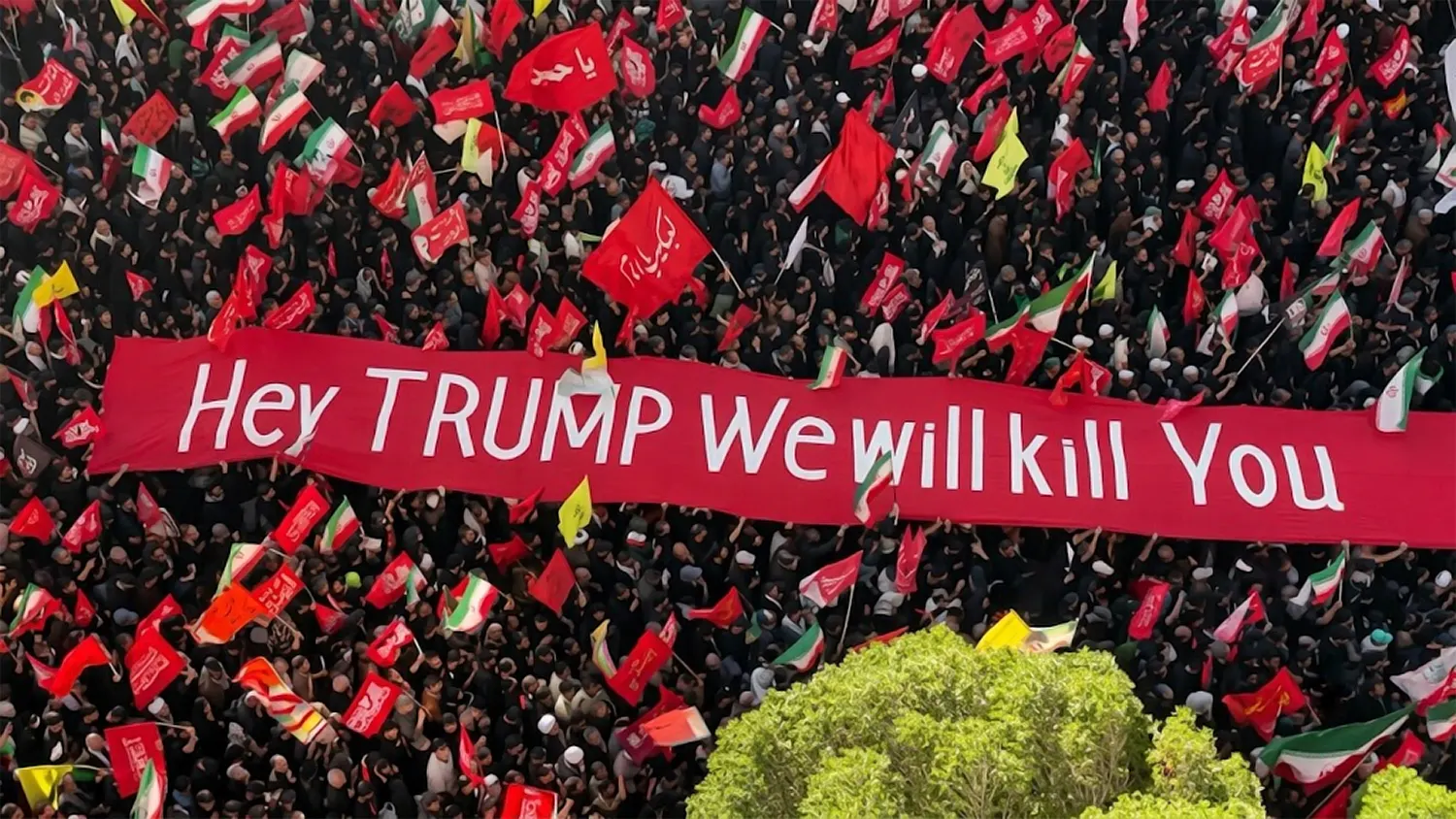
First, Israeli intelligence passed a warning to Washington about a possible Iranian plot against Trump. That report surfaced around the same time as the funeral for Ayatollah Ali Khamenei, where posters and banners reportedly showed Trump in a gunsight alongside threatening slogans.
Second, Trump declared that the fragile U.S.-Iran ceasefire is effectively over. That truce, originally brokered in June, collapsed after a fresh round of military exchanges in the Strait of Hormuz. With the ceasefire unraveling and a security warning landing at nearly the same moment, the combination was enough to trigger the president’s most aggressive public statement yet.
What Trump Actually Said
In an interview with the New York Post, Trump confirmed he has pre-authorized standing orders to strike Iran “at levels they’ve never seen before” if any attempt is made on his life. His Truth Social post went further, describing a full year of authorized military action capable of devastating Iran if the threat materializes.
Iran didn’t stay quiet. Foreign Minister Abbas Araghchi pushed back publicly, rejecting the assassination claims and arguing that the U.S. was the one who broke their agreement first. Despite the heated exchange, both governments have reportedly kept a line open for further talks, a small but notable sign that neither side wants this to spiral completely out of control just yet.
What the Intelligence Report Actually Says
Here’s where the story gets complicated. The intelligence Israel shared points to a renewed push by hardliners inside Iran’s Revolutionary Guard Corps, reportedly led by newly appointed IRGC commander Ahmad Vahidi. But intelligence officials have added important context: this reflects the intentions of hardliners, not confirmation of an active, ready to go hit squad.
Some U.S. officials also suspect the timing wasn’t accidental. They believe the report may have been shared, at least in part, to influence Trump’s decisions on whether to escalate military action against Iran following the collapse of the maritime truce.
Even so, security around Trump has reportedly been tightened. He brushed off related questions earlier in the week, claiming a mid-trip switch of Air Force One planes in Britain was simply “for old time’s sake” so service members could tour the newer aircraft not a reaction to any specific threat.
Why Officials Can’t Agree on What This Means
Inside the U.S. government, there’s genuine disagreement about how seriously to take the Israeli report. Analysts point to three competing explanations.
The U.S. hasn’t independently verified it. American intelligence has tracked a steady stream of general Iranian hostility toward Trump for months, tied to the 2020 killing of Qasem Soleimani. But this specific plot was new information, and it hasn’t been confirmed through independent U.S. sources.
Some officials suspect political motivation. With the ceasefire falling apart, several officials believe Israel may have passed along unverified intelligence specifically to push Trump toward a bigger, more aggressive military response.
Others see it as diplomacy, not danger. A third theory suggests the warning may have been deliberately broad less about an imminent attack and more about Prime Minister Benjamin Netanyahu aligning strategically with Trump during a volatile stretch.
Whichever theory is correct, one thing isn’t in dispute: Iran’s underlying hostility toward Trump is real, and public anger on display at Khamenei’s funeral has kept U.S. security agencies on alert regardless of how this particular report is judged.
How the CIA Is Actually Handling This
The CIA and the Office of the Director of National Intelligence haven’t dismissed the warning, but they haven’t fully endorsed it either. CIA Director John Ratcliffe and DNI Tulsi Gabbard have acknowledged a long-running “drumbeat” of general threats against Trump while privately signaling that this specific plot remains unverified by U.S. sources.
That skepticism runs both ways. Career intelligence officials have reportedly raised concerns that the report’s timing looks less like a routine security update and more like an attempt to shape U.S. policy during a critical moment in the Iran standoff. The worry, according to sources familiar with the discussions, is that unverified intelligence could be used to pressure Washington into a larger military campaign without going through normal vetting.
Still, doubts about the political angle haven’t stopped action on the ground. Trump’s protective security has quietly been increased over the past week. The logic from counterterrorism officials is straightforward: even if this specific report can’t be confirmed, the broader threat from Iran is real enough that it can’t be ignored so physical security tightens even while the intelligence itself stays in dispute.
The Bigger Picture
Strip away the competing theories, and the underlying situation is simple. The ceasefire has broken down, tensions in the Strait of Hormuz are rising again, and Iranian hostility toward Trump rooted in the 2020 Soleimani strike hasn’t gone away. Whether this particular intelligence report is airtight or politically timed almost doesn’t matter to the security response. What matters is that both sides are now operating in a far more volatile environment than they were even a few weeks ago, and neither the rhetoric nor the risk is likely to cool down soon.