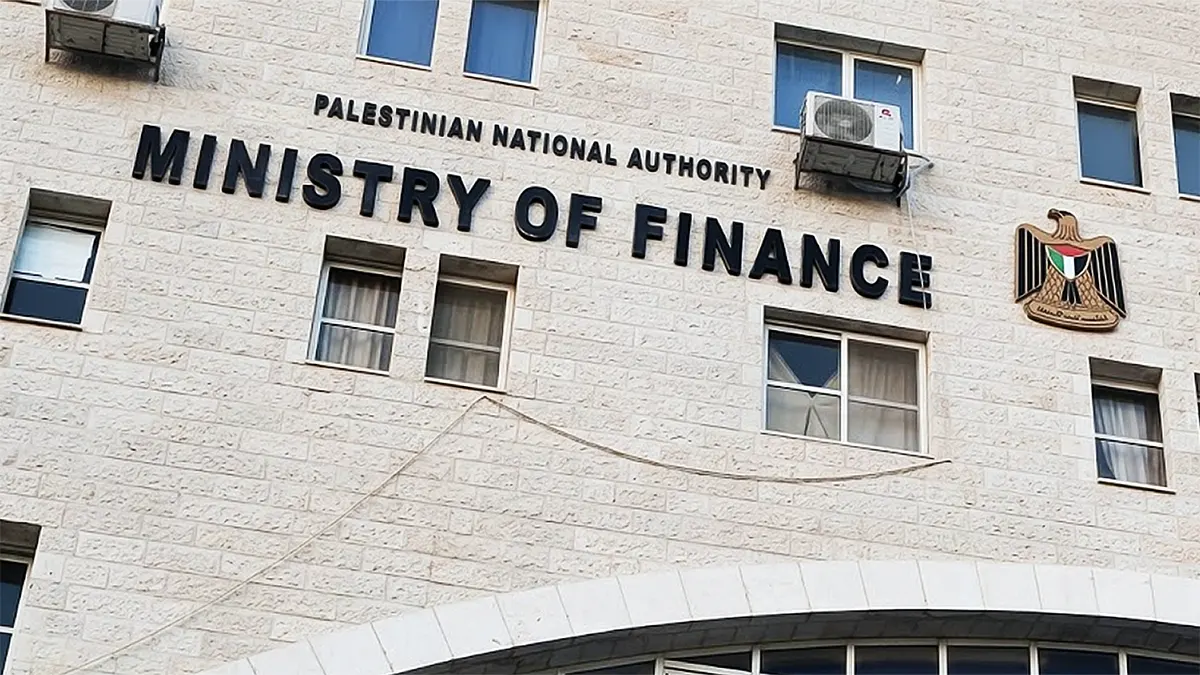
For years, Israel’s withholding of Palestinian tax revenues has been one of the most contentious issues in the Israeli-Palestinian conflict. What began as a series of deductions has evolved into a financial crisis that now threatens the stability of the Palestinian Authority (PA), disrupts essential public services across the West Bank, and raises growing concerns among the United Nations, the United States, the United Kingdom and the European Union.
The dispute centers on clearance revenues taxes collected by Israel on behalf of the Palestinian Authority under agreements signed after the Oslo Accords. While Israel argues that withholding portions of the money is necessary for national security and compensation for victims of attacks, the Palestinian Authority says the funds belong to Palestinians and that freezing them violates existing agreements while pushing the West Bank toward economic collapse.
With billions of dollars now withheld, diplomats and international organizations warn that the financial crisis could have consequences extending far beyond economics, affecting regional security and future peace efforts.
| Issue | Israel’s withholding of Palestinian tax revenues |
| Legal Framework | 1994 Paris Protocol (Oslo Accords economic annex) |
| Estimated Amount Withheld | More than $5 billion (according to UN and diplomatic briefings) |
| Main Impact | Budget crisis for the Palestinian Authority |
| International Concern | Risk of economic collapse and security instability in the West Bank |
How the Tax Collection System Works
At the center of the dispute is the 1994 Paris Protocol, an economic agreement attached to the Oslo Accords that governs many financial relations between Israel and the Palestinian Authority.
Under the arrangement, Israel controls the external borders through which goods enter the Palestinian territories. Because of this, Israel collects customs duties, import taxes and value-added tax (VAT) on goods destined for the West Bank and Gaza.
These funds are commonly known as clearance revenues.
Rather than keeping the money, Israel is expected to transfer the collected taxes to the Palestinian Authority each month while retaining a 3% administrative fee for processing the collections.
These revenues are not foreign aid. They are taxes paid on behalf of the Palestinian economy and have historically accounted for around 60% to 70% of the Palestinian Authority’s operating budget, making them its largest source of income.
That financial dependence means any interruption in transfers has an immediate impact on the PA’s ability to operate.
Why Israel Says It Is Withholding the Money
Israeli officials maintain that the policy is driven by security concerns rather than economic pressure alone.
One of the central issues involves payments made by the Palestinian Authority to families of Palestinians imprisoned by Israel or killed during the conflict. Israeli officials and critics refer to the payments as a “pay-for-slay” system, arguing that they create financial incentives for violence.
The Palestinian Authority rejects that characterization, saying the payments provide social welfare support to affected families.
Beginning in 2019, Israel started deducting from monthly tax transfers an amount roughly equivalent to what the Palestinian Authority allocated for those payments.
Following the October 7, 2023 attacks, Israel expanded the policy by withholding funds designated for Gaza, arguing that no public money should risk benefiting Hamas, which governs the territory.
Israeli lawmakers later approved legislation allowing additional deductions and permitting certain withheld funds to be redirected toward court-awarded compensation for Israeli victims of Palestinian attacks.
Supporters of these measures argue that the Israeli government has both a legal and moral responsibility to prevent public funds from reaching organizations or individuals linked to terrorism.
The Palestinian Authority Says the Policy Is Crippling Its Economy
The Palestinian Authority argues that the withheld money belongs to Palestinians and should be transferred regardless of political disputes.
Officials have described the policy as financial coercion and have accused Israel of violating agreements that govern economic relations between the two sides.
According to diplomatic estimates cited by the United Nations, United Kingdom and France, the cumulative value of withheld clearance revenues has now exceeded $5 billion.
Because these transfers represent most of the PA’s operating budget, officials say the consequences have spread across nearly every public institution in the West Bank.
Public Workers Have Been Living on Partial Salaries
The financial shortfall has left the Palestinian Authority struggling to meet its basic obligations.
Since late 2021, many public employees including teachers, healthcare workers, police officers and civil servants have reportedly received only 50% to 70% of their regular salaries because of mounting budget deficits.
The salary reductions have affected thousands of households and reduced spending across the local economy.
Officials say the government now owes billions of dollars in unpaid wages and delayed compensation.
Schools, Hospitals and Public Services Face Mounting Pressure
The budget crisis has also placed increasing strain on essential public services.
Education officials have reported that some schools have reduced operating hours because teachers cannot consistently afford transportation costs.
Healthcare facilities face similar financial pressures as hospitals and clinics contend with delayed government payments and limited operating budgets.
Meanwhile, private companies that supply goods and services to the Palestinian Authority have accumulated substantial unpaid invoices, creating wider economic stress beyond the public sector.
The longer the financial dispute continues, economists warn, the more difficult it becomes for the Palestinian economy to recover.
The West Bank’s Cash Crisis Is Making Matters Worse
Beyond the dispute over tax transfers, Palestinian financial institutions face another challenge often referred to as the “shekel crisis.”
Because the Israeli shekel is widely used throughout the Palestinian territories, banks in the West Bank accumulate large amounts of physical cash.
However, restrictions on transferring those banknotes back into Israel’s banking system have reportedly left billions of shekels sitting idle inside Palestinian bank vaults.
Financial experts say the situation limits liquidity, restricts lending and further slows economic activity, placing additional pressure on businesses already affected by the tax dispute.
Why the $5 Billion Figure Matters
The headline figure represents far more than a budget dispute.
According to estimates cited by international diplomatic sources:
| Estimated Financial Impact | Amount |
|---|---|
| Withheld tax revenues | More than $5 billion |
| Unpaid public sector wages | About $2.5 billion |
| Debt to private suppliers | About $1.6 billion |
| Estimated total public debt | Around $14.6 billion |
Officials say the growing debt burden now exceeds the annual economic output of the West Bank, illustrating how deeply the financial crisis has affected the Palestinian Authority’s ability to function.
For many analysts, the dispute is no longer simply about tax transfers. It has become a broader question of whether the Palestinian Authority can continue operating without access to one of its principal sources of revenue.
Competing Legal Arguments Drive the Dispute
Whether Israel is legally entitled to withhold Palestinian tax revenues remains one of the most contested aspects of the dispute. The answer depends largely on which legal framework is being applied.
Israel argues that its actions are supported by domestic legislation and national security considerations. The Palestinian Authority, many international legal experts, and several international organizations contend that the measures violate bilateral agreements and international humanitarian law.
The Palestinian Authority Cites the Paris Protocol
The Palestinian Authority says the 1994 Paris Protocol clearly requires Israel to transfer the tax revenues it collects on the PA’s behalf each month.
Under the agreement, Israel is authorized to retain only a 3% administrative fee for collecting the taxes. PA officials argue the protocol contains no provision allowing Israel to unilaterally freeze, deduct or permanently redirect those funds for political or security reasons.
For that reason, the PA maintains that withholding the revenues constitutes a breach of the economic framework established under the Oslo Accords.
The United Nations and many international legal scholars have expressed similar concerns, although Israel disputes those interpretations.
Israel Points to Domestic Law and Security Needs
Israeli officials argue the issue cannot be viewed solely through the Paris Protocol.
Successive governments have said preventing public money from supporting individuals convicted of attacks against Israelis is a legitimate national security objective.
Israeli legislation approved in recent years authorizes the government to deduct amounts equivalent to payments made by the Palestinian Authority to families of prisoners and those killed in the conflict. The law also allows certain withheld funds to be used to satisfy court-awarded compensation for Israeli victims of Palestinian attacks.
Supporters of the policy argue these measures are consistent with Israel’s responsibility to protect its citizens and prevent public funds from indirectly encouraging violence.
International Humanitarian Law Adds Another Layer
Beyond the bilateral agreements, human rights organizations have assessed the dispute through the lens of international humanitarian law, particularly the Fourth Geneva Convention.
Critics argue that withholding revenues needed to fund schools, hospitals and public administration affects millions of civilians who have no connection to acts of violence.
They point to Article 33 of the Fourth Geneva Convention, which prohibits collective punishment, arguing that broad financial restrictions imposed on the Palestinian Authority have consequences for the wider civilian population.
Many legal experts also argue that, as the occupying power under international law, a characterization Israel disputes in some contexts—Israel has obligations regarding the welfare of civilians in the territories.
Israel rejects accusations that its policies amount to collective punishment, maintaining that the measures are targeted security actions rather than penalties directed at the Palestinian population as a whole.
Why the International Community Is Increasingly Concerned
The growing warnings from the United Nations, the United States, the United Kingdom and the European Union are rooted not only in humanitarian concerns but also in regional security calculations.
While many Western governments have repeatedly urged the Palestinian Authority to improve governance, strengthen transparency and implement institutional reforms, they have also cautioned against allowing the PA to become financially insolvent.
Diplomats fear that a complete collapse of the Authority could create instability that extends well beyond its financial troubles.
A Security Vacuum Is the Biggest Fear
One of the international community’s primary concerns involves the Palestinian Authority Security Forces (PASF).
The force, estimated to include 30,000 to 40,000 personnel, is responsible for maintaining public order in parts of the West Bank and has long coordinated security efforts with Israel.
Western governments have invested heavily in training and supporting these forces over the years, viewing them as an important component of stability in the territory.
Officials worry that if the PA can no longer pay salaries, large numbers of security personnel could stop reporting for duty, weakening law enforcement in cities such as Jenin and Nablus.
Diplomats have warned that such a scenario could leave a significant security vacuum.
Concerns Over Armed Groups
Another major concern is that prolonged economic hardship could strengthen armed groups operating in the West Bank.
Western officials have argued that widespread unemployment, delayed salaries and deteriorating public services could make recruitment easier for organizations such as Hamas, Palestinian Islamic Jihad (PIJ) and other armed factions.
The concern is not simply economic but strategic: if the Palestinian Authority weakens substantially, alternative groups could seek to expand their influence in areas where the PA has traditionally maintained administrative control.
For many governments, preserving a functioning though imperfect, Palestinian Authority is viewed as preferable to the uncertainty that could follow its collapse.
Diplomatic Efforts Could Also Be Affected
The financial dispute has also complicated broader diplomatic initiatives concerning the future governance of Gaza and the Palestinian territories.
The United States and several European partners have explored proposals that envision the Palestinian Authority playing a greater administrative role in post-war governance and reconstruction efforts.
Some proposals have involved using released tax revenues to help finance future administrative structures and reconstruction projects.
However, as long as the revenue dispute remains unresolved, diplomats say those discussions face significant obstacles.
What Comes Next
There is currently no indication that the dispute will be resolved in the near term.
Israeli leaders continue to frame the withholding of tax revenues as a necessary security measure, while the Palestinian Authority insists the funds are legally owed under existing agreements and are essential for maintaining public services.
Meanwhile, international partners continue to urge both sides to find a solution that prevents further economic deterioration while addressing legitimate security concerns.
The outcome will likely shape not only the financial future of the Palestinian Authority but also the broader stability of the West Bank at a time when regional tensions remain high.