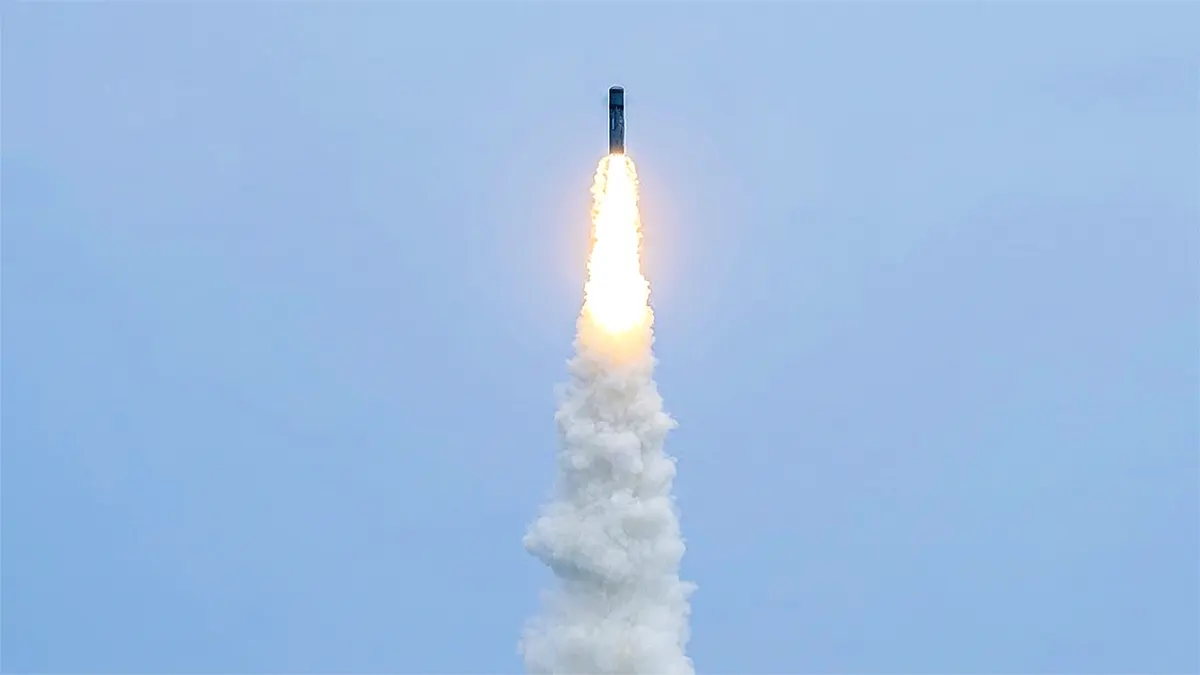
On Monday, July 6, 2026, China did something it has never done publicly before: it announced a long-range ballistic missile launch from a nuclear-powered submarine into the Pacific Ocean. The test lasted minutes. The fallout is still spreading across three continents.
What Actually Happened
At 12:01 p.m. local time, the PLA Navy fired a strategic ballistic missile carrying a dummy warhead from a nuclear-powered submarine. The missile flew over the Philippines before landing in international waters deep in the South Pacific. Experts believe it was either the JL-2 or the newer JL-3, China’s most advanced submarine-launched ballistic missile.
This wasn’t a one-off. It’s Beijing’s second high-profile long-range missile test in under two years, following a land-based ICBM launch in September 2024. And it didn’t happen in isolation, it coincided with the start of joint China-Russia naval exercises and landed the same day Australia and Fiji signed a new mutual defense pact.
China’s Response: “Nothing to See Here”
Foreign Ministry spokesperson Mao Ning and the PLA Navy described the launch as a routine, annual training exercise that fully complied with international law. Beijing’s message to the world was simple: don’t overreact.
Few countries took that advice.
Why the Missile Model Matters
China hasn’t confirmed which missile it used, but the technical details point strongly toward one of two options and the difference between them says a lot about what Beijing is signaling.
The JL-2 has been in service since around 2015, with a range of roughly 7,200 to 9,000 km and the ability to carry up to six warheads. To hit the continental U.S., submarines carrying it have to sail past America’s island defense chains into open ocean, a risky move.
The JL-3, unveiled more recently between 2022 and 2025, changes that equation entirely. With a range exceeding 10,000 km and up to seven independently targetable warheads, it lets Chinese submarines stay parked safely in home waters like the South China Sea while still reaching major cities across North America.
Navigational warning data shows the missile traveled about 7,300 km from the Bohai/Yellow Sea to its target. That distance sits right at the edge of what either missile could plausibly do, which is part of why analysts are split on which one was actually tested.
A Wave of Regional Condemnation
The test triggered swift pushback across the Pacific, though the tone varied by country.
The United States called out China’s rapid, opaque nuclear buildup, the Pentagon estimates Beijing already holds around 600 warheads and is on pace to pass 1,000 by 2030.
Australia’s Foreign Minister Penny Wong labeled the launch “destabilizing,” while officials noted it fell short of meaningful advance notification under the Hague Code of Conduct.
New Zealand raised a specific and pointed objection: the missile landed inside the South Pacific Nuclear Free Zone, an area protected under the 1985 Treaty of Rarotonga.
Perhaps most notably, the Solomon Islands, one of Beijing’s closest South Pacific allies broke ranks. Prime Minister Matthew Wale didn’t mince words: “China is a good friend of Solomon Islands, but this is not something a friend does.”
Japan said it received only short-notice warning that debris could fall inside its exclusive economic zone, while Taiwan’s National Security Council called the test a deliberate act of intimidation.
The Philippines Didn’t Hold Back
Because the missile flew directly over Philippine territory, Manila’s response issued the following day was among the sharpest in the region.
The Department of National Defense called it a “calculated act of taunting and provocation,” adding that the launch “serves no peaceful purpose.” The Armed Forces of the Philippines warned that even if Beijing frames the test as routine, it deepens regional anxiety regardless.
Officials also flagged the timing: the test came just days before July 12, the 10th anniversary of the international arbitral ruling that struck down China’s expansive maritime claims in the West Philippine Sea, a date Manila treats as symbolically important.
The Real Target Wasn’t the Pacific, It Was NATO
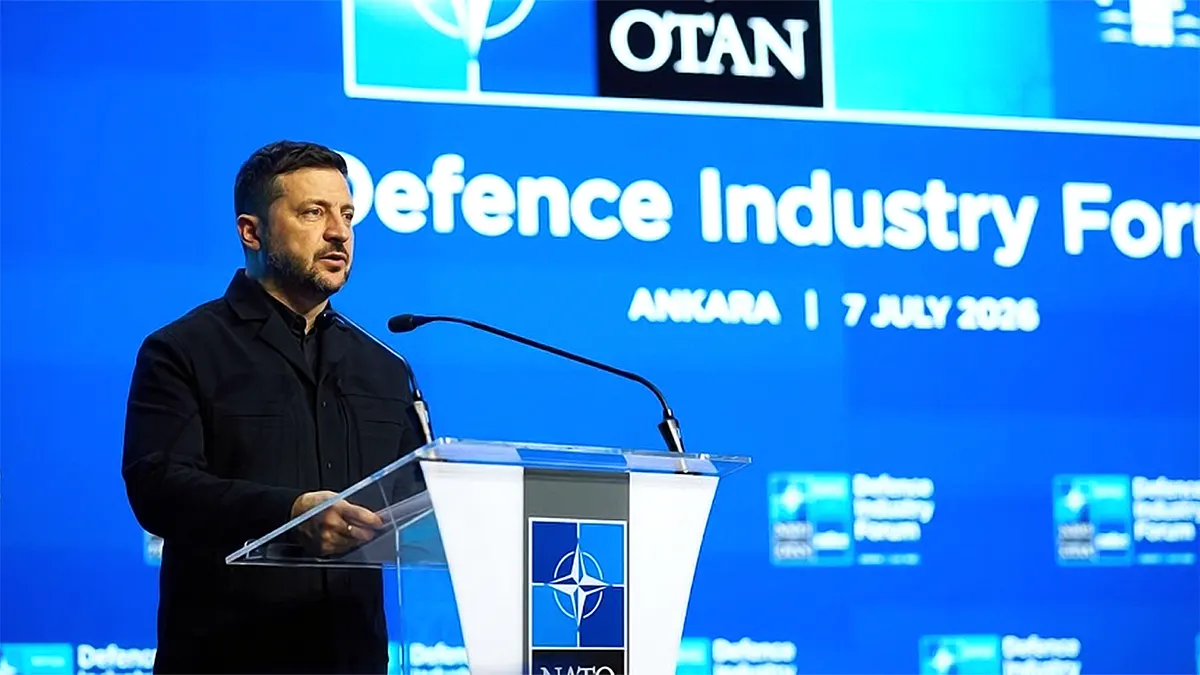
Here’s where the story gets bigger than one missile test. China launched this weapon just hours before the 2026 NATO Summit opened in Ankara, Türkiye and that timing appears deliberate.
NATO has spent recent years expanding its attention toward the Indo-Pacific, inviting leaders like South Korea’s Lee Jae-myung and top officials from Australia, New Zealand, and Japan to its summits. By firing a nuclear-capable missile over the Philippines and into the South Pacific right beforehand, China sent an unmistakable message: if NATO is going to look into our backyard, we can reach directly into yours.
The test also mirrors a tactic Russia has used for years, leaning on nuclear signaling to complicate Western decision-making. Conducting the launch just as China-Russia naval drills began, and right as NATO gathered to project unity, wasn’t a coincidence in the eyes of most analysts.
It also landed on the same day Australia and Fiji formalized their new defense pact effectively stepping on that announcement and reminding the region that new alliances don’t cancel out an advanced, hard-to-intercept nuclear deterrent.
What NATO’s Rutte Said and Why China Answered With a Missile
NATO Secretary General Mark Rutte has been increasingly blunt about China, describing it alongside North Korea and Iran as a “key enabler of Russia’s unprovoked war of aggression.” Beijing strongly rejects that framing being grouped with heavily sanctioned states undercuts its image as an independent global power.
Rutte has also argued that “what happens in the Indo-Pacific is relevant to what is happening in the transatlantic,” the logic NATO uses to justify deepening ties with Japan, South Korea, Australia, and New Zealand. China views this as an attempt to build an Asian counterpart to NATO aimed at containing it.
Analysts see the missile test as Beijing’s answer to both points at once: a demonstration that Western rhetoric won’t change its behavior, and a reminder that its nuclear reach already connects its home waters to the American mainland, no alliance required.
There’s a third layer, too. Rutte has repeatedly pushed NATO members to spend more on defense, at a moment when the alliance is already stretched thin supplying Ukraine while pivoting toward Asia. China’s message, intentionally or not, lands at the most uncomfortable point possible: while Western planners struggle to keep up with conventional weapons production, China’s nuclear modernization isn’t slowing down at all.
The bottom line: one missile, fired into open ocean, managed to rattle capitals from Wellington to Washington to Brussels not because of what it hit, but because of what it proved China can now reach.