While the world watches the case numbers climb, governments have already shifted from monitoring to action. The United States has moved faster and harder than almost any other country, invoking a rarely-used public health legal tool to seal its borders and quietly rerouting an infected American doctor to Germany rather than home. Here’s a clear breakdown of what’s been put in motion, who it affects, and what it tells us about how seriously officials are taking the Bundibugyo strain.
An American Doctor Tests Positive in Bunia
The outbreak moved from abstract emergency to personal story over the weekend, when Dr. Peter Stafford, an American missionary surgeon, tested positive for the Bundibugyo strain while working at Nyankunde Hospital in Bunia, the capital of DRC’s Ituri Province and the heart of the outbreak zone. Dr. Stafford had been treating patients there through Serge, an international Christian missions organization, when he developed symptoms and was tested.
He is now being medically evacuated on a specialized containment flight to Germany, not the United States, a decision that was deliberate, not logistical.
He isn’t the only American caught up in this. At least six others who worked alongside Dr. Stafford or had close contact with him are also being evacuated out of the region for strict monitoring and quarantine. Among them is his wife, Dr. Rebekah Stafford, and fellow physician Dr. Patrick LaRochelle. As of the latest update, all six remain completely asymptomatic. The CDC was careful to emphasize that despite these evacuations, the risk of an outbreak on US soil remains very low.
Why Germany and Not a US Biocontainment Unit
The decision to route Dr. Stafford to Germany rather than an American facility raised eyebrows, but the reasoning is straightforward once you understand the variables at play.
A transatlantic flight to a US biocontainment unit takes significantly longer than a flight to central Europe. For a patient who is acutely ill with a 30–50% mortality strain, every hour in transit on a containment aircraft is a risk. Germany is closer, faster to reach, and maintains high security isolation facilities with direct, hands on experience treating viral hemorrhagic fevers including previous Ebola cases. Routing him there also keeps an unstable, confirmed case off US soil during the most critical window of his illness.
The CDC and State Department coordinated the transfer in partnership with international health partners. It is less a sign of panic and more a sign of clinical pragmatism under pressure.
The Title 42 Order: What It Is and Who It Stops
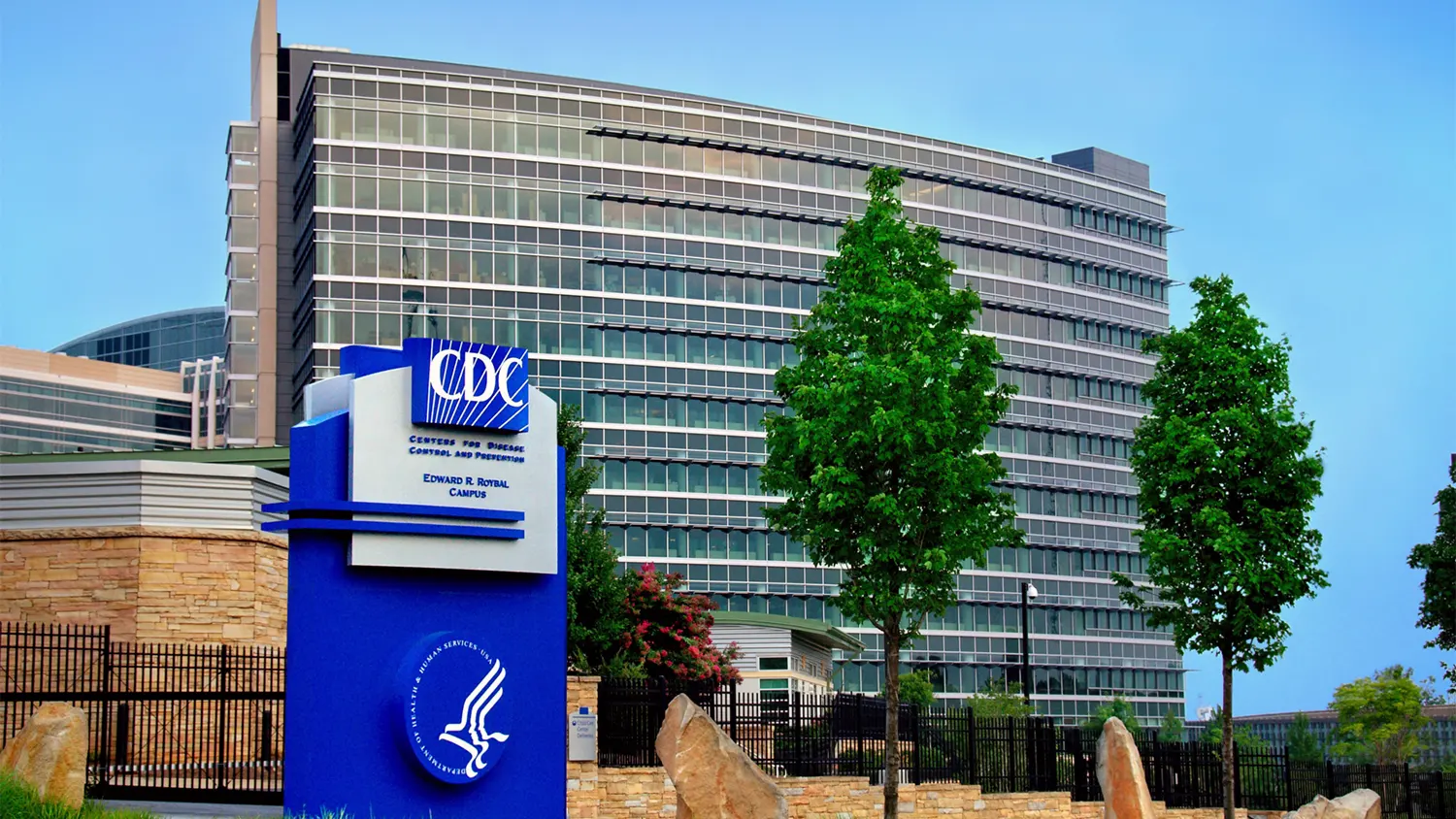
The bigger structural move came from Washington. The CDC, operating under emergency powers granted by Sections 362 and 365 of the Public Health Service Act, signed a Title 42 public health order, the same legal mechanism used during COVID-19 to restrict entry at the US border.
Here is exactly what the order does.
Any foreign national who has been physically present in the DRC, Uganda, or South Sudan within the past 21 days is barred from entering the United States. That window maps directly onto Ebola’s maximum incubation period. Anyone who clears 21 days without symptoms is considered past the transmission risk zone. The ban applies regardless of nationality or the purpose of travel tourists, business travelers, students, visa holders, all blocked if they passed through those three countries.
South Sudan was included despite having no confirmed cases. The CDC’s reasoning: the country shares high-traffic border corridors with both Uganda and the DRC, creating a realistic route for undetected cross-border movement.
To reinforce the barrier, the US Department of State has temporarily suspended all routine visa services both immigrant and nonimmigrant at US embassies in Kinshasa, Kampala, and Juba.
Who Is Exempt
The order does carve out specific categories:
- US citizens and US nationals — they cannot legally be blocked from returning home
- Lawful Permanent Residents (Green Card holders)
- US Armed Forces members, overseas government personnel, and their immediate families
- Case by case humanitarian or law enforcement exceptions granted by Customs and Border Protection
Returning Americans Don’t Just Walk Through Customs
Being a US citizen means you can come home. It does not mean you bypass the health system.
The CDC has established an interagency coordination system at designated international airports to handle travelers arriving from East or Central Africa. Returning Americans and exempted residents go through mandatory thermal temperature checks and detailed symptom questionnaires. Anyone who traveled through the outbreak zones is then funneled into a public health monitoring network required to report their temperature daily and stay in contact with local health departments for the remainder of their 21-day incubation window.
The CDC also sends that traveler’s data directly to state and local health departments, so monitoring doesn’t drop off the moment someone clears the airport.
The Domestic Hospital and Lab Alert
One of the quieter but more consequential parts of the US response targets the healthcare system itself. The Bundibugyo strain caused serious diagnostic confusion in the DRC in the early weeks of this outbreak partly because many testing setups were calibrated for the more common Zaire strain, not Bundibugyo’s specific genetic fingerprint.
To prevent that from happening inside US hospitals, the CDC has alerted the nationwide laboratory response network to explicitly screen for Bundibugyo, and redistributed its full infection prevention and control guidelines for viral hemorrhagic fevers to major emergency rooms across the country. Doctors are now on notice: any traveler arriving from Central or East Africa presenting with sudden fever, severe weakness, vomiting, or unexplained bleeding should trigger immediate isolation protocols not a wait and see approach.
The US has also mobilized $13 million in foreign assistance to send CDC personnel and protective equipment directly into Central Africa, operating on the principle that containing the outbreak at its source is still the most effective form of border defense.
How the Rest of the World Is Responding and Why Most Aren’t Following the US Lead
The United States and Bahrain are currently the only two countries to have enacted hard 30-day travel bans matching this level of restriction. Most of the international community has deliberately stopped short of that, largely following the WHO’s explicit guidance issued alongside the PHEIC declaration: sweeping border closures don’t stop sick people from moving, they just push them onto unmonitored informal routes where health screenings can’t reach them.
The majority of countries have landed on a tiered approach instead:
Enhanced airport screening is the most common response across Europe, the Middle East, and East Africa, mandatory health questionnaires and thermal checks at major transit hubs, without denying entry outright. Countries sharing land borders with the DRC and Uganda, including Rwanda and Kenya, have heavily reinforced health checkpoints at crossing points to track movement without shutting down trade. The UK and several EU nations have issued high-level “Reconsider Nonessential Travel” advisories for the affected regions, aiming to slow traffic voluntarily without a legal ban.
The tension between the US approach and the WHO advisory is real and worth noting. The US made a sovereign call that the legal certainty of a formal barrier outweighs the WHO’s softer guidance. Most other governments disagree or are waiting to see whether the outbreak’s trajectory forces their hand.
Where the Case Count Stands Now
The numbers have shifted again since the initial outbreak declaration. The latest combined figures from the WHO and CDC:
- Confirmed cases: 12 — 10 in the DRC, 2 in Uganda (both Congolese nationals who traveled to Kampala while infected)
- Suspected cases: 336 — individuals with severe, Ebola-compatible symptoms awaiting lab confirmation
- Deaths: 88 to 100 — including at least 4 local healthcare workers who contracted the virus in late April before anyone realized what they were treating
- Uganda’s status: No local transmission confirmed — both Ugandan cases were imported directly from the DRC
Health officials are currently tracking more than 65 known close contacts of confirmed cases. Because the Bundibugyo strain carries a historically high mortality rate and has no active approved vaccine, the speed of that contact tracing directly determines whether those numbers stay manageable or accelerate.
The Next Few Weeks Will Tell the Story
The US response reflects a government that has decided not to wait for the outbreak to arrive before acting. Whether the Title 42 mechanism proves to be the right call or an overreach that mirrors the WHO’s concerns about border closures will depend entirely on what the next two to three weeks reveal about how contained this virus actually is.
What’s clear right now: the international response is no longer unified. Countries are making different calculations about risk, economics, and the limits of border control. And an American doctor in a German isolation unit has made this outbreak, for many people, feel far less distant than it did a week ago.