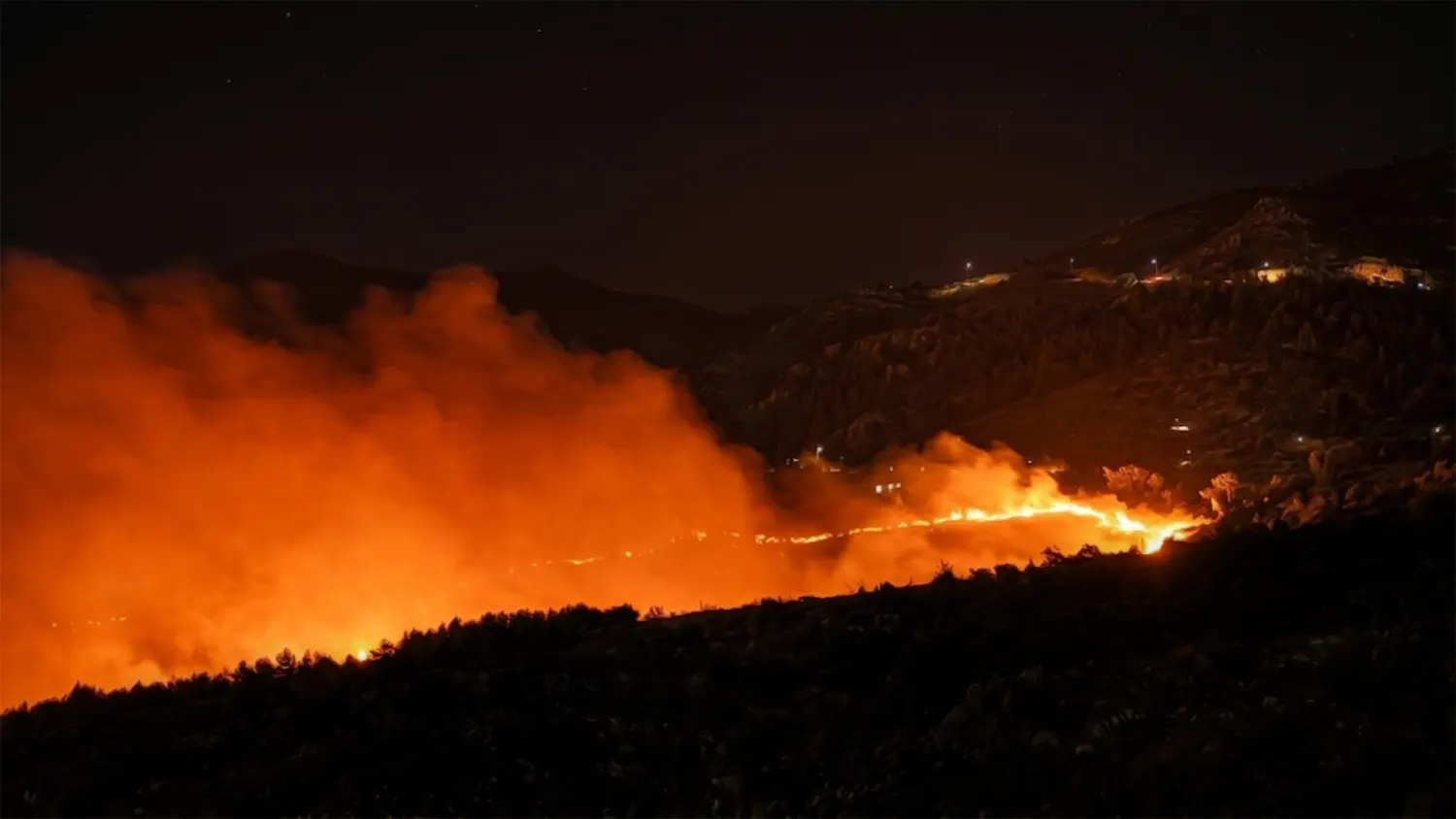
Croatia is heading into its most dangerous wildfire season in recent memory and summer hasn’t even started yet.
In just the first four months of the year, wildfires have already scorched 5,060 hectares (roughly 12,500 acres) of Croatian land. That’s a 70% increase compared to the same period last year, according to Slavko Tucakovic, head of the Croatian fire department. Firefighters have also responded to 20% more fire outbreaks since January, a sign that this isn’t a one off spike, but a deepening trend.
The numbers are alarming on their own. But what makes them truly sobering is this: Croatia’s worst fire months haven’t arrived yet.
The Adriatic Coast Faces Its Most Dangerous Window
Croatia’s wildfire season traditionally peaks between June and September, when dry summer heat converges with strong coastal winds along the densely populated Adriatic shoreline. Emergency services and volunteer brigades are already on high alert scaling up aerial surveillance, pre-positioning equipment, and preparing for what many officials fear could be an exceptionally destructive summer.
The concern isn’t unfounded. Scientists from the World Weather Attribution network have flagged that a strong El Niño pattern, combined with accelerating climate change, is setting the stage for an unusually severe fire season across the entire Mediterranean region. Croatia, sitting squarely in that zone, is particularly exposed.
Three Overlapping Forces Are Driving the Crisis
Understanding why Croatia burns requires looking at three layers that work together in a dangerous cycle.
Human ignition is where most fires start. Croatian police and forestry officials have repeatedly pointed to arson as a primary driver especially along the Dalmatian coast, where investigations have uncovered fires deliberately started at multiple locations simultaneously. Beyond arson, everyday negligence plays a major role: discarded cigarettes, unmanaged campfires, agricultural burns gone wrong, and sparks from faulty power lines all serve as common triggers.
But a spark alone doesn’t create a catastrophe, it needs fuel. Decades ago, the coastal landscape was covered in well-maintained vineyards and terraced farmland that naturally slowed the spread of fire. As agriculture declined, those fields were abandoned and gradually overtaken by dense, unmanaged brush, dry leaves, and pine scrub. Because much of this land is privately owned often by people living abroad, it rarely gets cleared. The result is a vast, forgotten landscape that acts like a tinderbox waiting for a match.
Weather then determines how bad it gets. Prolonged drought and unseasonably high temperatures driven by both El Niño and broader climate shifts have turned that dry vegetation into near-perfect fuel. And when Croatia’s notorious Bora winds kick in the powerful northeasterly gusts the Adriatic coast is known for fires spread with terrifying speed. Embers get carried for miles. Flames triple in intensity. And firefighting aircraft like Canadairs are often grounded entirely because it’s too dangerous to fly.
26 Dead, 132 Injured, and Billions in Damage Already
The human and economic toll is mounting fast.
According to Croatia’s firefighters association, 26 people have been killed in fire disasters so far this year, including one firefighter who died on duty. The number of fire-related injuries has climbed to 132, up sharply from 97 recorded over the same period previously.
On the financial side, the damage is still being calculated but the scale is already historic. Over 56,000 hectares of land have been destroyed in recent fire seasons, a 160% surge compared to prior baselines. To put that in economic terms: Croatia’s National Risk Assessment shows that even a moderate fire season can cost the country upwards of €100 million. The devastating 2017 season alone carried a price tag of roughly €109 million, and cumulative losses over recent years have surpassed €249 million.
Infrastructure exposure makes the financial picture even grimmer. 94% of the country’s power lines and 97% of road segments in high-risk coastal areas including Split Dalmatia, Istria, and Zadar sit inside designated high-hazard fire zones. As the main season approaches, repair costs are expected to climb significantly.
A Country Bracing for a Long Summer
Croatia’s situation reflects a reality that’s becoming harder to ignore across the Mediterranean: wildfire seasons are getting longer, arriving earlier, and burning hotter. The combination of human negligence, abandoned land, and a climate that keeps pushing temperatures higher has created conditions that emergency services however prepared will struggle to fully contain.
With June still weeks away, Croatia is already counting its losses. The question now isn’t whether this summer will be difficult. It’s how much worse it will get.