While U.S. tech giants are cutting tens of thousands of jobs in the name of “AI efficiency,” Chinese courts have quietly established something the world has never seen before: a legal shield protecting workers from automation driven layoffs.
Something unprecedented happened in two Chinese courtrooms in early 2026. Judges in Hangzhou and Beijing ruled that companies cannot legally fire employees simply because an AI can now do their job. At first glance, it sounds like a technicality. In practice, it may be one of the most consequential labor rulings of the decade.
To understand why, you need to see the bigger picture, one where the world’s two largest economies are responding to the exact same technological wave in almost exactly opposite ways.
The case that started it all
A quality assurance supervisor referred to in court documents only as “Zhou” was told by his employer that a large language model (LLM) could now perform his job. The company’s solution was straightforward: take a 40% pay cut or leave. Zhou refused. The company fired him.
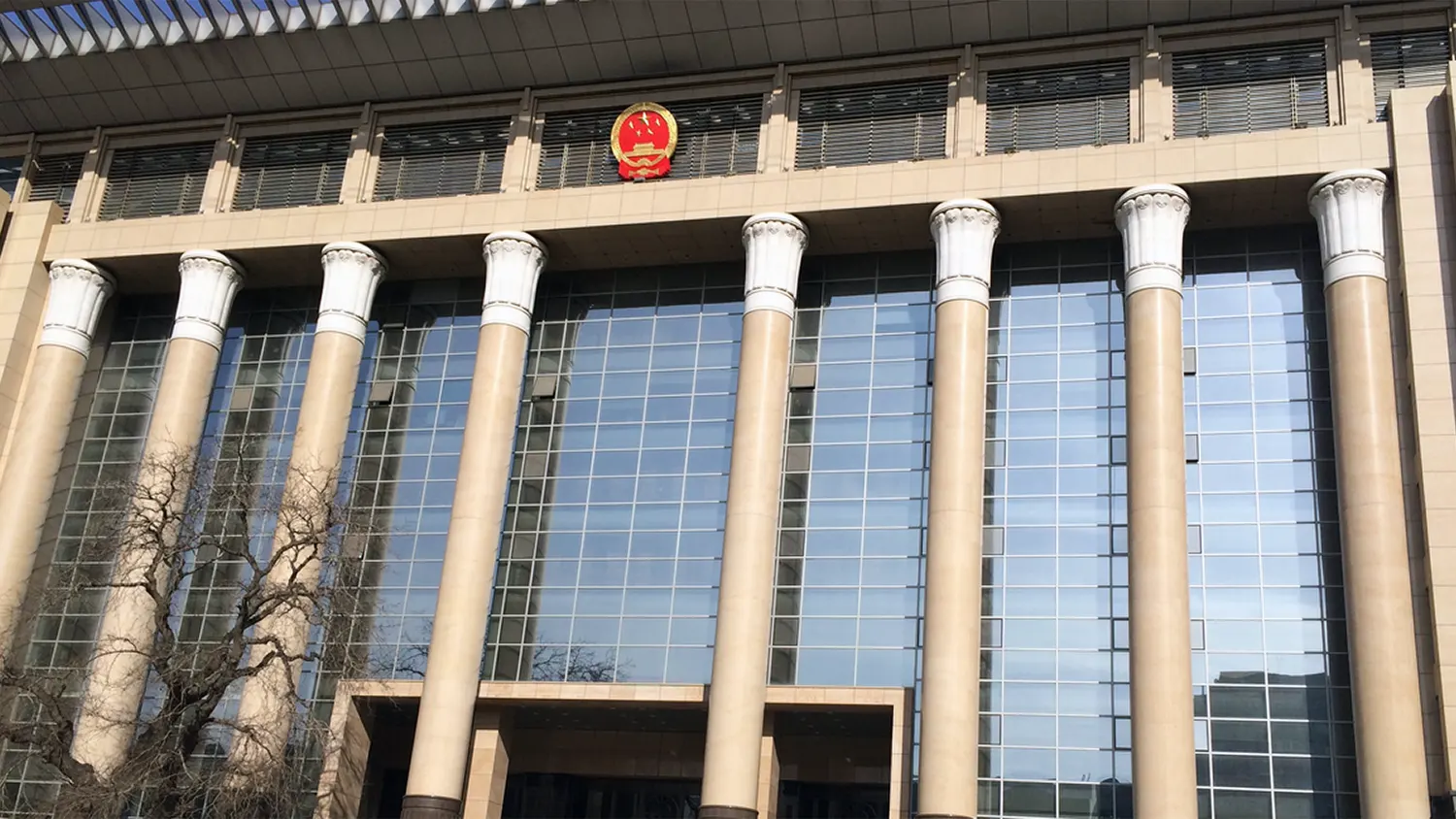
The Hangzhou Intermediate People’s Court disagreed with that outcome. It ruled the dismissal illegal and ordered the company to pay Zhou more than 260,000 yuan (roughly $36,000–$38,000) in compensation. The logic of the ruling was simple but striking: implementing AI is a deliberate business decision made to increase profit. It is not an “unforeseeable external event” like a natural disaster or a sudden government policy change that makes a contract impossible to fulfill. If you choose to automate, that choice and its consequences belong to you.
The court’s core argument
The risks of technological change belong to the company that chooses to adopt it, not to the workers who are displaced by it. Choosing AI to boost profit is a management strategy, not a legal emergency.
What “retrain or retain” actually means for businesses
The ruling does not say companies can never part ways with workers whose roles have been automated. It says they have to try something else first. In practice, this creates a clear legal sequence employers must follow before any termination is considered valid.
Priority placement comes first. If a specific task say, data collection or quality control gets automated, the employer must actively look for a higher-value role to move that employee into. Simply doing nothing is not enough to satisfy the court.
Next comes what courts are calling the “reasonable reassignment” test. Companies cannot just offer a deliberately bad job to pressure someone into quitting. In the Zhou case, the court ruled that pairing a demotion with a 40% salary reduction was a bad-faith attempt to bypass labor law. A new role must be genuinely comparable in status and pay.
And if none of that works, the Beijing ruling added a further layer: under the “2N” rule, companies that do proceed to fire a worker due to AI automation without completing the retraining and reassignment process face double severance payments. The financial cost of getting it wrong is steep by design.
Meanwhile, in the West: AI cuts are accelerating
The contrast with what’s happening in the United States could not be more dramatic. In the first months of 2026, several major tech companies have cited AI-driven restructuring as a sign of corporate strength not crisis.
Amazon has cut roughly 16,000 corporate roles this year alone, bringing its recent total to nearly 30,000. The strategy is explicitly framed as flattening management structures to redirect savings into a $100 billion AI infrastructure push. Block (formerly Square) went further: CEO Jack Dorsey cut 4,000 people 40% of the entire workforce while openly stating the company was profitable. The rationale? AI allows smaller teams to accomplish more. Meta is in the process of eliminating approximately 8,000 positions 10% of its staff to offset the staggering cost of AI development, projected at $135 billion this year.
In the U.S. legal environment, all of these moves are treated as legitimate “business necessity” decisions. Shareholders often reward leaner headcounts with higher stock prices. The system is structured to enable fast, low-friction downsizing.
Two models for the same revolution
| Feature | China (2026) | U.S. / EU (2026) |
|---|---|---|
| Legal framing of AI adoption | A business choice — foreseeable risk belongs to the employer | A market condition — often qualifies as economic redundancy |
| Retraining obligation | Legally mandated before any termination | Encouraged, rarely required by law |
| Cost of AI-driven layoffs | “2N” double severance if rules aren’t followed | Standard severance; low legal friction |
| Pay protection | Drastic cuts tied to automation ruled unreasonable | Market-driven restructuring largely permitted |
| Primary goal | Social stability and labor protection | Corporate agility and shareholder returns |
Why China is doing this now
The timing is not accidental. China’s youth unemployment rate hovered between 15.3% and 16.9% in the early months of 2026. Millions of new graduates are entering a job market that is simultaneously being reshaped by AI. For the government, mass AI-driven unemployment is not just an economic problem, it’s a social stability risk.
Economists have also started flagging a darker long-term scenario: what some are calling “ghost GDP.” The idea is that companies can automate themselves into high productivity while quietly destroying the consumer base that buys their products. Unemployed workers don’t spend. Courts enforcing worker protection are, in this view, also protecting demand.
This is why the judiciary is being used as a policy instrument. The message from Beijing is clear: the AI revolution is welcome, but the social cost of that revolution cannot be offloaded entirely onto individual workers.
The ripple effects beyond China’s borders
Labor experts in Canada and India are already citing these Chinese rulings as a potential blueprint for future domestic regulation. That makes sense both countries face similar pressures: rapidly automating industries, competitive job markets, and growing public anxiety about AI displacement.
For multinational companies, the immediate headache is compliance. A firm that tells a China-based employee that their role was “automated away” with no documented attempt at retraining or reassignment has essentially handed that employee the legal foundation for a winning lawsuit. Global HR strategies built around fast, low-drama headcount reductions now require a complete rethink for operations in China.
The broader question is whether Western labor law which has historically favored employer flexibility and “at-will” employment can sustain the pressure to evolve. The Chinese rulings have made one thing visible that was previously only theoretical: it is legally possible to hold companies accountable for how they automate. Whether other governments choose to follow that path is now a live political question, not just an academic one.
A “Human + AI” model by force
What China’s courts have inadvertently done is make a particular vision of AI adoption the only legally viable one: humans and AI working together, rather than AI replacing humans outright. Companies operating in China are now structurally incentivized to find ways to augment their workforce with AI tools rather than swap one for the other.
Western companies, particularly in the U.S., are taking the opposite path becoming “AI-lean” at speed, shedding human labor while scaling machine capacity. Both models will produce data over the coming years. Which one sustains economic growth, social cohesion, and long-term productivity better is a question that may define the next decade of technology policy.
For now, the split is official. The world’s two largest economies are running the same experiment the AI revolution with fundamentally different rules about who bears the cost when the machines get better.