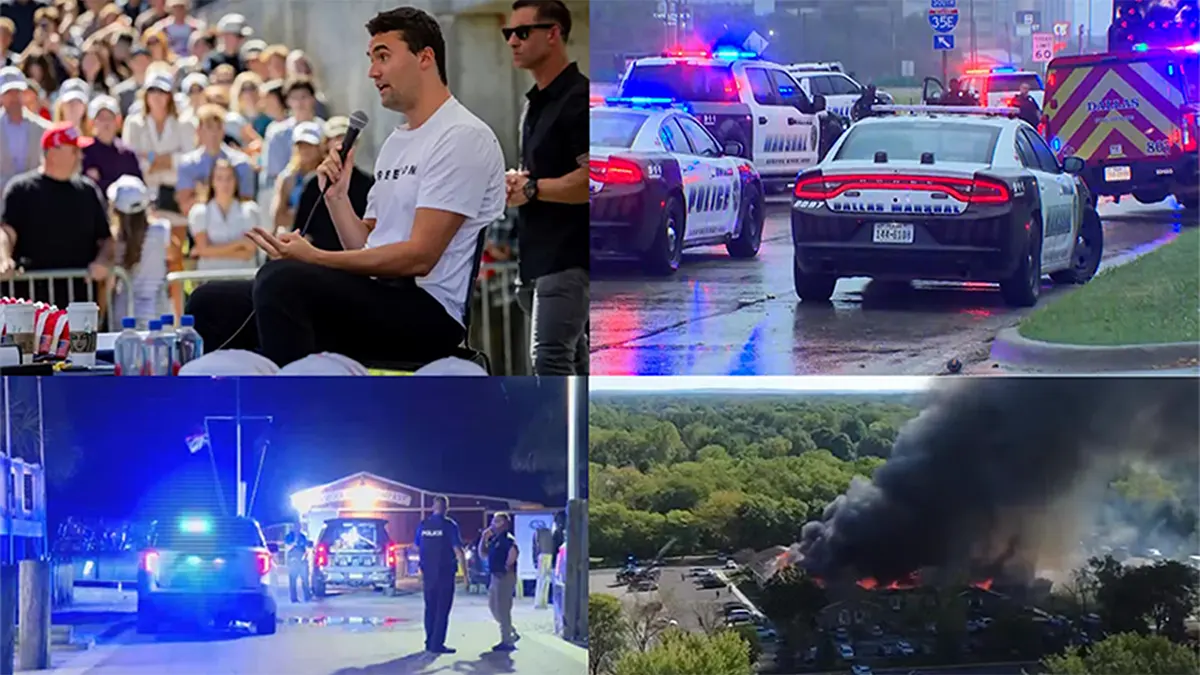
September 2025 left a lasting mark on the United States as a series of violent attacks shook communities across the country. From political events and places of worship to wedding celebrations and public venues, several tragedies unfolded within weeks of each other, raising concerns about public safety, social division, and the state of national unity.
While the attacks generated headlines and intense public debate, many Americans found hope in the response of survivors, families, and community leaders who chose resilience over anger.
A Message of Forgiveness Amid National Grief
One of the most powerful moments came after the assassination of conservative activist Charlie Kirk in Orem, Utah.
As political tensions threatened to dominate the conversation, Kirk’s widow, Erika Kirk, delivered a message that resonated far beyond the memorial service. Instead of calling for retaliation, she urged Americans to focus on healing and renewal.
“We didn’t see revolution. Instead, we saw what my husband always prayed we would see in this country, we saw revival.”
Her remarks quickly became a symbol of forgiveness, compassion, and unity during a period marked by fear and uncertainty.
For many observers, the response highlighted an important reality: the strongest answer to violence may not be revenge, but a commitment to rebuilding community.
Violence Reaches Places Once Considered Safe
The events of September affected a wide range of locations and communities, reinforcing the feeling that no part of public life was untouched.
In Utah, the killing of Charlie Kirk raised concerns about the safety of political discourse and public engagement.
In Michigan, an attack at a Mormon church disrupted a place traditionally viewed as a sanctuary, leaving worshippers shaken and prompting broader discussions about security at religious institutions.
Elsewhere, violence struck locations associated with everyday life and celebration. Reports from New Hampshire and North Carolina described incidents that transformed gatherings meant for joy into scenes of tragedy.
Law enforcement officers also became targets. In Pennsylvania, an ambush on police officers highlighted the risks faced by first responders who work daily to protect their communities.
Taken together, these incidents created a shared sense of vulnerability that crossed political, religious, and cultural boundaries.
A Growing Concern Beyond Politics
Although individual attacks involved different circumstances, many Americans viewed them through a broader lens.
The tragedies underscored a common concern: violence affects everyone, regardless of political affiliation, faith, race, or background.
Whether the victim is a public figure, a police officer, a worshipper, or an ordinary citizen, each attack represents a challenge to one of society’s most basic expectations, the ability to live, gather, and participate in public life safely.
As a result, calls for national unity grew louder throughout the month. Community leaders from different perspectives argued that addressing violence requires cooperation rather than division.
Rebuilding Trust in Public Spaces
One of the lasting questions raised by September’s events is how communities can restore confidence in places once considered safe.
Churches, public gatherings, restaurants, wedding venues, and civic events have traditionally served as spaces where people come together. When violence enters those environments, the emotional impact often extends far beyond the immediate victims.
Experts and community advocates have emphasized the importance of rebuilding trust through stronger community engagement, improved safety measures, and meaningful dialogue between citizens and institutions.
The goal is not simply to respond to individual incidents but to strengthen the social connections that help communities remain resilient during difficult times.
Addressing the Human Causes Behind Violence
Many observers argue that reducing violence requires looking beyond immediate enforcement measures.
Growing attention has been placed on factors such as mental health challenges, social isolation, economic stress, and increasing polarization. While no single factor explains every act of violence, experts often point to a combination of personal and societal pressures that can contribute to crises.
Advocates continue to call for investments in mental health services, community support programs, and initiatives designed to reduce social fragmentation.
The broader objective is to create conditions where individuals receive help before reaching a breaking point.
Why Survivor Stories Matter
As discussions continue, many believe the voices of survivors and victims’ families should remain at the center of the national conversation.
Their experiences provide a human perspective that statistics alone cannot capture. Stories of resilience, healing, and forgiveness often inspire communities to move forward while honoring those who were lost.
The message delivered by Erika Kirk became one example of this approach, offering a vision of recovery rooted in dignity rather than division.
A Defining Moment for America
The violence that unfolded throughout September 2025 challenged communities across the country and raised difficult questions about safety, unity, and social cohesion.
Yet alongside the grief emerged stories of compassion, courage, and perseverance.
For many Americans, the month will be remembered not only for the tragedies that occurred but also for the determination of individuals and communities who refused to allow violence to define their future.
As the nation continues to reflect on these events, the central challenge remains clear: finding ways to strengthen human connection, protect public life, and build a future where unity prevails over fear.