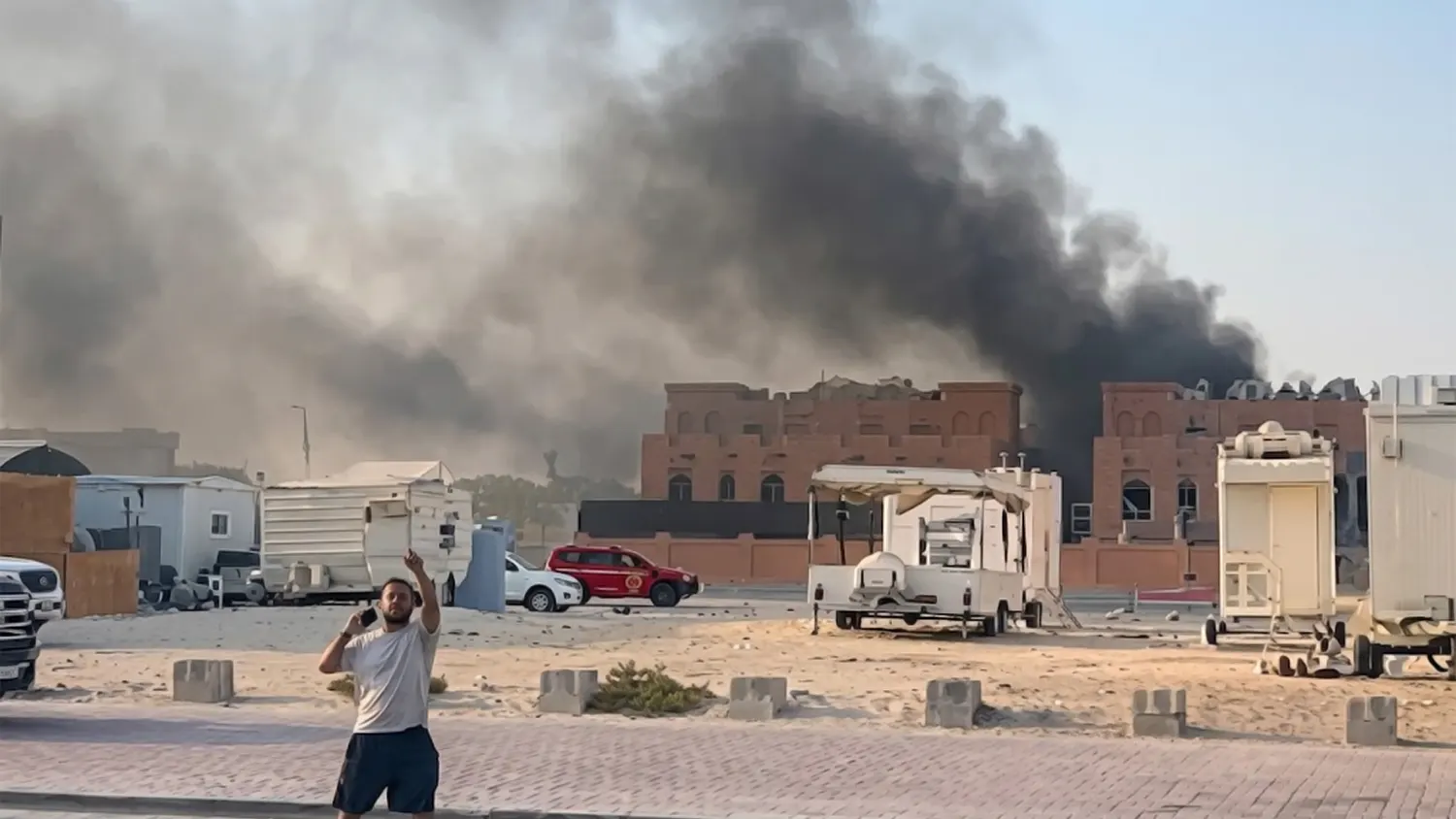
Israeli airstrike targeting senior Hamas figures in Doha, Qatar, have sparked concern across the Middle East and raised fears of a major regional escalation.
While details remain limited, early reports claim the operation targeted high-ranking members of Hamas who were based in the Qatari capital. Neither Israeli nor Qatari officials have officially confirmed the incident so far.
If the reports are verified, the strike would mark a historic expansion of Israel’s military operations, bringing the conflict into one of the region’s most important diplomatic hubs.
Qatar’s Role Makes the Situation More Sensitive
For years, Qatar has played a key role in negotiations between Israel and Hamas.
The Gulf nation has acted as a mediator during ceasefire talks, hostage negotiations, and humanitarian aid discussions involving Gaza. Doha has also hosted Hamas political leaders, making it a crucial communication channel between the militant group and international governments.
Because of that role, any military action inside Qatar carries serious diplomatic risks.
A strike on Qatari territory could damage mediation efforts that many countries including the United States rely on to prevent the conflict from spreading further across the region.
Israel Expands Pressure on Hamas Leadership
The reported strike comes during a period of growing regional tension following the October 7 attacks and the ongoing war in Gaza.
Israeli officials have repeatedly accused Hamas leaders operating outside Gaza of continuing to direct operations and influence the conflict from abroad.
In recent years, Israel has conducted operations against Hamas and allied groups in places such as Gaza, Lebanon, and Syria. However, carrying out a strike inside Qatar would represent a dramatic escalation and a significant shift in strategy.
Analysts say such a move could signal that Israel is now willing to pursue Hamas leadership far beyond traditional conflict zones.
International Concerns Over Sovereignty and Stability
The reports have already triggered debate over international law and national sovereignty.
Military action inside another country especially one not directly involved in active fighting could attract criticism from governments and human rights organizations worldwide.
The situation may also place the United States Department of State in a difficult position.
The United States maintains close ties with both Israel and Qatar and has strongly supported Qatar’s role in regional diplomacy. Any breakdown in those mediation efforts could complicate broader attempts to contain tensions involving Hezbollah in Lebanon and Iranian-backed groups operating in Syria and Iraq.
No Official Confirmation Yet
At this stage, many details remain unclear.
The Qatari government has not released an official statement, and there have been no confirmed reports of civilian casualties or major infrastructure damage in Doha.
Israeli officials have also remained silent regarding the alleged operation.
Because of the lack of formal confirmation, international observers are closely monitoring developments to determine whether the reports reflect a limited covert action or the beginning of a wider military campaign.
Middle East Watching for Possible Retaliation
The reported strike has intensified concerns about the possibility of retaliation from Hamas or other regional armed groups aligned with Iran.
Security analysts warn that any attack inside Qatar could trigger diplomatic fallout and potentially widen the conflict beyond Gaza and southern Lebanon.
At the same time, countries involved in mediation efforts may now face greater pressure to prevent the situation from spiraling into a broader regional confrontation.
Whether the incident becomes a turning point in the conflict will likely depend on how Israel, Qatar, Hamas, and regional allies respond in the coming days.
For now, the Middle East remains on edge as governments and international observers wait for official confirmation and assess the potential consequences of what could become one of the most significant escalations of the war so far.