A deadly drone strike in Haiti’s capital has sparked outrage after reports emerged that several children were among those killed during an operation targeting suspected gang members in Port-au-Prince.
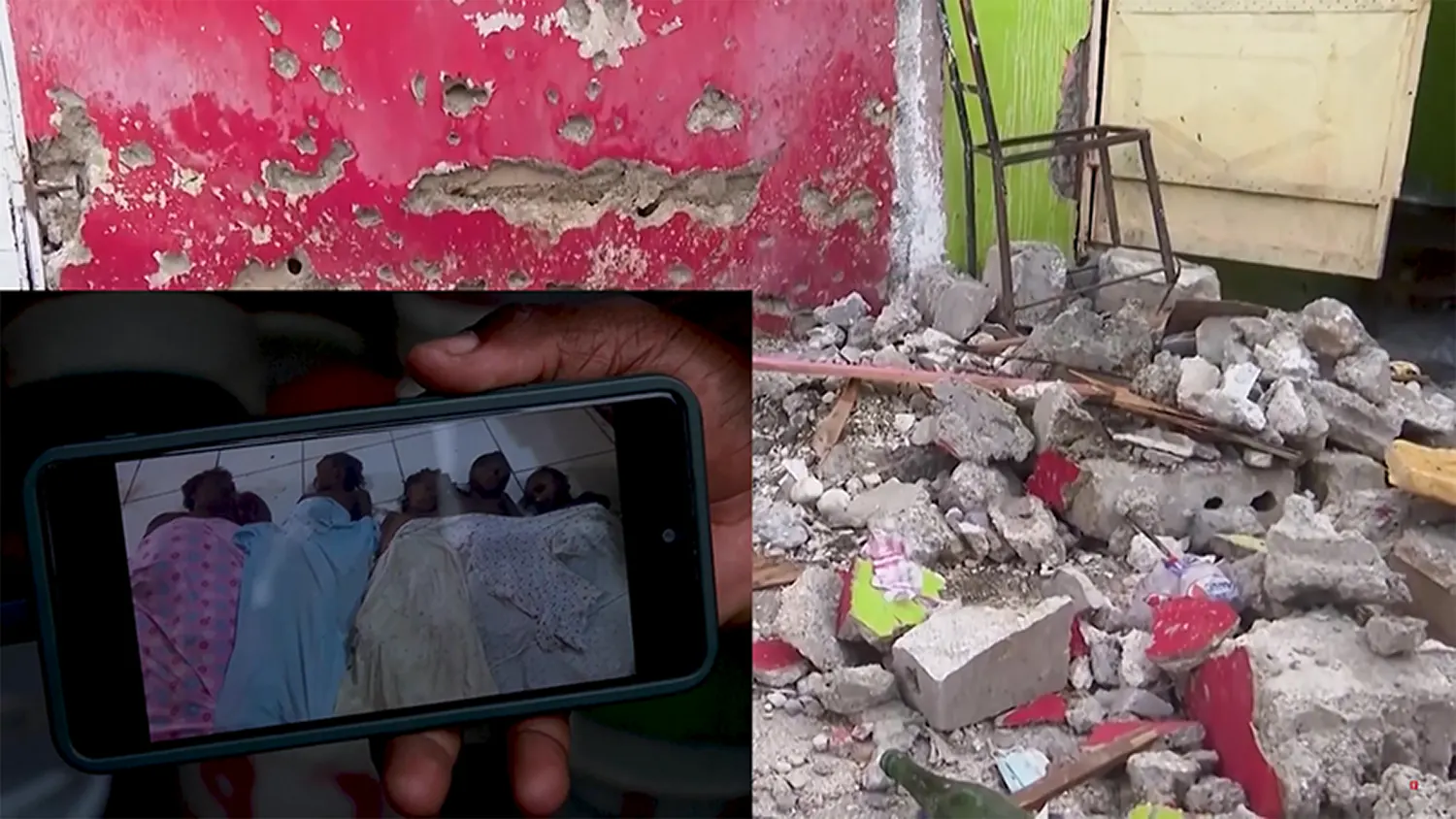
The attack happened late Saturday in the heavily gang-controlled neighborhood of Cité Soleil, one of the most dangerous areas in Haiti. According to local witnesses and human rights organizations, at least 13 people died after explosive drones struck a gathering in the Simon Pelé district.
Among the victims were reportedly eight children, turning the incident into one of the most controversial moments in Haiti’s worsening security crisis.
Chaos and Grief After the Explosion
Residents described scenes of panic and devastation moments after the blast tore through the crowded neighborhood.
Families rushed through debris searching for loved ones as screams filled the streets. Several victims were reportedly attending a birthday gathering linked to Albert Steevenson, also known as “Djouma,” a suspected gang figure connected to the powerful Viv Ansanm coalition.
Human rights groups said two explosive “kamikaze” drones were used in the strike.
One grieving mother, Claudia Bobrun, shared footage showing her 8-year-old daughter lying injured after the explosion. Another victim, a four-year-old girl named Merika, died on the way to the hospital after suffering catastrophic injuries.
A local moto taxi driver, 33-year-old St-Jean Limonthard, was also killed while returning home from work, leaving behind his young daughter.
For many families in Cité Soleil, the tragedy became another painful reminder of how civilians are increasingly caught in the middle of Haiti’s violent conflict.
Haitian Government Faces Growing Scrutiny
The strike has placed Haiti’s government under intense pressure, especially after authorities failed to immediately explain what happened.
Neither the Haitian National Police nor the Transitional Presidential Council released an official statement following the attack, fueling anger among residents and rights advocates.
The National Human Rights Defense Network (RNDDH) accused a specialized police-linked task force of carrying out the drone operation. According to the organization, the unit reportedly works with private security contractors and operates with limited oversight.
Security analyst Romain Le Cour said the silence from Haitian officials raises serious questions about accountability.
He warned that uncertainty over who approved the strike could further damage public trust in the government at a time when Haiti is already struggling with political instability and widespread gang violence.
Haiti’s Expanding Use of Armed Drones
The incident also highlights Haiti’s growing reliance on armed drone operations in its fight against gangs that now control much of Port-au-Prince.
The Viv Ansanm gang coalition, blamed for kidnappings, killings, and extortion, has been designated a foreign terrorist organization by the United States. Haitian authorities have increasingly used drones as part of efforts to weaken gang strongholds without sending officers directly into dangerous neighborhoods.
But human rights groups argue that using explosive drones in densely populated urban areas puts civilians at enormous risk.
Earlier this month, another drone strike in downtown Port-au-Prince reportedly killed at least 11 civilians, adding to fears that these operations are becoming deadlier and less controlled.
International Concerns Over Drone Use
Questions are also growing about where Haiti obtained the drones and whether they were legally authorized for combat missions.
Reports linked to a UN-backed mission suggest some drones may have originally been provided under agreements limiting them to surveillance and reconnaissance roles rather than lethal attacks.
Canadian officials have already expressed concern after reports that explosives were attached to drones supplied for security support.
Critics say the use of weaponized drones could create legal and diplomatic problems while also increasing civilian casualties in crowded neighborhoods like Cité Soleil.
Violence Continues to Push Haiti Deeper Into Crisis
Haiti remains trapped in a severe humanitarian and security crisis.
According to recent United Nations figures, violence displaced around 1.3 million people across the country, while more than 1,500 people were killed between April and June alone.
Armed gangs continue to dominate large parts of the capital, overwhelming police forces and disrupting daily life for millions of Haitians.
The international security mission deployed to Haiti has also struggled with limited funding, manpower shortages, and political uncertainty, leaving authorities increasingly dependent on controversial tactics and private security partnerships.
Fear of Retaliation After the Strike
The situation may worsen in the coming days.
Notorious gang leader Jimmy Chérizier, widely known as “Barbecue,” reportedly vowed revenge after the attack, raising fears of further violence across Port au Prince.
For residents of Cité Soleil, however, the focus remains on mourning the victims.
Many families now face the unbearable reality of burying children killed in a conflict they had no control over, a stark reflection of how Haiti’s spiraling violence continues to devastate ordinary civilians.