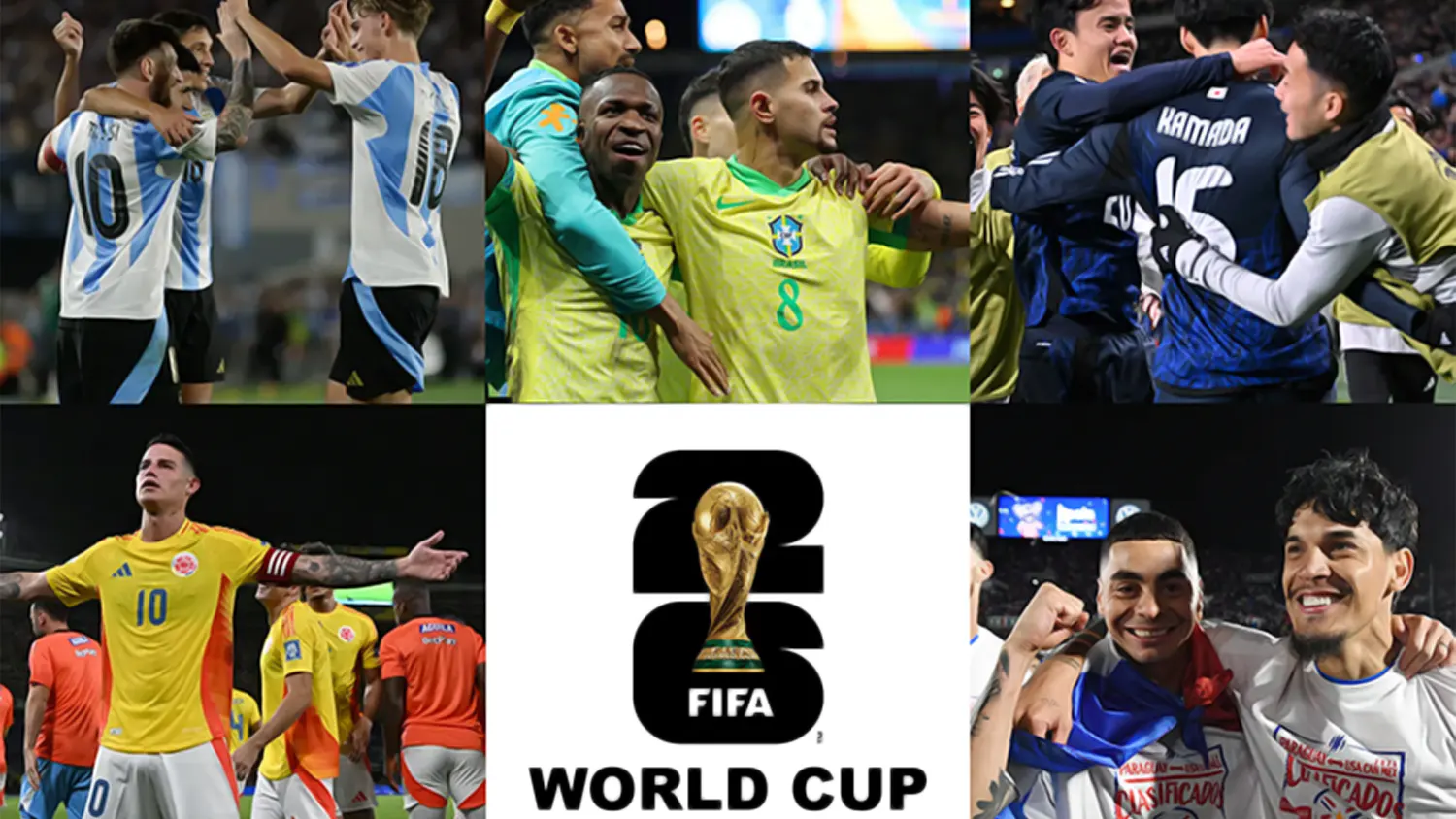
The race to the 2026 FIFA World Cup is already delivering surprises, historic breakthroughs, and major shifts in global football.
With the tournament expanding to 48 teams for the first time, more countries now have a realistic path to football’s biggest stage. The result has been one of the most unpredictable and exciting qualifying campaigns in modern World Cup history.
From powerhouse nations securing their places to first-time qualifiers making history, the road to 2026 is transforming the global football landscape.
A Historic World Cup Across North America
The 2026 tournament will be hosted jointly by United States, Mexico, and Canada, the first time three countries have hosted a FIFA World Cup together.
As co-hosts, all three nations automatically qualified.
For the United States, the tournament represents another major opportunity to grow football’s popularity and showcase a rising generation of talent on home soil.
Mexico enters as one of the most experienced World Cup nations, hoping home support can finally help the team make a deep tournament run.
Canada’s qualification may be the most symbolic of all. Once considered outsiders in international football, Canada’s rapid rise reflects years of investment in player development and growing global respect for the country’s football program.
South America’s Giants Continue to Deliver
World Cup qualifying in South America remains one of the toughest competitions in football.
As expected, defending champions Argentina successfully secured qualification after another strong campaign built around experienced stars and emerging young talent.
Brazil also booked its place despite facing tougher competition than in previous qualifying cycles.
Meanwhile, Uruguay, Colombia, Ecuador, and Paraguay fought through demanding schedules to secure direct qualification spots.
The region once again proved why South American football remains one of the strongest forces in the sport.
Asia Welcomes New Football Nations
Asia’s qualifying campaign has produced some of the biggest feel-good stories of the tournament so far.
Traditional powers such as Japan, South Korea, Iran, and Australia continued their strong World Cup records.
But the biggest headlines belong to Jordan and Uzbekistan.
Both nations are set to make their World Cup debuts after impressive qualifying campaigns.
Jordan’s qualification has sparked celebrations across the country after years of football development and near misses on the international stage.
Uzbekistan’s breakthrough is also being viewed as a major moment for Central Asian football, signaling that the balance of power in Asia may be changing.
Africa Continues to Produce Surprises
African qualifiers have once again shown how competitive and unpredictable football on the continent can be.
Following its historic semifinal run in 2022, Morocco continued its impressive rise by qualifying strongly once again.
Tunisia also stood out after completing an extraordinary defensive campaign without conceding a single goal in eight matches.
At the same time, traditional African football powers such as Nigeria are facing serious pressure and risk missing the tournament entirely.
The results highlight the growing depth and competitiveness across African football.
Europe Delivers Early Drama
European qualifying matches have already produced several major storylines.
One of the biggest shocks came when Germany suffered a surprising 2-0 defeat against Slovakia, raising concerns about Germany’s consistency ahead of the World Cup.
Meanwhile, Erling Haaland stole headlines after scoring five goals in Norway’s massive 11-1 victory over Moldova.
Haaland’s incredible scoring form has boosted Norway’s hopes of finally returning to the World Cup and could make them one of the tournament’s most dangerous underdog teams.
New Teams Rising in North America
Outside the automatic host spots, competition remains fierce across CONCACAF.
One of the biggest surprises has been the rise of Suriname, whose national team has improved dramatically thanks to policies allowing Dutch-born dual nationals to represent the country.
The move has transformed Suriname into a serious regional contender and created one of the most interesting stories in North American qualifying.
Countries such as Jamaica and Honduras are also battling for crucial qualification spots.
A Bigger Tournament Means Bigger Opportunities
The expanded 48-team format is changing international football in major ways.
Smaller football nations now have more opportunities to qualify, while traditional powers can no longer assume automatic dominance.
The rise of new teams and the struggles of established giants suggest the global football order is becoming more competitive and unpredictable.
For fans, that means more drama, more new stories, and a wider variety of playing styles at the 2026 World Cup.
As qualifiers continue around the world, millions of supporters are watching dreams come alive while others face heartbreak on the road to football’s biggest tournament.
And with the final stages still ahead, the journey to 2026 may only get more dramatic from here.