China has announced its first official commitment to reducing carbon emissions, marking a major shift in the country’s climate policy. But despite the historic nature of the pledge, climate experts and international observers say the target falls far short of what is needed to slow global warming.
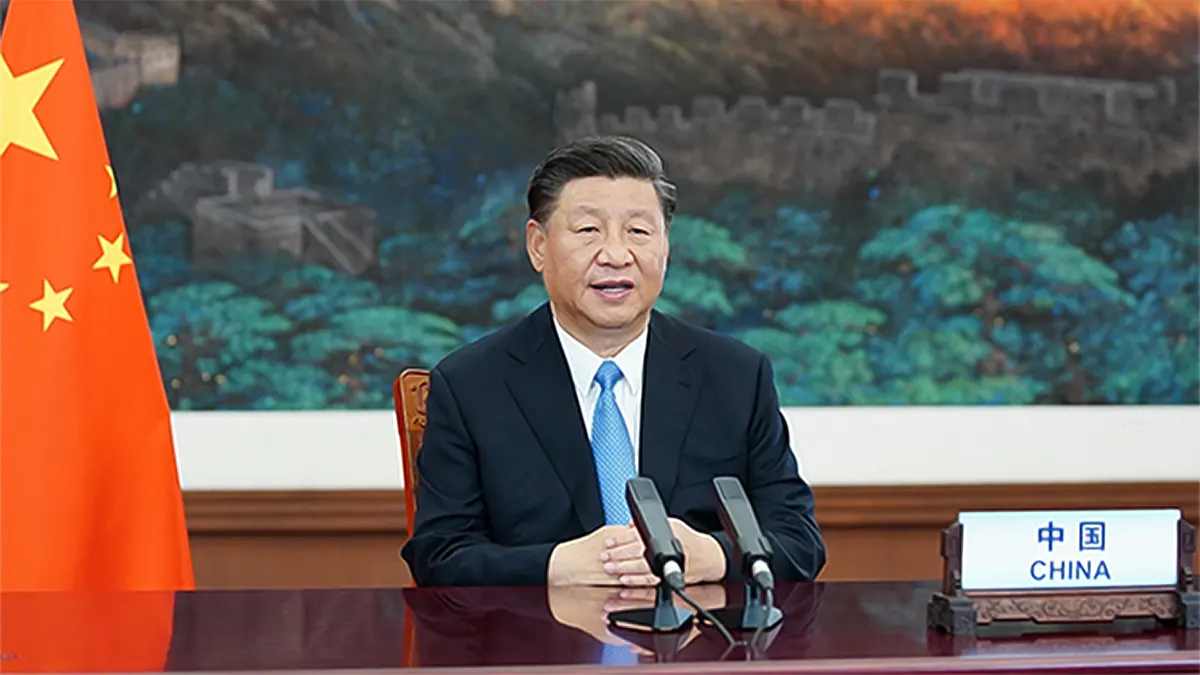
The announcement was made during the United Nations General Assembly in New York, where Chinese President Xi Jinping presented the country’s updated climate plan.
Under the proposal, China pledged to reduce carbon emissions by 7% to 10% by 2035 compared to its future peak emissions level.
While Beijing described the move as proof of its commitment to global climate leadership, critics argue the reductions are too small for the world’s largest carbon emitter.
China Moves Beyond Its Old “Peak Emissions” Strategy
For years, China’s climate promise focused mainly on reaching peak emissions before 2030. The new plan is significant because it officially shifts the country toward actual emissions reductions rather than simply slowing growth.
That transition is being viewed as an important symbolic moment in global climate policy.
China also paired the announcement with ambitious renewable energy goals. The country plans to dramatically expand wind and solar power while increasing the share of non-fossil fuels in its overall energy mix.
Officials say renewable energy capacity could grow several times larger than 2020 levels over the next decade.
However, many climate analysts believe the scale of the emissions cuts remains far below what scientists consider necessary.
Experts Say the Climate Target Is Too Weak
Climate researchers and international policymakers reacted cautiously to the announcement, with many arguing the pledge does not match the urgency of the climate crisis.
Several analysts pointed out that limiting global warming to the targets outlined in the Paris Climate Agreement would require much deeper reductions from China.
Research groups estimate China may need to reduce emissions by roughly 30% by 2035 to remain aligned with the international goal of limiting warming to 1.5 degrees Celsius.
Because China produces more than 30% of the world’s annual carbon emissions, even relatively small policy decisions in Beijing can have major global consequences.
Critics argue that a modest reduction target could consume a large share of the planet’s remaining carbon budget and weaken international climate efforts.
Renewable Growth Faces a Major Coal Problem
Another major concern involves China’s continued investment in coal power.
Although the country is rapidly expanding renewable energy production, it is also continuing to approve and build new coal-fired power plants.
This contradiction has raised doubts among climate experts about whether renewable growth will actually replace fossil fuels or simply support additional industrial expansion.
If coal use continues rising alongside renewable investment, overall emissions reductions could remain limited.
Questions Remain Over Transparency
Analysts also say important details surrounding the climate pledge remain unclear.
China has not fully explained the exact baseline for measuring the promised emissions cuts, leaving uncertainty about how reductions will be calculated.
Transparency remains another concern.
Environmental groups and policy experts continue calling for stronger independent monitoring and internationally verifiable reporting systems to ensure climate commitments are accurately measured.
Without clearer oversight, some observers fear the pledge could remain more symbolic than practical.
China Faces Pressure to Deliver Stronger Action
The timing of the announcement has also drawn attention internationally.
China’s new climate commitment positions the country as a more active participant in global climate discussions, particularly as other major economies continue debating their own environmental policies.
Still, many experts believe the world is now waiting for more concrete action rather than long-term promises.
Future decisions on coal regulations, emissions transparency, and industrial policy will likely determine whether China’s climate strategy becomes a genuine turning point or simply a cautious political compromise.
For now, the announcement represents both progress and frustration, a historic acknowledgment that emissions must decline, but at a pace many scientists say is still dangerously slow.