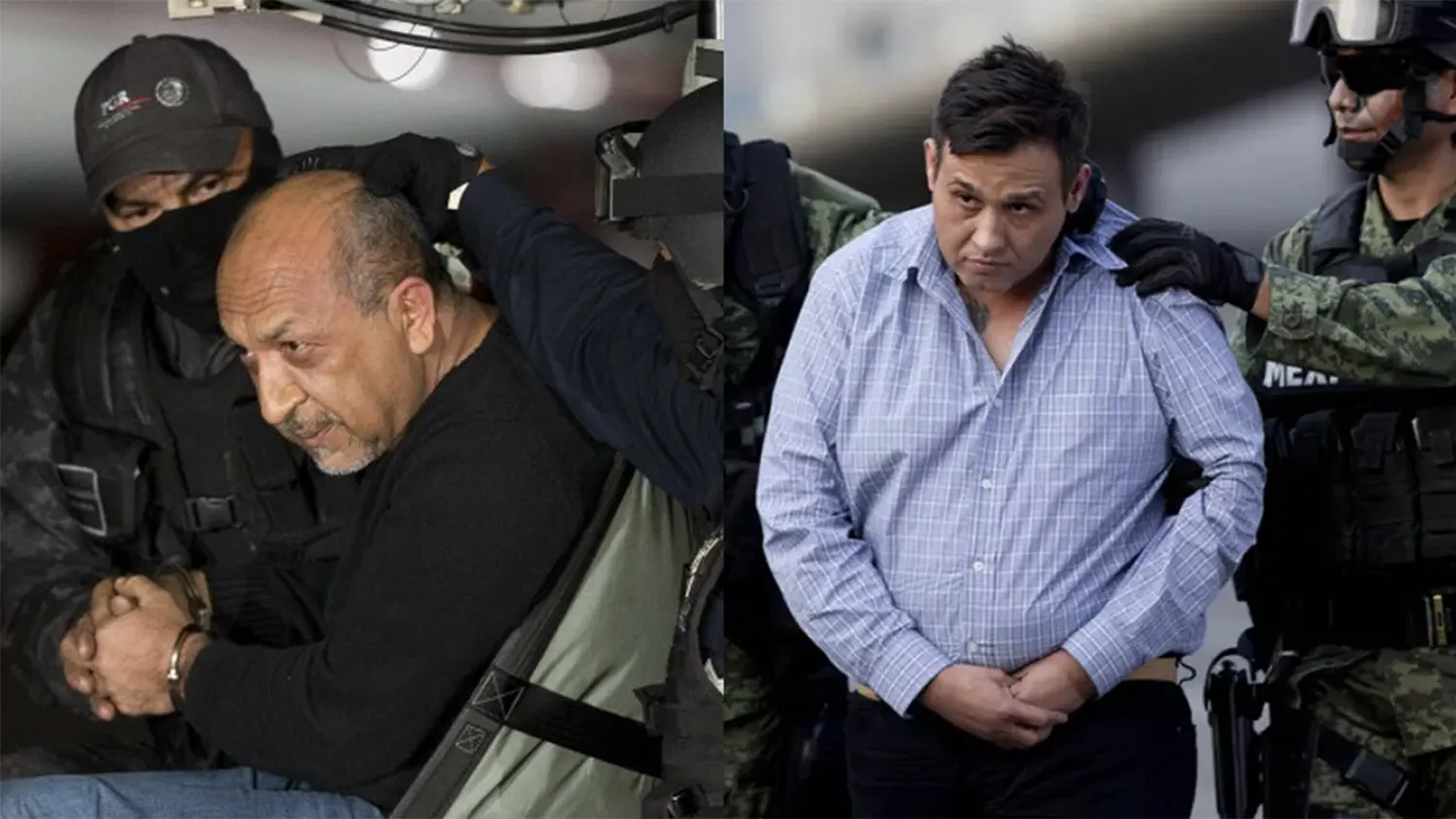
In a decisive move against organized crime, Mexico has transferred 26 high ranking cartel figures to the United States.
The extradition marks a major escalation in U.S.-Mexico security cooperation and highlights renewed efforts to combat drug trafficking networks operating across borders.
While such transfers are not new, the scale and timing of this operation signal a deeper alignment between the two countries alongside ongoing tensions over sovereignty and strategy.
A High Profile Transfer of Cartel Figures
Among those extradited are some of the most recognizable names in Mexico’s criminal landscape.
Abigael González Valencia, a senior figure in the Los Cuinis organization with ties to the Jalisco New Generation Cartel, is one of the most significant individuals handed over.
Also included is Servando Gómez Martínez, widely known as “La Tuta,” a former leader of the Knights Templar cartel.
Another notable case is Roberto Salazar, wanted in connection with the 2008 killing of a Los Angeles County sheriff’s deputy.
These extraditions target leadership level operatives, a strategy aimed at disrupting cartel command structures rather than just lower level members.
The Deal Behind the Extraditions
This transfer was made possible by a key concession from Washington.
According to reports, the U.S. Justice Department agreed not to pursue the death penalty against any of the extradited individuals.
This condition has historically been a sticking point in extradition cases, as Mexico does not allow capital punishment.
By addressing this issue, both sides were able to move forward with what is now the second major extradition wave in recent months.
Growing Pressure from Washington
The move comes amid sustained pressure from the United States to curb the flow of illegal drugs, particularly fentanyl and other narcotics.
Donald Trump has repeatedly emphasized dismantling cartels as a cornerstone of U.S. national security policy.
As a result, cross border enforcement efforts have intensified, with extraditions becoming a key tool.
At the same time, cooperation has expanded beyond law enforcement to include intelligence sharing and coordinated operations.
Mexico’s Balancing Act on Sovereignty
Despite increased collaboration, Mexico is drawing clear boundaries.
Claudia Sheinbaum has reaffirmed the country’s commitment to cooperation but also its sovereignty.
She has explicitly rejected any suggestion of U.S. military intervention inside Mexico.
This reflects a delicate balance:
- Supporting joint efforts against cartels
- Maintaining national control over security policy
- Avoiding political backlash domestically
The result is cooperation with limits, rather than full alignment.
What This Means for the Fight Against Cartels
Extraditing high level figures can disrupt operations, but the long term impact is less certain.
Cartels are highly adaptive organizations. Removing leaders can:
- Create short term instability
- Trigger internal power struggles
- Lead to fragmentation or increased violence
At the same time, targeting leadership remains one of the most effective tools available to law enforcement.
The key question is whether these actions will weaken cartel networks or simply reshape them.
A Step Forward with Uncertain Outcomes
Mexico’s extradition of 26 cartel leaders marks a significant milestone in the fight against organized crime.
It demonstrates stronger bilateral cooperation and a shared commitment to tackling cross border criminal networks.
However, the broader challenge remains unresolved.
Cartels continue to evolve, and lasting impact will depend on sustained coordination, policy alignment, and long term strategy.
For now, this move sends a clear message: both countries are willing to act but the road ahead is far from simple.