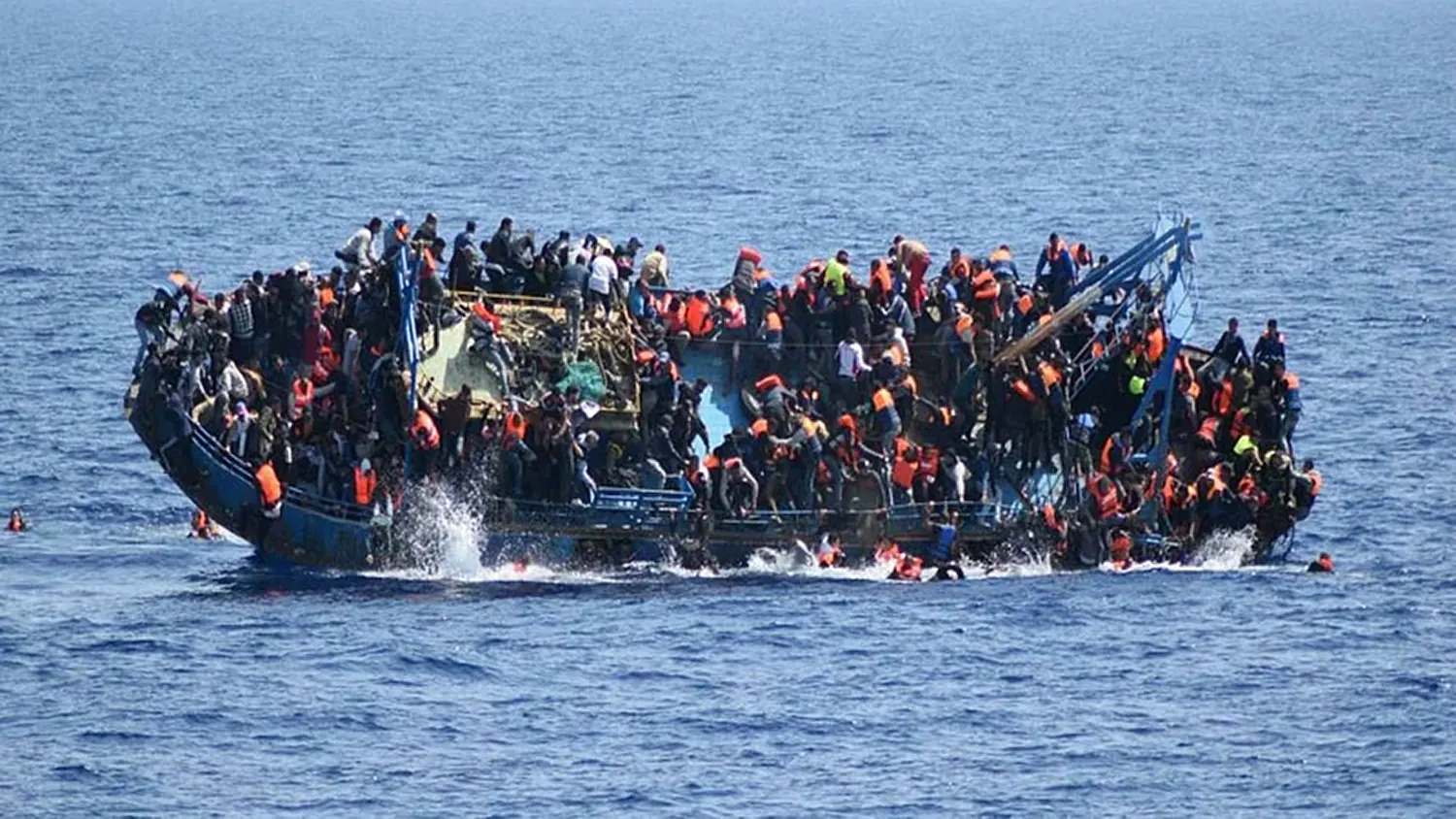
At least 76 migrants were killed and dozens remain missing after a boat carrying around 154 people capsized in the Gulf of Aden off southern Yemen.
The tragedy highlights the ongoing risks of irregular migration routes between the Horn of Africa and Gulf states, where desperate journeys often end in disaster. For many, this route remains one of the deadliest maritime corridors in the world.
Rescue teams and local authorities, supported by the International Organization for Migration (IOM), are still working to assess the full scale of the disaster. Early reports confirm that bodies were found along Yemen’s southern coastline, particularly in Abyan province.
But the real scale of the tragedy became clear as recovery efforts continued. At least 54 bodies were recovered in Khanfar district, with additional victims found elsewhere along the coast.
A disaster unfolding in real time as hopes fade for the missing
The number of survivors remains extremely low. Only 12 people were rescued alive, many suffering from severe trauma and injuries after the ordeal.
This leaves a large number of passengers unaccounted for. Officials estimate that up to 74 migrants are still missing, raising fears that the death toll could rise significantly in the coming days.
As time passes, search efforts are shifting from rescue to recovery. The chances of finding additional survivors are now rapidly diminishing.
What makes this tragedy particularly stark is where it occurred. Yemen, despite being gripped by a prolonged civil war and humanitarian crisis, continues to serve as a key transit route for migrants.
Many of those onboard are believed to be from Ethiopia and other Horn of Africa nations, traveling in hopes of reaching wealthier Gulf countries in search of work and stability.
Why migrants continue to risk one of the world’s deadliest routes
That raises a critical question: why do people continue to take such risks? The answer lies in a mix of economic hardship, conflict, and lack of legal migration pathways.
Smugglers exploit this desperation, often packing migrants into overcrowded and unseaworthy boats with little regard for safety. These journeys frequently end in tragedy, especially in the unpredictable waters of the Gulf of Aden.
And this is not an isolated case. According to the IOM, hundreds of migrants have died in recent months attempting similar crossings, underscoring a worsening crisis.
The latest incident also reflects a broader pattern. Maritime migration routes worldwide are becoming increasingly dangerous as enforcement tightens and safer pathways remain limited.
This forces vulnerable populations into the hands of traffickers, increasing the likelihood of fatal accidents at sea.
A crisis demanding urgent global attention
What makes this even more urgent is the lack of coordinated international response. While rescue operations continue, experts stress the need for safer migration systems and stronger anti smuggling measures.
Without meaningful intervention, the cycle is likely to repeat. More migrants will attempt the journey, and more lives will be lost in similar circumstances.
For now, the focus remains on recovering victims and supporting the survivors. But the deeper issue persists: as long as desperation outweighs safe alternatives, the waters off Yemen will continue to claim lives.
And for many, the search for a better future will remain a journey with no guarantee of survival.