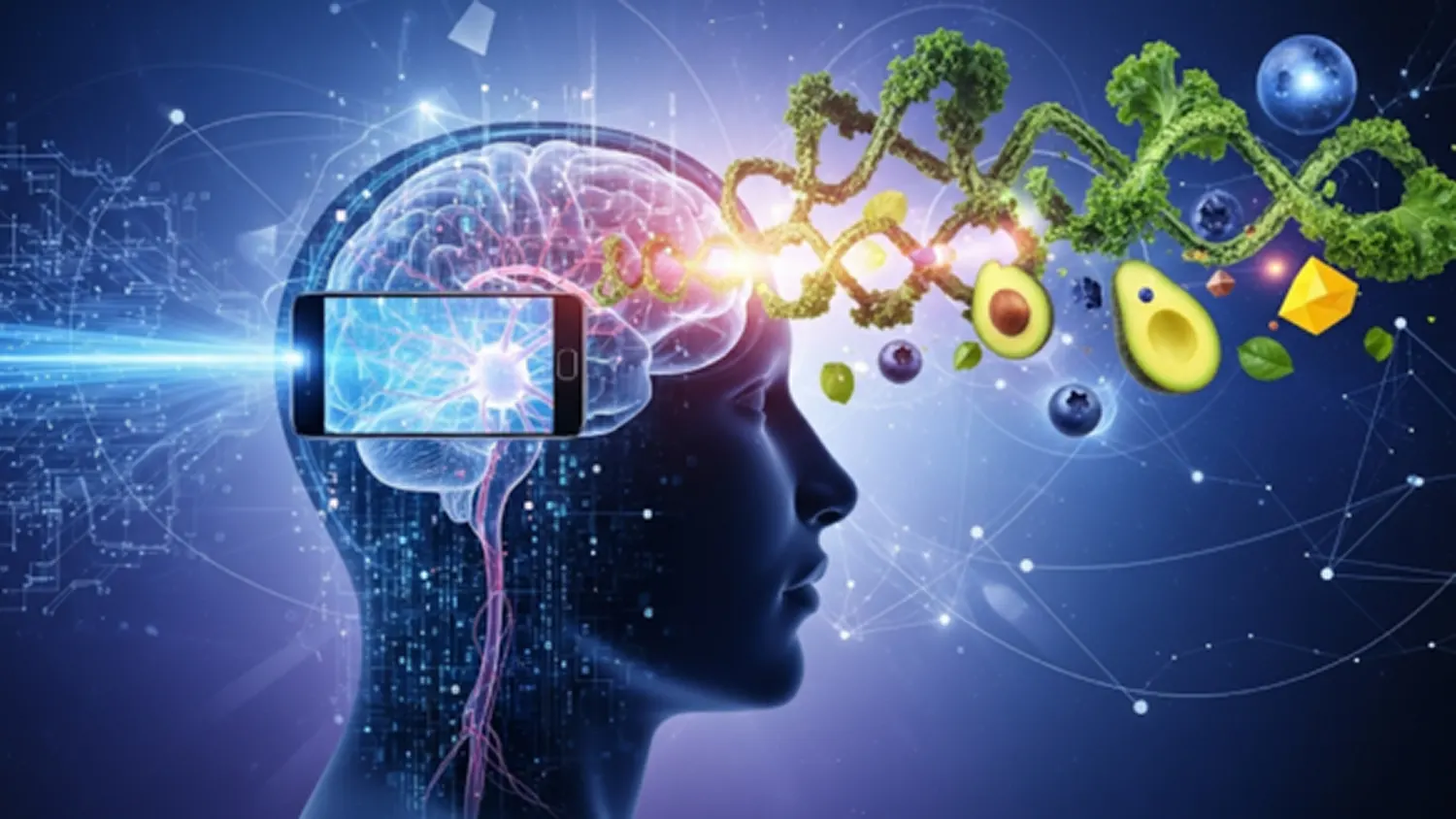
A Hidden Shift in How We Think and Live
Technology is no longer just a tool, it is quietly shaping how our brains develop,
function, and age.
From children growing up glued to smartphones to scientists using artificial intelligence to redesign our diets, two major trends are emerging. One raises concern about long term mental health. The other offers hope in preventing cognitive decline.
The question is no longer whether technology affects us but how deeply it is already shaping our future.
How Early Smartphone Use Impacts Mental Health
It has become a familiar scene: young children scrolling, tapping, and swiping with ease. But new large scale research involving more than 100,000 participants suggests this early exposure may come with serious long-term consequences.
Children who receive smartphones before age 13 are significantly more likely to experience poorer mental health in early adulthood.
Among individuals aged 18 to 24, those who had early access to smartphones reported higher rates of:
- Severe anxiety and emotional distress
- Suicidal thoughts
- Aggressive behavior
- Difficulty managing emotions
- Detachment from reality
The trend is clear and consistent: the earlier the exposure, the greater the mental health risks later in life.
Why This Is Happening: The Hidden Chain Reaction
The connection between smartphones and mental health is not simple, it is a chain reaction of interconnected effects.
Researchers have identified several key drivers:
- Early access to social media, exposing children to comparison and validation loops
- Cyberbullying, which can begin at increasingly younger ages
- Weakened family interaction, reducing emotional support systems
- Disrupted sleep patterns, caused by screen exposure and overstimulation
These factors don’t act alone, they reinforce each other, creating a cycle that can shape emotional development during critical years.
What makes this finding even more significant is its consistency. The pattern appears across cultures, countries, and languages, suggesting a universal vulnerability in early brain development.
A Growing Societal Challenge
Despite most social platforms setting 13 as the minimum age, enforcement remains weak. Meanwhile, children are receiving smartphones earlier than ever before.
This creates a widening gap between what is developmentally safe and what is socially normalized.
As a result, researchers are urging:
- Parents to reconsider early smartphone access
- Schools to introduce digital literacy earlier
- Policymakers to enforce age restrictions more effectively
The debate is no longer about convenience, it is about long term mental well being.
AI and Nutrition: A New Weapon Against Dementia
While technology raises concerns in one area, it is also unlocking breakthroughs in another.
Artificial intelligence is now being used to design personalized diets that may significantly reduce the risk of dementia.
With more than 55 million people worldwide affected by dementia, the need for prevention has never been greater. Instead of relying on general dietary advice, researchers are turning to machine learning for precision.
How AI Is Redefining Brain Healthy Diets
A new approach known as the “Modern diet” uses machine learning to analyze large scale health and nutrition data.
The goal is to identify exactly which foods and combinations of foods have the
strongest impact on brain health.
Key findings highlight the importance of:
- Green leafy vegetables
- Berries
- Citrus fruits
But the real innovation lies in personalization.
AI can create tailored nutritional plans based on individual risk factors, offering a level of precision never before possible in preventive healthcare.
Early results suggest that this AI driven approach may be more effective than traditional “brain healthy” diets, marking a significant step forward in dementia prevention.
Technology as Both Risk and Solution
These two developments may seem unrelated, but they point to a deeper truth:
Technology is simultaneously creating new health risks and new health solutions.
On one side, early and unmanaged digital exposure may be reshaping emotional and psychological development.
On the other, advanced algorithms are helping us better understand the biological systems that keep our brains healthy over time.
The difference lies in how we use technology not just how much we use it.
The Road Ahead: A Critical Balance
Looking forward, the challenge is clear.
We must learn to balance technological convenience with long term health awareness.
This means:
- Setting healthier boundaries around screen use
- Delaying early exposure where possible
- Leveraging AI and data to make smarter lifestyle choices
The future of brain health will not be decided by technology alone but by how intentionally we integrate it into our lives.
The Future Is Being Shaped Now
Our daily habits, how we use our devices and what we eat are quietly building the foundation of our future mental health.
The evidence is growing stronger:
- Early smartphone use may carry lasting psychological risks
- AI driven nutrition could help protect against cognitive decline
Together, these insights reveal a powerful reality:
The choices we make today both digital and physical will define how our minds function tomorrow.