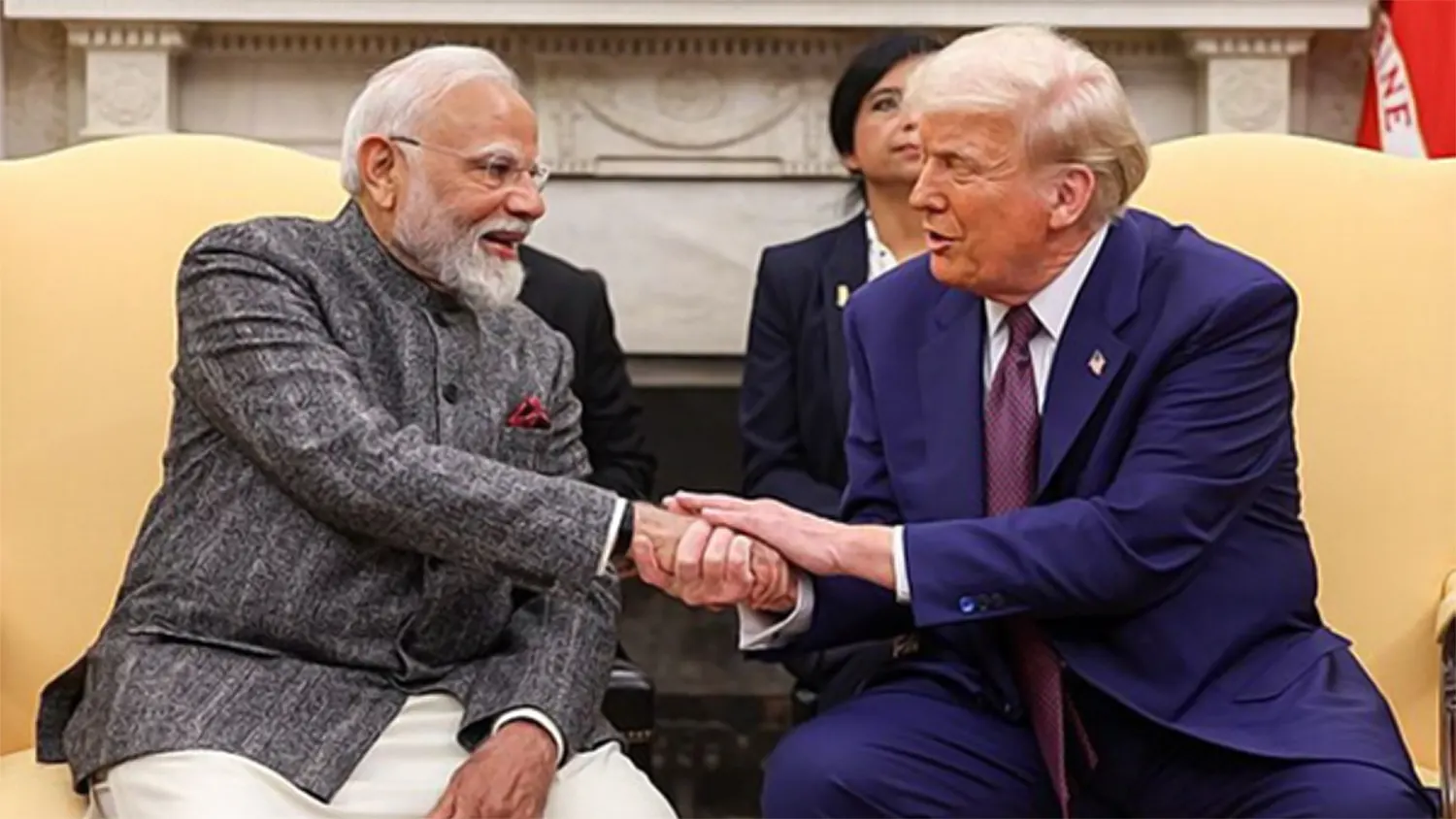
The global economic landscape faces renewed uncertainty after the United States announced a 25% tariff on Indian imports, alongside an additional unspecified penalty set to take effect on August 1, 2025.
The move, confirmed by President Donald Trump, is expected to reshape bilateral trade flows and intensify pressure on an already fragile global economy marked by geopolitical tensions and uneven recovery.
Tariffs Driven by Trade Imbalance and Geopolitical Concerns
The US administration cited two primary reasons behind the decision:
- India’s high import duties, described as among the highest globally
- India’s continued energy and defense ties with Russia
The additional penalty specifically targets India’s engagement with Moscow, reflecting a broader geopolitical strategy to economically isolate Russia amid ongoing global conflicts.
This development signals a growing trend where trade policy is increasingly used as a geopolitical tool, rather than purely economic leverage.
Economic Fallout: Key Indian Sectors Under Pressure
The announcement places significant strain on the $87 billion US–India trade relationship, with economists warning of both short-term disruptions and long term structural impact.
Projections suggest India’s GDP could decline by 0.2% to 0.5% if tariffs remain in place through fiscal year 2026.
Industries Most Affected
Several export driven sectors are expected to face immediate pressure:
- Automobiles and auto components – likely to see declining competitiveness and pricing stress
- Steel and aluminum – already sensitive to global trade fluctuations
- Gems and jewellery – a major export category with over $9 billion in US shipments
- Smartphones and solar modules – thin margin industries facing cost escalation
- Marine products and agricultural goods – included in the tariff bracket
However, pharmaceuticals, semiconductors, and critical minerals have been excluded, indicating a targeted and strategic tariff approach by the US.
India Signals Firm but Measured Response
India’s Ministry of Commerce & Industry responded cautiously, stating it would take
“all necessary steps to protect national interests.”
New Delhi has consistently defended its right to:
- Maintain independent trade policies
- Source energy and defense supplies based on economic and strategic priorities
Despite rising tensions, diplomatic engagement remains ongoing. A US trade delegation is expected to visit India in August, suggesting that negotiations are still active.
However, longstanding disagreements particularly around market access in agriculture and dairy sectors continue to complicate progress toward a comprehensive trade deal.
Global Economic Implications and Rising Trade Uncertainty
The tariff decision adds to a broader climate of heightened trade barriers and policy uncertainty.
While the International Monetary Fund (IMF) recently projected 3% global growth for 2025, it warned of persistent risks stemming from:
- Escalating tariffs
- Geopolitical tensions
- Trade fragmentation
This latest development reinforces concerns that economic policies are increasingly intertwined with geopolitical strategies, raising the stakes for global trade stability.
What Comes Next for US–India Trade Relations
The coming months will determine whether these tariffs serve as:
- A negotiation tactic to extract concessions
- Or a long term shift in US–India economic relations
For businesses and exporters, the immediate challenge lies in adapting to a more complex and restrictive trade environment, while policymakers navigate the delicate balance between economic interests and geopolitical priorities.