Uber is cutting roughly 3,300 corporate jobs, or about 10% of its global corporate workforce, as the ride-hailing giant restructures its business around a rapidly changing transportation market.
The cuts are not primarily a response to falling demand. Instead, CEO Dara Khosrowshahi says Uber has become too complicated, too management-heavy and too slow to make decisions after years of rapid growth.
The restructuring is designed to remove layers of management, combine overlapping teams and redirect money toward technologies that could reshape the ride-hailing industry most notably autonomous vehicles and robotaxis.
That makes the layoffs part of a much larger strategic shift. Uber is not simply trying to become a leaner company. It is preparing for a future in which some of the drivers who power its platform today could eventually be replaced by autonomous vehicles.
Uber’s Problem Is Organizational Complexity, Not Weak Demand
Uber’s business has expanded dramatically over the past several years, with revenue roughly tripling over a five-year period.
That growth brought scale, but it also created more management layers, overlapping responsibilities and small teams whose roles increasingly involved coordination rather than direct product development.
Khosrowshahi’s restructuring aims to address that problem.
Uber plans to reduce management positions by about 20%, either by eliminating roles or moving some managers into individual-contributor positions. The company is also targeting so-called micro-teams, particularly groups with only one or two direct reports.
Those teams are expected to be reduced by nearly half.
The objective is straightforward: fewer layers between decision-makers and the people building and operating Uber’s products.
Uber is also combining groups that previously operated separately. Core technology, engineering and science functions are being reorganized, while different parts of the delivery business including restaurants, retail and white-label services are being brought under broader leadership structures.
The result should be a flatter organization with fewer opportunities for duplicated work and internal coordination to slow down decisions.
Uber Is Redirecting Savings Toward the Robotaxi Race
The more important part of the restructuring is where the savings are going.
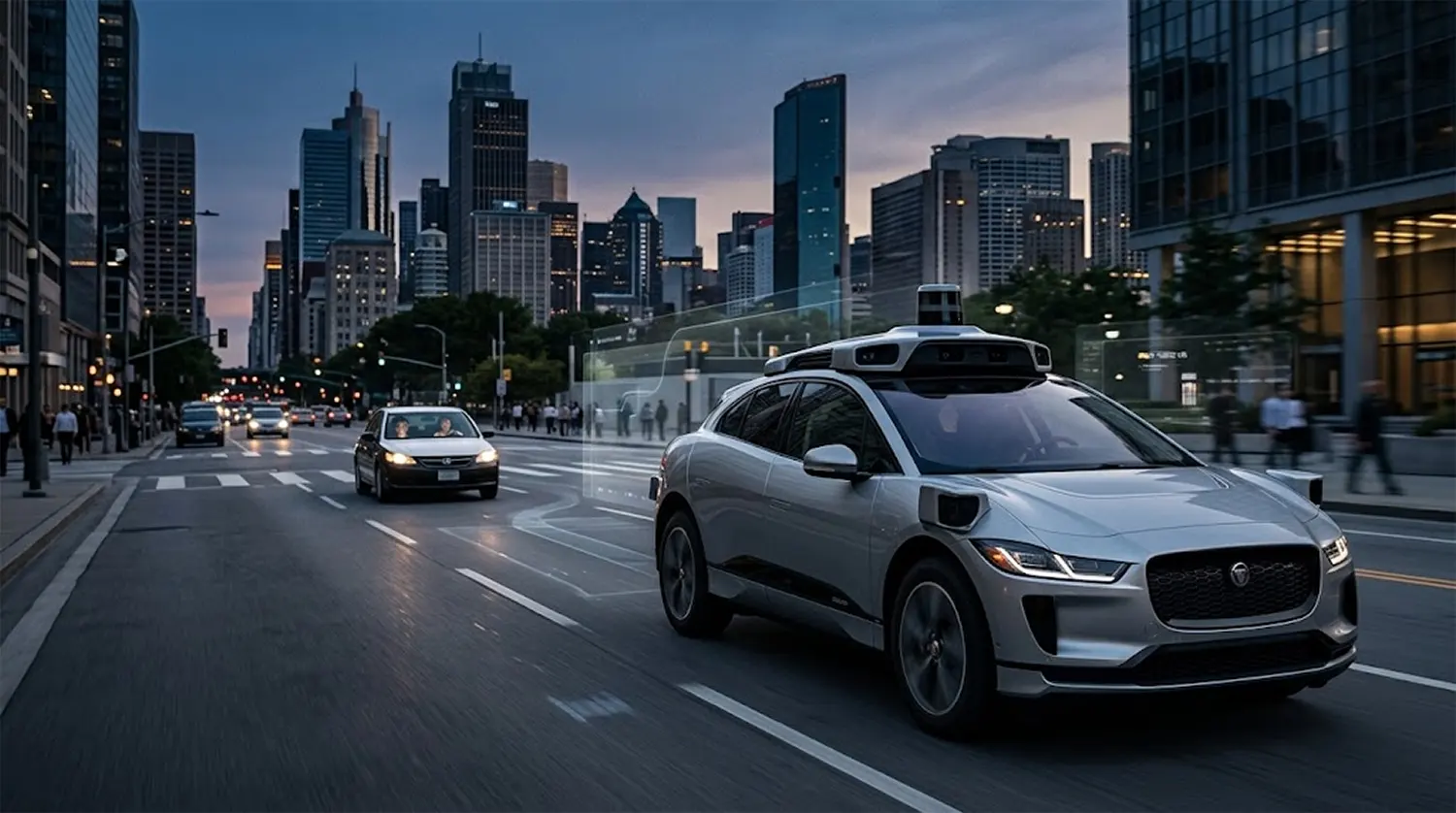
Uber has committed more than $10 billion to autonomous vehicle partnerships, choosing to work with specialized AV companies rather than develop a complete driverless vehicle system on its own.
That strategy fits Uber’s historical strength.
Uber already has the consumer-facing marketplace, millions of riders, a large network of drivers and the software infrastructure needed to match transportation supply with demand. Its bet is that it can become the platform connecting passengers with autonomous fleets, regardless of which company builds the vehicles.
Partners and potential partners have included companies such as Waymo, Avride, Lucid, Nuro and Rivian.
This approach could allow Uber to participate in autonomous transportation without taking on the full cost and technical risk of developing its own self-driving hardware and software stack.
But it also creates a race against time.
If autonomous competitors build their own consumer networks and capture riders directly, Uber risks losing the strategic advantage created by its enormous user base. The company’s investment is therefore about more than adding another transportation option. It is about keeping Uber at the center of the ride-hailing ecosystem as autonomous vehicles become more common.
Why Robotaxis Could Change Uber’s Cost Structure
The economic argument for autonomous vehicles is powerful.
Traditional ride-hailing has a fundamental cost that is difficult to eliminate: human labor.
Drivers are paid for providing the service, meaning a significant portion of every fare ultimately goes toward labor. As ride volumes increase, driver payouts increase with them.
An autonomous vehicle changes that equation.
Instead of paying a driver for every trip, an operator pays for the vehicle, autonomous-driving hardware, software, maintenance, insurance, charging and remote operational support.
The costs do not disappear. They simply move from variable labor expenses to technology and asset costs.
That distinction could become increasingly important at scale.
A human driver also has a practical limit on how many hours a vehicle can operate. An autonomous vehicle does not need to take breaks, sleep or go home at the end of a driver’s shift. Subject to charging, maintenance and regulatory constraints, an autonomous fleet can potentially operate for substantially longer periods.
Higher utilization means the cost of expensive hardware can be spread across more trips and more miles.
Illustrative Ride-Hailing Cost Structure
| Cost category | Human-driven ride | Mature robotaxi fleet |
|---|---|---|
| Driver labor | ~$1.15–$1.40/mile | $0 |
| Vehicle depreciation | ~$0.20–$0.30 | ~$0.30–$0.45 |
| Fuel/electricity | ~$0.15–$0.25 | ~$0.05–$0.10 |
| Insurance/liability | ~$0.20–$0.30 | ~$0.25–$0.40 |
| Remote support/fleet operations | $0 | ~$0.15–$0.25 |
| Platform/technology overhead | ~$0.40–$0.50 | ~$0.15–$0.25 |
| Illustrative total | ~$2.10–$2.75/mile | ~$0.90–$1.45/mile |
*Note: The above metrics are model estimates for illustrative purposes only and do not reflect Uber’s official reported financials.
The key point is not any individual number. It is the structural change in the economics.
Robotaxis carry significant upfront costs, including sensors, computing systems and specialized vehicle equipment. Insurance and remote support can also be expensive while the technology is still developing.
But if those costs fall with scale while human labor is largely eliminated, autonomous fleets could eventually deliver rides at a substantially lower operating cost.
The Biggest Advantage May Be Vehicle Utilization
Autonomous vehicles could also generate more revenue from each physical vehicle.
A human-operated vehicle depends on a driver’s availability. Even if the vehicle itself could run continuously, the person behind the wheel cannot.
A robotaxi removes that limitation.
A vehicle could potentially spend 20 or more hours per day in active service, depending on charging, maintenance, demand and local operating restrictions.
That higher utilization matters because vehicle depreciation is effectively spread across more miles.
The same principle applies to autonomous-driving hardware. Early systems can be extremely expensive, with some retrofitted autonomous vehicles costing well into six figures.
As manufacturers develop vehicles specifically designed for autonomous operation, however, hardware integration and production volumes could bring those costs down.
If autonomous vehicles eventually become significantly cheaper to build and operate while maintaining high utilization, their economics could look very different from today’s early robotaxi fleets.
Uber Does Not Need to Build the Robotaxi Itself
This is one of the most important parts of Uber’s strategy.
Uber does not necessarily need to win the autonomous-driving technology race.
Instead, it can position itself as the marketplace and distribution layer.
A passenger opens Uber, requests a ride and gets matched with an available vehicle. The vehicle might be operated by a human driver today or an autonomous fleet tomorrow.
That model gives Uber a potentially valuable role in an autonomous transportation market.
The company can focus on demand, pricing, dispatching, customer relationships and marketplace liquidity while autonomous-vehicle partners focus on the difficult engineering problems surrounding perception, navigation and vehicle control.
For Uber, the danger is that this advantage disappears if autonomous operators decide they can reach passengers without Uber.
That is why scale matters.
Waymo and Other Autonomous Rivals Raise the Stakes
Uber’s autonomous strategy is unfolding as companies such as Waymo expand robotaxi services in major U.S. markets.
That creates a strategic dilemma.
Uber has an enormous transportation marketplace, but autonomous-driving companies have something Uber historically did not: purpose-built self-driving technology.
Uber’s response is essentially to combine those strengths.
Rather than attempting to become the world’s best autonomous-driving company, Uber can potentially provide autonomous fleets with access to millions of customers.
The company therefore wants to make its platform difficult to replace even as the vehicles operating on that platform change.
Remote Work Is Also Being Pulled Back
The restructuring extends beyond headcount and management.
Uber is also tightening its remote-work policy, with fully remote positions expected to represent about 1% of its workforce under the new structure.
Employees are being encouraged or required to work closer to key regional and technology hubs, including major locations such as San Francisco and New York.
The reasoning is consistent with the broader organizational overhaul.
Uber is attempting to put teams closer together physically while also reducing organizational layers. The company believes that faster communication and clearer ownership can help it execute more quickly as it takes on increasingly complicated technology and transportation projects.
That represents a significant change from the more distributed working arrangements that became common across the technology industry.
The Real Shift Is From Labor Costs to Technology Costs
The Uber restructuring illustrates a broader economic change taking place across technology and transportation.
For decades, companies primarily scaled by hiring more people.
The emerging model is different.
Companies are increasingly asking whether software, AI and automation can allow smaller teams to accomplish work that previously required much larger organizations.
For Uber, that principle applies both inside and outside the company.
Internally, automation and a flatter organizational structure can reduce administrative overhead.
Externally, autonomous vehicles could eventually reduce the industry’s dependence on human drivers.
The two trends reinforce each other.
A company that spends less on organizational overhead has more capital available for technology. A company that successfully automates expensive parts of its operating model can potentially generate even more cash to invest in the next generation of technology.
Uber’s Layoffs Reflect a Bigger “AI and Automation” Capital Shift
Uber’s restructuring also fits into a wider pattern across the technology industry, although the specific motivations vary from company to company.
Companies including Meta, Amazon, Oracle, Microsoft and Salesforce have all pursued combinations of headcount reductions, management cuts, automation and major AI investments.
The underlying argument is similar: AI and automation can increase the amount of work a smaller workforce can accomplish.
That has encouraged technology companies to reconsider the value of traditional organizational structures.
Middle managers, coordinators and teams responsible primarily for moving information between departments are increasingly being scrutinized.
At the same time, spending is shifting toward areas considered strategically critical, including AI infrastructure, computing capacity, specialized talent and autonomous systems.
The result is a strange combination: technology companies can report strong demand and substantial revenue while simultaneously cutting thousands of jobs.
The contradiction is only apparent.
The companies are not necessarily spending less. They are spending differently.
The “Great AI Swap” Is Really a Reallocation of Capital
The broader trend can be understood as a shift from labor-intensive operations toward technology-intensive infrastructure.
The old model depended heavily on people.
The emerging model puts more capital into GPUs, data centers, AI systems, autonomous vehicles, robotics and specialized computing.
That does not mean automation will immediately eliminate every job being cut. Nor does it guarantee that every AI or autonomous-vehicle investment will produce the expected returns.
But the direction of corporate spending is increasingly clear.
Capital is moving toward systems that companies believe can produce more output with fewer human inputs.
Uber’s restructuring provides a particularly clear example because the transition is visible on both sides of its business.
Inside the company, it is reducing management layers and consolidating teams.
Outside the company, it is investing billions in a future where some rides could be provided without a human driver.
Uber Is Betting That the Platform Will Matter More Than the Driver
The biggest question for Uber is whether it can remain indispensable when the vehicle itself becomes autonomous.
For decades, Uber’s platform has connected passengers with independent human drivers.
The next generation could connect passengers with autonomous vehicle fleets.
If Uber succeeds, the company’s role could become even more important. Instead of being primarily a marketplace for drivers, it could become the operating layer through which multiple autonomous fleets access millions of passengers.
But that outcome is far from guaranteed.
Autonomous driving remains technically difficult, regulation varies by market, vehicle costs remain significant and competitors are building their own consumer relationships.
Uber is therefore making a large financial and organizational bet before the final shape of the autonomous transportation market is known.
The 3,300 job cuts are one part of that bet.
The deeper story is capital reallocation: Uber is reducing the cost of running its existing organization so it can spend more aggressively on the technology that could define its next decade.
If robotaxis ultimately deliver rides at significantly lower operating costs, the payoff could be enormous.
If autonomous fleets instead become vertically integrated platforms that bypass Uber, the company will have spent billions preparing for a future in which its traditional marketplace advantage matters less.
For now, Uber is betting that the best way to survive the transition is not to build every piece of the autonomous vehicle itself but to make sure its platform remains where the riders are.