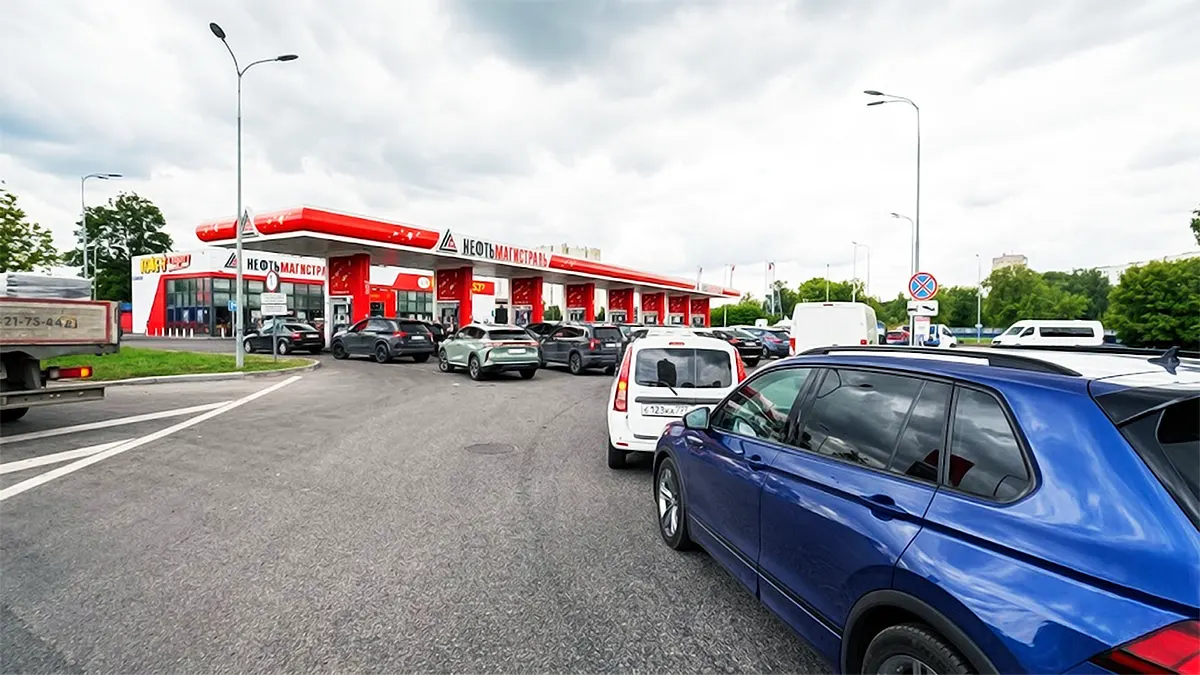
Russia sits on some of the largest crude oil reserves on the planet. Yet right now, ordinary Russians are lining up at gas stations, watching pumps run dry, and paying record prices for fuel that used to be plentiful. It’s one of the strangest contradictions of the war: a top oil exporter can’t keep its own citizens supplied with gasoline.
The reason isn’t a lack of oil in the ground. It’s that Russia can no longer process enough of it. A sustained campaign of Ukrainian drone strikes has knocked out an estimated 25% to 30% of the country’s oil refining capacity, and the fallout is now visible in nearly every corner of the country.
Empty Pumps From Major Cities to Occupied Crimea
The shortage isn’t isolated to one region, it’s nationwide. Roughly 90% of Russia’s 83 regional entities have reported fuel disruptions or rationing in recent weeks. Even major chains like Gazprom and Rosneft have started capping how much fuel civilian drivers can buy in a single visit, typically somewhere between 30 and 100 liters, in an effort to head off panic buying.
The pain isn’t spread evenly, though. In Russian-occupied Crimea, the situation has gotten bad enough that authorities declared a state of emergency and sharply restricted civilian fuel sales. Independent, non-chain gas stations across the country are struggling even more, since Russia’s vertically integrated oil giants are prioritizing their own branded networks first and leaving smaller operators to fend for themselves.
Prices are climbing just as fast as the lines are growing. Average pump prices have seen record-breaking weekly spikes, and the Kremlin is reportedly considering something drastic to compensate: temporarily rolling back environmental standards to the “Euro 2” level, a grade of fuel that was banned back in 2013 just to get more product out of refineries faster, pollution be damned.
The government has also slammed the brakes on exports. Gasoline and jet fuel exports are banned through July 31, and officials are actively discussing a full ban on diesel exports too. In a move that would have been unthinkable a few years ago, Moscow has reportedly opened talks to import fuel from other countries to stabilize its own domestic market.
Putin Breaks the Silence
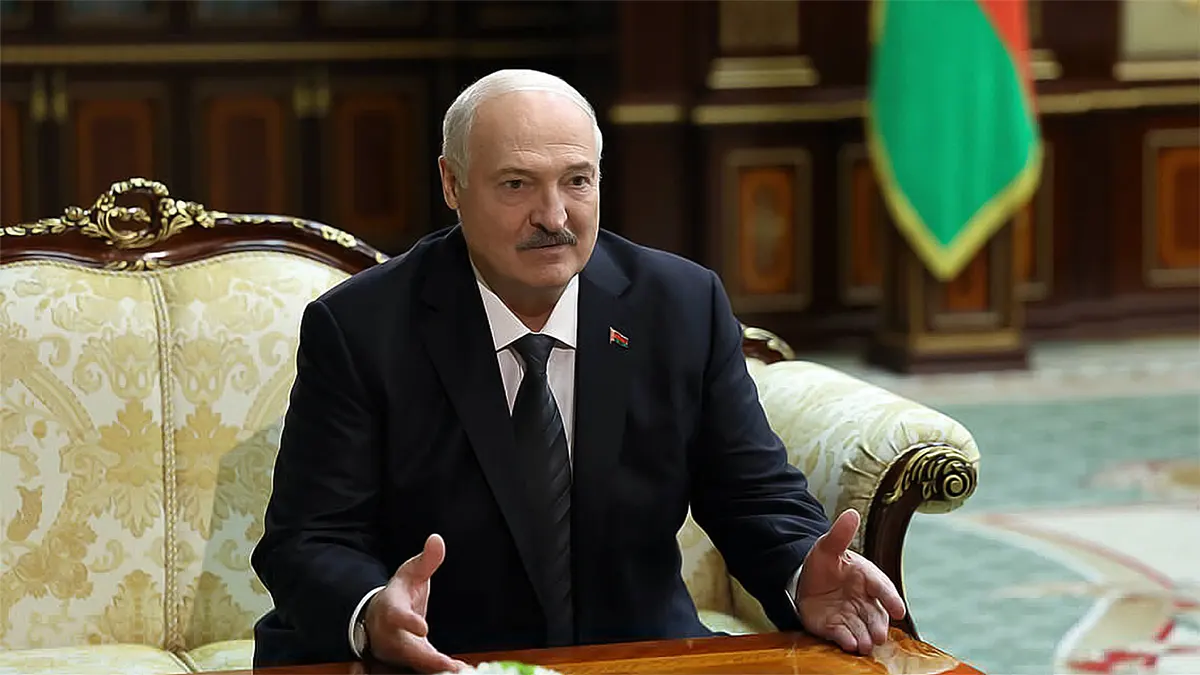
For most of the war, the Kremlin has downplayed how much the conflict is disrupting daily life at home. That changed during a late-Sunday televised meeting with oil executives and government officials, when Vladimir Putin made a rare, direct acknowledgment of the crisis.
“You know very well that problems for motorists and businesses persist,” Putin told the room. “Unfortunately, there are also queues at gas stations. The right grade of gasoline isn’t always available right now.”
He called the shortage “temporary” and “not critical,” but the admission itself was significant. It came right in the middle of peak summer harvest season, when agricultural and transport demand for fuel is at its highest, arguably the worst possible time for refineries to be offline.
How Cheap Drones Took Down Billion-Dollar Refineries
Understanding why this crisis is so hard to fix starts with a basic fact: crude oil is useless until it’s refined. You can’t pour it straight into a car or a military vehicle, it has to pass through a refinery first. Ukraine figured out that hitting those refineries, rather than oil fields or pipelines, would do far more damage to Russia’s fuel supply.
Using relatively inexpensive, long-range attack drones, Ukraine has been able to fly past Russia’s front-line air defenses and strike deep inside Russian territory, targeting the delicate distillation columns at major refineries including facilities in Moscow, Krasnodar, Yaroslavl, and St. Petersburg.
The strategy has worked because of a few compounding factors:
- Capacity has been gutted. Roughly a quarter to a third of Russia’s total refining capacity has been knocked offline by the strikes.
- Production has collapsed. Domestic gasoline output has dropped by about 17%, hitting supply right as summer demand peaks.
- Repairs are agonizingly slow. Modern Russian refineries depend heavily on sophisticated Western equipment and software. Because of sanctions, sourcing replacement parts for drone-damaged units is a slow, difficult, often semi-legal process.
By targeting these choke points instead of the battlefield directly, Ukraine has effectively brought the war home to everyday Russians — and forced the Kremlin into an awkward, very public scramble for fuel.
The Numbers Behind the Shortage
This isn’t a problem that gets fixed in a few weeks. According to energy analysts, industry trackers, and intelligence assessments, Russia’s fuel crisis is projected to last at least through the end of 2026, with strain likely continuing well into 2027.
The daily math doesn’t add up. During peak summer months, Russia needs around 110,000 metric tons of gasoline per day. After the June drone strikes, production fell by 25%, dropping output to just 85,000 metric tons per day. That leaves a shortfall of roughly 25,000 metric tons every single day, a gap that export bans and emergency import deals can ease but not close.
Refinery repairs are measured in months, not weeks. The Moscow Oil Refinery, which supplies more than 10% of the capital region’s fuel, was knocked completely offline by a mid-June strike that damaged both its primary distillation unit and its more advanced “Euro+” unit. Analysts at Russian banking group Sinara estimate repairs could cost up to $1 billion and take six months to a year meaning the refinery likely won’t be back online until 2027.
Sanctions are the real bottleneck. In most countries, a damaged refinery might be back in operation within a few months. Russia’s problem is structural: its refineries rely almost entirely on specialized Western technology and cracking units that it can no longer legally buy. Sourcing parts through black-market “grey pipelines,” or trying to manufacture lower-grade domestic substitutes, adds months of delay to every repair.
Why the Shortage Isn’t Going Away Soon
How bad the day-to-day “panic buying” feels may ease up depending on how much fuel Russia can import from allies like Kazakhstan or Belarus. But the deeper, structural shortfall is baked in for now. Analysts at the Carnegie Endowment and other regional energy trackers largely agree on one point: as long as Ukraine can keep launching these long-range drone strikes, Russia’s refining capacity will stay damaged, rationing will continue, and the country’s fuel troubles will likely persist well into 2027.