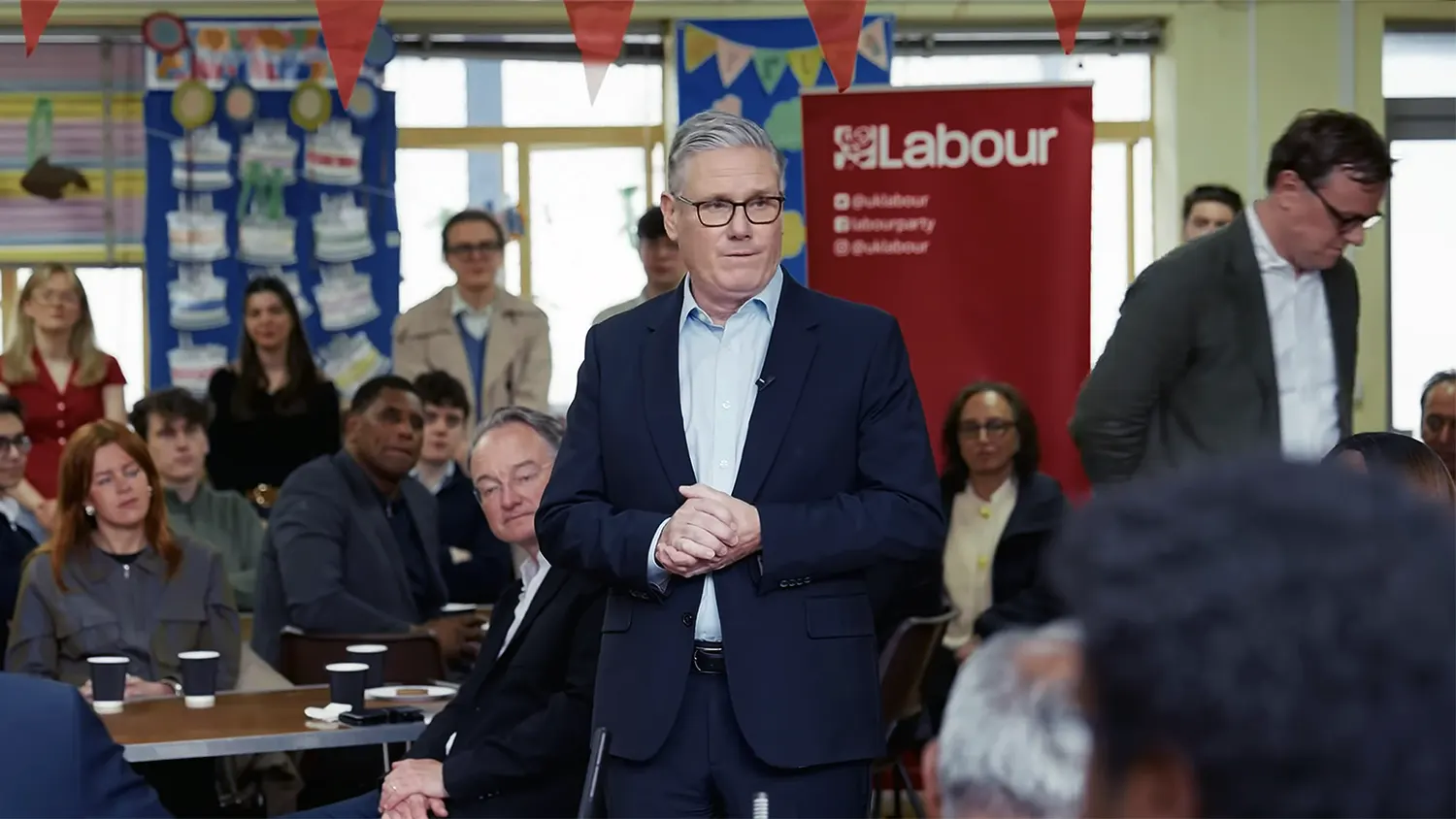
The May 7 local elections didn’t just hand Labour a bad night. They handed Keir Starmer what political commentators are already calling a “political earthquake”, one that has cracked open a full-blown leadership crisis and raised a question Westminster can no longer avoid: is he still retrievable?
For now, Starmer says he’s staying. But the numbers, the mood inside his party, and a ticking deadline suggest his room to manoeuvre is shrinking by the hour.
A Historic Collapse at the Ballot Box
The scale of Labour’s defeat went well beyond a routine mid-term bruising. The party lost over 1,100 council seats and surrendered control of 28 councils across England. In Wales, the results were even more symbolic, Labour lost its grip on the Welsh Senedd, ending a century of dominance there in what many described as a “humiliation.”
The beneficiaries made the picture even bleaker for Labour. Nigel Farage’s Reform UK swept in as the night’s biggest winner, gaining more than 1,300 seats and seizing control of 10 councils, including a landslide in Essex and a dramatic surge in Sunderland. Meanwhile, the Green Party capitalised on discontent from Labour’s left, winning its first-ever directly elected mayors in Hackney and Lewisham. Starmer’s party was being squeezed from both directions at once.
The UK’s traditional two-party system, in the eyes of many analysts, was effectively “smashed” in a single night.
The Revolt from Within
What makes this crisis different from a typical post-election dip is where the pressure is coming from. This is no longer just the party’s vocal left wing. The rebellion has spread.
Around 40 Labour MPs have now openly called on Starmer to set a “dignified” timeline for his departure, with many suggesting he step down after the party conference this autumn. More urgently, MP Catherine West has publicly threatened to formally trigger a leadership challenge by Monday morning if no Cabinet heavyweight intervenes first, a deadline that has focused minds across Westminster.
The succession conversation is already happening in the open. Names circulating include Health Secretary Wes Streeting, former Deputy PM Angela Rayner, and Greater Manchester Mayor Andy Burnham, the latter commanding a striking +72% favourability rating among Labour members, even though he currently holds no seat in Parliament. A separate faction on the party’s left is pushing to draft Energy Secretary Ed Miliband as a unity or stopgap leader, specifically to block a Streeting takeover.
That level of public successor-talk, while a sitting PM remains in office, is rarely a good sign.
Starmer’s Strategy to Survive
Faced with the worst poll results of his tenure, Starmer went on offence. In a defiant op-ed published in The Guardian on May 8, he acknowledged the results were “tough” but refused to frame them as a personal verdict. He argued that walking away would “plunge the party into chaos” casting his own resignation not as an act of accountability, but as a destabilising choice the party cannot afford.
It is a carefully calibrated message. By explicitly ruling out any shift in ideology, stating he will not “tack left or right” he is simultaneously refusing demands from the socialist wing pushing for a return to radical roots, and from centrists spooked by Reform UK’s surge. The framing is deliberate: this is a leader positioning himself as the only stable option in an unstable moment.
To reinforce that image, Starmer has brought in political heavyweights as senior advisors. Former Prime Minister Gordon Brown has been appointed as Special Envoy on Global Finance, a nod to Labour’s economic competence during the 2008 financial crisis. Harriet Harman, long regarded as a moral and legislative conscience of the party, has been appointed as Adviser on Women and Girls. The intent is clear: surround the leadership with figures whose credibility is beyond question.
Critics, however, have been quick to note the irony. Rather than signalling a “future-looking” direction, the optics of leaning on Labour veterans has reinforced the perception that Starmer is “stuck in the past.”
The Numbers Behind the Crisis
The election results didn’t happen in a vacuum. They reflected and accelerated a collapse in public confidence that polling had been tracking for months.
Starmer’s approval rating has now plummeted to 22%, with 70% of the public viewing him unfavourably. For context, those figures are approaching the territory last seen during Liz Truss’s final days in Downing Street. Among Labour’s own membership, 45% now want him to step down immediately.
The dissatisfaction runs deeper than a single bad election. A “perfect storm” of accumulated damage has been eating away at his standing. Lingering controversy over the vetting of Peter Mandelson has dented his reputation for clean governance. His positioning on climate and international issues has driven progressive voters toward the Greens. His handling of immigration has failed to prevent a haemorrhage of working-class support to Reform UK. And the Burnham shadow, a Labour figure polling far higher than the Prime Minister within their own party makes the contrast impossible to ignore.
“In Office, but Not in Power”
There is a phrase circulating among anonymous Labour MPs this weekend that captures the mood precisely: “It’s no longer a question of if he has lost the room, but who in the room is brave enough to tell him first.”
The word “inevitable” is appearing more frequently in political columns than at any point in Starmer’s premiership. His Cabinet has so far held its public loyalty but seasoned Westminster observers know that “full confidence” statements from a Cabinet are often the final act before a sudden exit.
The “Monday ultimatum” from Catherine West has given the crisis a concrete timeline. If no senior Cabinet figure breaks ranks by Monday morning, West has promised to begin gathering signatures to force a formal leadership contest. Whether that threshold is crossed remains to be seen but the fact that such a deadline exists at all marks how dramatically things have shifted in a matter of days.
Starmer is a political survivor by temperament and by record. But surviving a crisis and leading through one are different things. With a 2029 General Election on the horizon and a party fractured across ideological lines, the question is no longer simply whether he can hold on through the weekend, it’s whether holding on is enough.