On Saturday, May 9, a drone found a father and his 12 year old daughter on a motorcycle in Nabatiyeh. It struck once. They survived. As they tried to move away, it struck again. The father died. His daughter, wounded, managed to crawl roughly 100 meters before the drone came back a third time. She was taken to Nabih Berri Governmental Hospital, where she later died from her injuries.
That sequence of events three strikes, one drone, one child has become the defining image of what the April 17 ceasefire now looks like on the ground.
The Deadliest Day Since the Truce Began
Saturday’s violence was not an isolated incident. It was the single deadliest day Lebanon has experienced since the April 17 agreement took effect, with between 17 and 19 people killed across the country according to the Lebanese Health Ministry and the National News Agency.
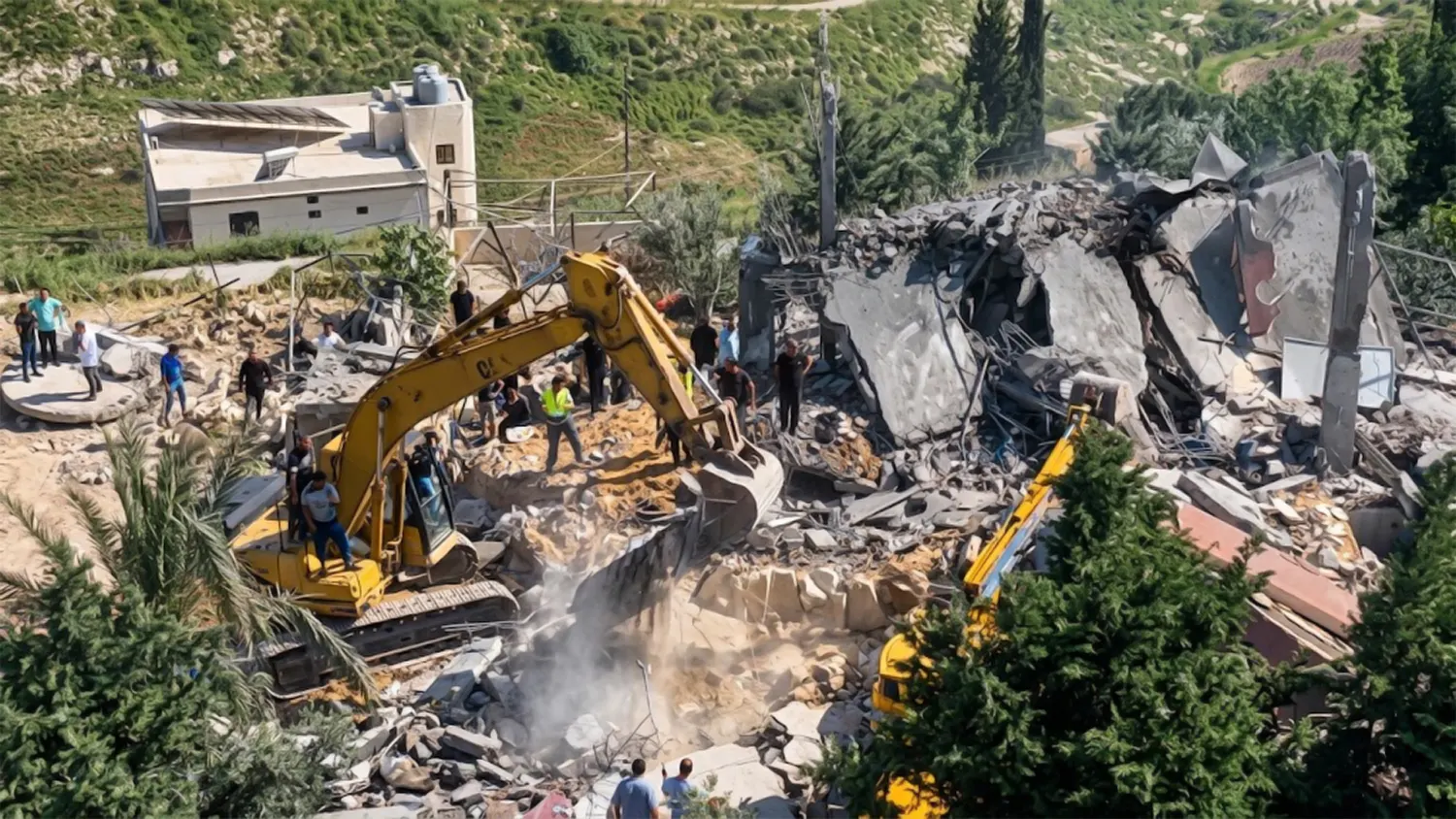
The strikes spread across multiple locations in rapid succession. In Saksakiyeh, the deadliest single strike of the weekend hit a building housing a family that had already been displaced from the border region. At least seven people were killed, including a girl, and 15 others were wounded. In the Beirut suburbs of Saadiyat and Damour, three separate drone strikes targeted vehicles along the coastal highway linking Beirut to Sidon, a stretch of road that had remained largely untouched since the truce began killing four people. Additional strikes in Toura, Maifadoun, and Bourj Rahhal resulted in further civilian and paramedic fatalities.
The Israeli military described the operations as “targeted strikes on Hezbollah terrorists” and infrastructure, carried out in response to explosive drones launched by Hezbollah that wounded three Israeli soldiers. The Lebanese government responded by filing an urgent complaint with the UN Security Council, accusing Israel of “barbaric targeting” and a wholesale disregard for the terms of the truce.
Two Sides, One Clause, No Agreement
At the heart of the ongoing violence is a fundamental disagreement over what the ceasefire actually permits and both sides are exploiting the same loophole to justify expanding their operations.
Israel has established a security corridor roughly 8 to 10 kilometres deep inside Lebanese territory, which it maintains as a permanent buffer zone. The IDF argues that the movement of Hezbollah operatives and equipment within or near this zone constitutes an imminent threat, justifying preemptive strikes under the agreement’s self-defense provisions. Prime Minister Netanyahu has gone further, explicitly stating that the broader U.S.-Iran ceasefire announced in early April does not cover Lebanon meaning Israel retains full freedom to pursue what it calls the disarmament of Hezbollah regardless of the wider regional pause in hostilities.
Hezbollah, meanwhile, frames every rocket barrage as a defensive response to what it describes as Israel’s unrelenting violations continued drone surveillance, targeted assassinations, and the presence of IDF troops on Lebanese soil. Since Friday alone, Hezbollah has carried out 13 distinct attacks, using artillery and fiber-optic guided drones to target Merkava tanks and Iron Dome batteries stationed inside the buffer zone.
The fiber-optic drones have emerged as a particular flashpoint. Unlike conventional drones, they are difficult to jam or intercept because they operate on hardwired signals rather than radio frequencies. Netanyahu recently labelled them a “major threat,” and the IDF has responded by shifting toward a more aggressive pre-emptive strike posture, a policy shift that critics say directly contributed to the high civilian toll in Nabatiyeh and Saksakiyeh.
| Hezbollah’s Position | Israel’s Position | |
|---|---|---|
| Justification | Defensive response to ongoing Israeli violations | Pre-empting imminent threats before launch |
| Tactics | Fiber-optic drones, guided missiles targeting IDF in buffer zone | Precision airstrikes, drone “hunts” targeting mobile launchers and commanders |
| Key Demand | Full Israeli withdrawal and halt to all overflights | Complete Hezbollah disarmament and permanent 8–10km security zone |
A Population With Nowhere Left to Go
For the 1.2 to 1.6 million people currently displaced inside Lebanon roughly one in five of the country’s entire population, the Saksakiyeh strike has done something beyond adding to the death toll. It has destroyed the last assumption many families were clinging to: that moving away from the front line means moving toward safety.
The family killed in Saksakiyeh had already fled once. They were sheltering in a building they believed was far enough from the fighting. They were wrong.
This pattern of compounded displacement has become one of the defining features of Lebanon’s humanitarian crisis in 2026. Families who fled the border towns in March moved to cities like Nabatiyeh and Sidon. As those cities became new flashpoints over the past week, they were forced to flee again. For many, there is now no third destination. UN reports confirm that some families are sleeping in cars or on the streets in Beirut and Tripoli, priced out of the “safer” zones where rents have spiked beyond reach.
Lebanon’s 680 collective shelters mostly schools and public buildings are operating at full capacity. The overcrowding has created its own danger: as displaced populations concentrate in the same villages and buildings, those locations risk becoming inadvertent targets when Israeli strikes hit nearby Hezbollah infrastructure.
The crisis is compounded further by Lebanon’s existing refugee population. The country still hosts approximately 1.3 million Syrian refugees, meaning that nearly half the people currently on Lebanese soil are either displaced or formally classified as refugees. In host communities already stretched by years of economic collapse, the competition for bread, water, and electricity is generating rising social tension.
An Aid Response Falling Dangerously Behind
The international humanitarian response has not kept pace with the speed or scale of the 2026 escalation. The UN Flash Appeal for Lebanon is currently only 38% funded, leaving relief agencies unable to meet basic needs across multiple sectors simultaneously.
The shortfalls are already producing visible consequences. The WASH sector covering water, sanitation, and hygiene is at risk of total breakdown by July if fuel and supply deliveries are not secured in the coming weeks. Over 50 health centres have been forced to close due to damage or insecurity since March. The death toll now exceeds 2,700 people, including at least 150 children.
The strikes on healthcare infrastructure have added a further layer of crisis. With medical facilities already shuttered or overwhelmed, the wounded from Saturday’s strikes including the 15 injured in Saksakiyeh alone are being routed through a system that has almost no remaining capacity to absorb them.
Washington on the Horizon, But the Ground Is Moving Fast
High-level peace talks are scheduled to resume in Washington on May 14–15. The talks carry significant weight U.S. and Iranian negotiators had reportedly been nearing a broader regional understanding partly tied to stability along the Israel-Lebanon front, and Tehran has warned that a continued collapse of the ceasefire could derail any wider agreement.
But the gap between the diplomatic calendar and the reality on the ground has rarely looked wider. Israel shows no sign of withdrawing from the buffer zone it has spent months consolidating. Hezbollah has no intention of disarming. The Lebanese government which has officially banned Hezbollah’s military activities lacks the military capacity to enforce its own position, leaving it to file UN complaints while the strikes continue.
As of May 11, the April 17 ceasefire remains technically in effect. On the ground, that distinction is becoming harder to explain to the families sleeping in cars in Tripoli, or to the paramedics who have become targets alongside the civilians they were trying to reach.
The Washington talks may yet produce something. But for a country where a fifth of the population has been displaced and a drone hunted a 12 year old girl across 100 metres of open ground, the distance between a diplomatic framework and a liveable peace has never felt further.