With 33 days remaining before kickoff on June 11, the 2026 FIFA World Cup is already facing a controversy bigger than tactics, squads, or title favorites.
The issue is tickets.
Not just expensive tickets, but a pricing system many fans believe has fundamentally changed who the World Cup is for. Across social media and supporter forums, frustration is growing over soaring costs, unrestricted resale prices, and FIFA’s growing role in the secondary market itself.
The backlash reached another level when resale listings for the World Cup final at MetLife Stadium in New York/New Jersey appeared online for as much as $2.3 million per seat.
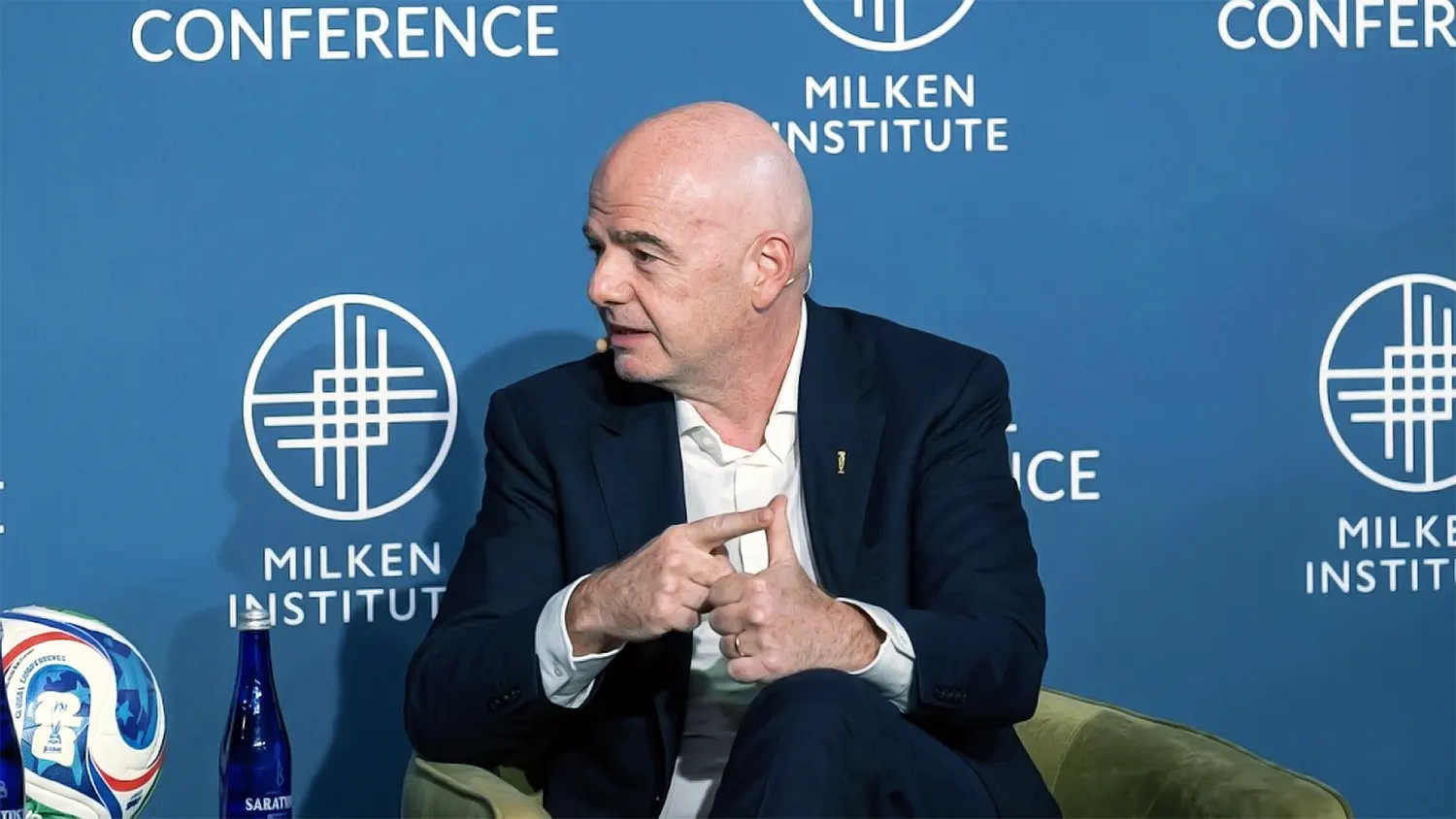
Gianni Infantino tried to laugh it off.
“If somebody buys a ticket for the final for $2 million,” the FIFA president joked recently, “I will personally bring him a hot dog and a Coke.”
The line went viral instantly. But for many supporters, it landed badly.
Because behind the joke sits a deeper fear: the 2026 World Cup may become the richest tournament football has ever staged and one ordinary fans can barely afford to enter.
That tension is now shaping the atmosphere around the tournament almost as much as the football itself.
FIFA says the American market changed everything
Infantino’s defense has been remarkably direct. FIFA, he argues, is simply adapting to the economics of North American sports.
According to the FIFA president, the United States operates in a different commercial universe than previous World Cup hosts. NFL playoff games, NBA postseason tickets, and major college football rivalries routinely command enormous prices. In that environment, FIFA believes lower World Cup pricing would be unrealistic.
He has repeatedly cited demand as justification.
FIFA says the 2026 tournament generated more than 500 million ticket requests, dwarfing interest levels from recent World Cups in Qatar and Russia. Infantino argues those numbers prove the market can sustain premium pricing.
He also insists higher prices are designed to protect fans from scalpers.
The logic works like this: if FIFA sells a World Cup final ticket for $200, brokers and automated bots immediately buy the inventory and flip those seats for thousands on secondary marketplaces. Under FIFA’s argument, the money is going to be spent anyway.
Infantino’s position is that it is better for FIFA to capture that revenue and reinvest it into global football rather than letting private resellers pocket the profits.
He regularly reinforces that point by describing FIFA as a non-profit organization whose World Cup revenues fund football development programs across 211 member nations.
But that explanation has triggered a second controversy, critics believe undermines FIFA’s entire argument.
The 30% resale system changed the debate completely
The loudest criticism of FIFA is no longer about ticket prices alone.
It is about the organization profiting from resale inflation while publicly condemning it.
On FIFA’s official resale marketplace, buyers reportedly pay a 15% fee while sellers surrender another 15%. Combined, FIFA can collect up to 30% of a resale transaction.
The math stunned many supporters once it became widely understood.
If a fan resells a ticket for $1,000:
- the buyer may pay $1,150,
- the seller receives around $850,
- and FIFA collects roughly $300 in fees.
That structure has transformed the conversation around the tournament.
Critics now argue FIFA is not merely reacting to an expensive American sports market. They believe the organization is actively monetizing it.
And unlike previous World Cups, the 2026 tournament represents a major policy shift.
During Russia 2018 and Qatar 2022, FIFA’s official resale systems operated far differently. Resale prices were generally capped near face value, limiting speculative profit. The platform functioned more like a fan exchange than an open marketplace.
For 2026, strict resale caps were removed in the United States and Canada.
That decision allowed ticket prices to rise freely with demand and allowed FIFA’s commission earnings to rise alongside them.
For supporters groups, that distinction matters enormously.
Because if FIFA previously limited resale inflation but chose not to in North America, critics argue this is not simply “market reality.”
It is a deliberate commercial strategy.
Fans fear the World Cup is losing its identity
For many supporters, the anger surrounding ticket prices goes beyond economics.
It is about atmosphere.
The World Cup has traditionally been football’s great democratic event, a tournament where traveling supporters, families, local communities, and working-class fans mixed together in the stands.
Many now fear that culture is being pushed aside by hospitality packages, premium seating, and dynamic pricing systems designed around maximum revenue extraction.
“The World Cup is supposed to belong to everybody,” one England supporter wrote on Football Supporters Europe forums after seeing resale prices for knockout matches. “Now it feels like it belongs to investment bankers.”
That sentiment is becoming increasingly common.
Football Supporters Europe, one of the continent’s largest fan advocacy organizations, has criticized FIFA’s pricing model as “excessive and opaque.” Other fan groups argue the tournament is drifting toward a corporate entertainment model closer to the Super Bowl than a traditional World Cup.
Even some figures inside football have warned about the broader consequences.
Manchester City manager Pep Guardiola recently cautioned that football risks becoming too expensive for ordinary supporters, warning that the sport depends on fan culture to maintain its identity.
That concern feels especially significant ahead of a World Cup hosted in stadiums built for massive commercial demand.
Because supporters are not only worried about who gets inside.
They are worried about what kind of tournament atmosphere survives once they do.
FIFA’s biggest World Cup could also become its most divisive
There is no question the 2026 tournament will be enormous.
The expanded format, the North American venues, and unprecedented global demand are set to produce the largest World Cup in history. Host cities are preparing for millions of visitors, while broadcasters expect record audiences worldwide.
Commercially, FIFA may ultimately view the tournament as a triumph.
But culturally, the backlash continues to grow.
The image of million-dollar resale tickets, combined with FIFA collecting fees from the same marketplace driving those prices higher, has become difficult for many fans to ignore.
And that is why Infantino’s “hot dog and Coke” joke resonated so differently than intended.
To FIFA, it was humor.
To many supporters, it sounded like a governing body increasingly comfortable treating the World Cup less like football’s global festival and more like a luxury product.